Sidebar
Religions Around The World
World Religions News
U.S. bishops launch annual Catholic Home Missions Appeal
Vance says Trump was ‘posting a joke’ with now-deleted Jesus-like image
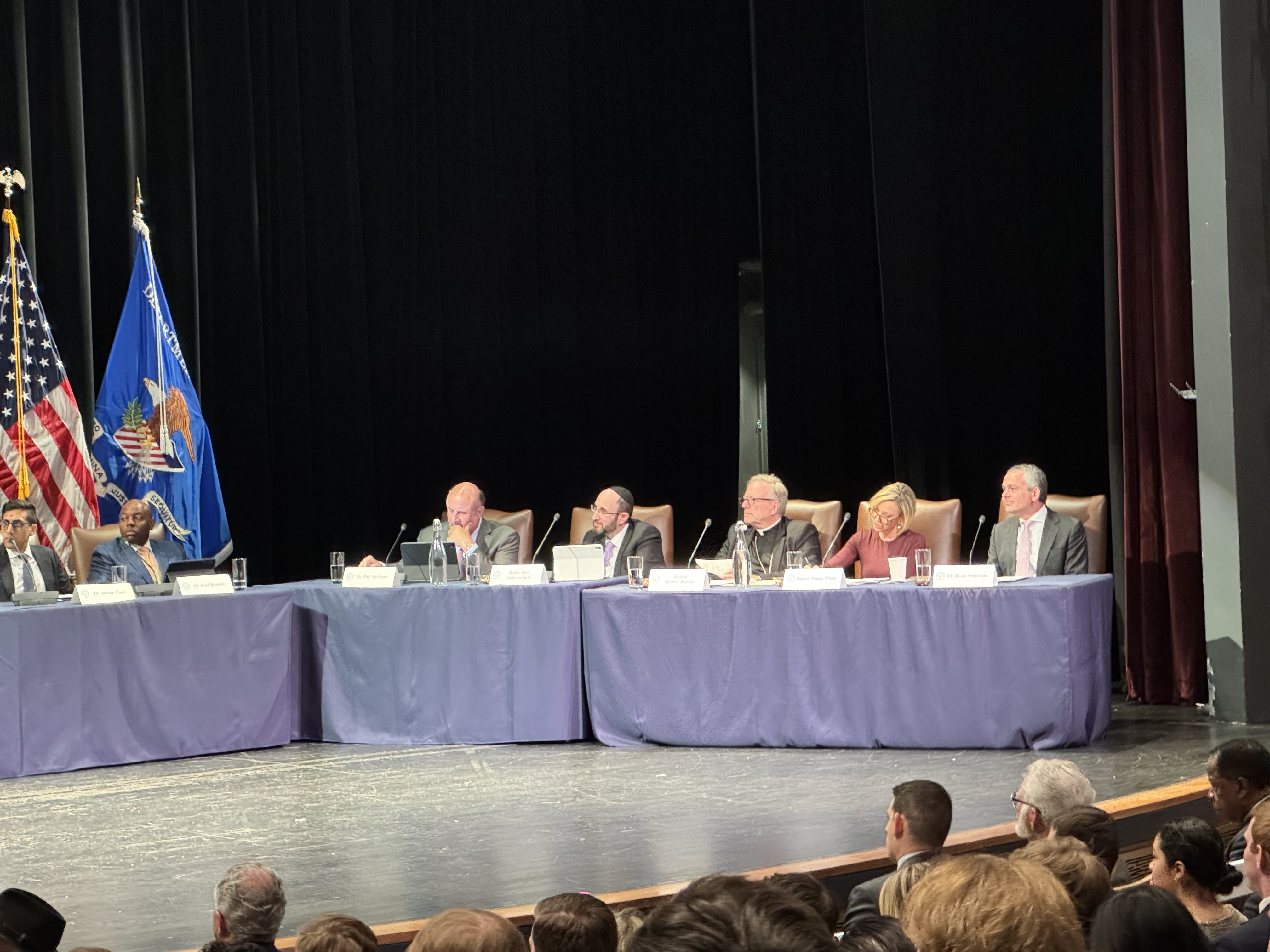
Religious Liberty Commission members urge continued work as threats ‘are not disappearing’
Orbán’s defeat is a defeat for Christian nationalism
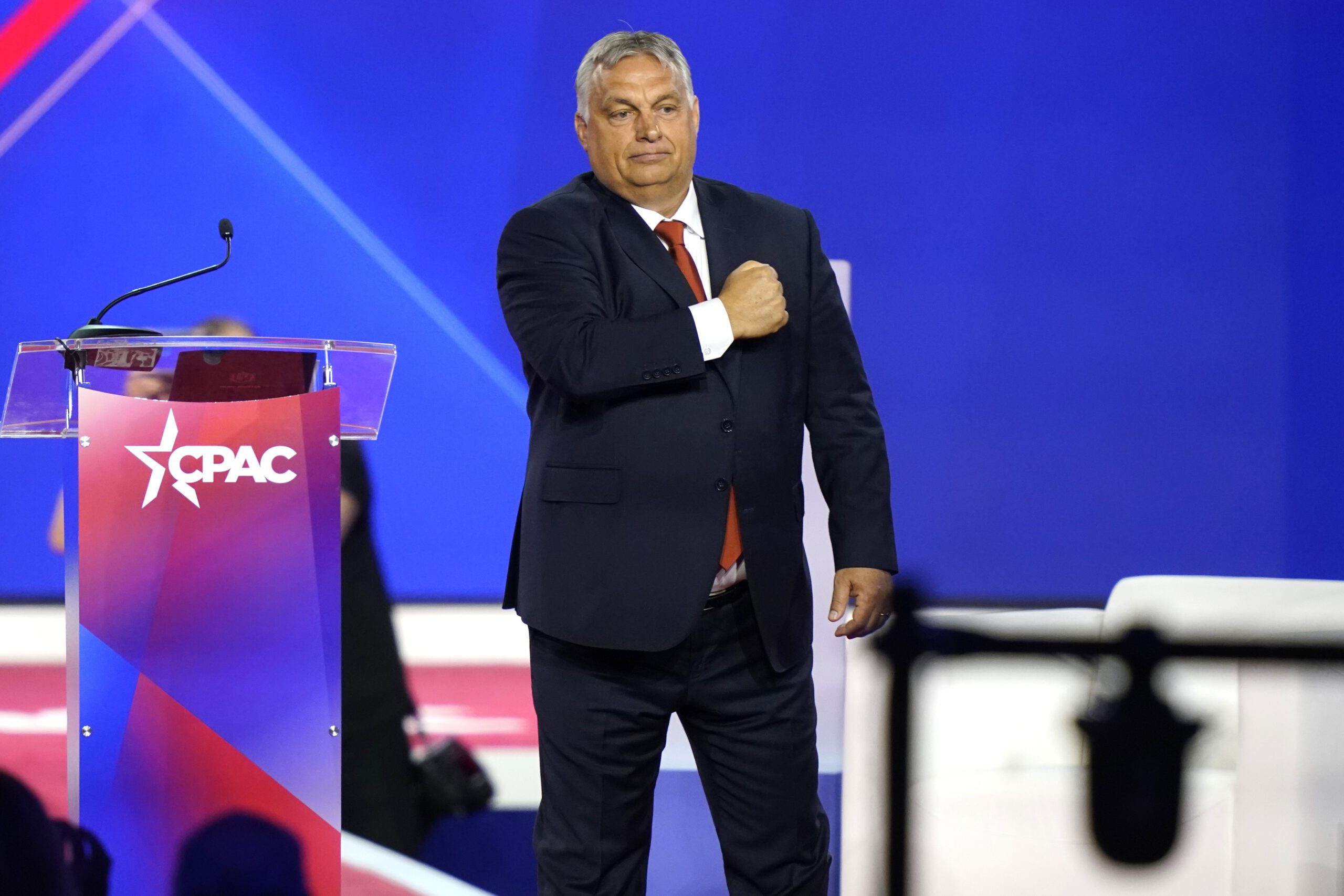
(RNS) — Like the journalist Lincoln Steffens, who, after visiting the Soviet Union in 1919, wrote, “I have seen the future, and it works,” America’s Christian nationalists saw the future working in Viktor Orbán’s Hungary.
Take Tucker Carlson, for example. Interviewing Orbán a year ago, he said, “I don’t mind sucking up: I think there’s a reason you’re the longest-serving leader in Europe. I think history, for all the criticism you’ve taken, will (vindicate you).”
And then on Sunday, Orbán was overwhelmingly rejected by Hungarian voters.
So what was the “illiberal Christian democracy” on the Danube of which their prime minister liked to speak during his 16 years in office?
It rested on a pillar of opposition to immigration, construed as maintaining Hungary for ethnic Hungarians — an ideal created historically as the result of, well, settler colonialism on the part of Magyar nomads from east of the Urals. The ideal was enshrined in 2011 via a rewriting of the country’s Fundamental Law (i.e. constitution) that declared, “We hold that the protection of our identity rooted in our historic constitution is a fundamental obligation of the State.”
As for the Christian dimension, the Law begins with the injunction “God bless the Hungarians” and proceeds with a National Avowal that includes: “We are proud that our king Saint Stephen built the Hungarian State on solid ground and made our country a part of Christian Europe one thousand years ago”; and, “We recognise the role of Christianity in preserving nationhood.” The document goes on to declare that the “protection of the constitutional identity and Christian culture of Hungary shall be an obligation of every organ of the State.”

To be sure, this has not served to make Hungary into a nation of churchgoers. Nor, for that matter, did Orbán’s perpetual defense of national sovereignty against the dictates of the European Union extend to neighboring Ukraine, the defense of which by the EU he continually resisted.
To advance his policies, the electoral system was rigged to enable Orbán’s Fidesz Party to win supermajorities in Parliament without even a majority of the popular vote. That made it possible to get a law passed to put the country’s public media outlets under the authority of an agency run by Fidesz, which proceeded to fill them up with Fidesz propagandists. Independent news outlets were suppressed and bought out to the point that by 2017, 90% of Hungarian media was controlled directly or indirectly by the government. Similar control was extended over the country’s education system.
Of particular appeal to conservative culture warriors in America were laws passed preventing gay couples from adopting and requiring government IDs to identify a person’s gender as the one assigned at birth. Meanwhile, think tanks established to promote Orbanist ideas made Hungary into a kind of Right Wing International. In a 2022 interview, Heritage Foundation President Kevin Roberts declared, “Modern Hungary is not just a model for conservative statecraft, but the model.”
Among those attracted to the Hungarian model was the writer Rod Dreher, whose devotion to the cause of re-Christianizing Europe led him to relocate to Budapest and mediate Orbánism to the likes of Carlson and JD Vance. In Dreher’s view, Orbán’s loss was the result not of his authoritarian cultural project but his tolerance of corruption amid poor national economic conditions. To say nothing of the Fidesz sex scandal that launched the political career of the newly elected Hungarian prime minister, Peter Magyar.
“It is undoubtedly true that populist, sovereignists, and national conservatives have lost their most visible champion,” Dreher wrote a day after the election. “But again, this result does not discredit the cause.”
While that, of course, remains to be seen, I have my doubts. Not only can causes be discredited by the shortcomings of their protagonists, but those shortcomings may be intimately related to the causes themselves. One need look no further than Donald Trump and his Christian nationalist devotees for evidence of that.
Pope Leo arrives in Africa with message of peace, unity amid global tensions
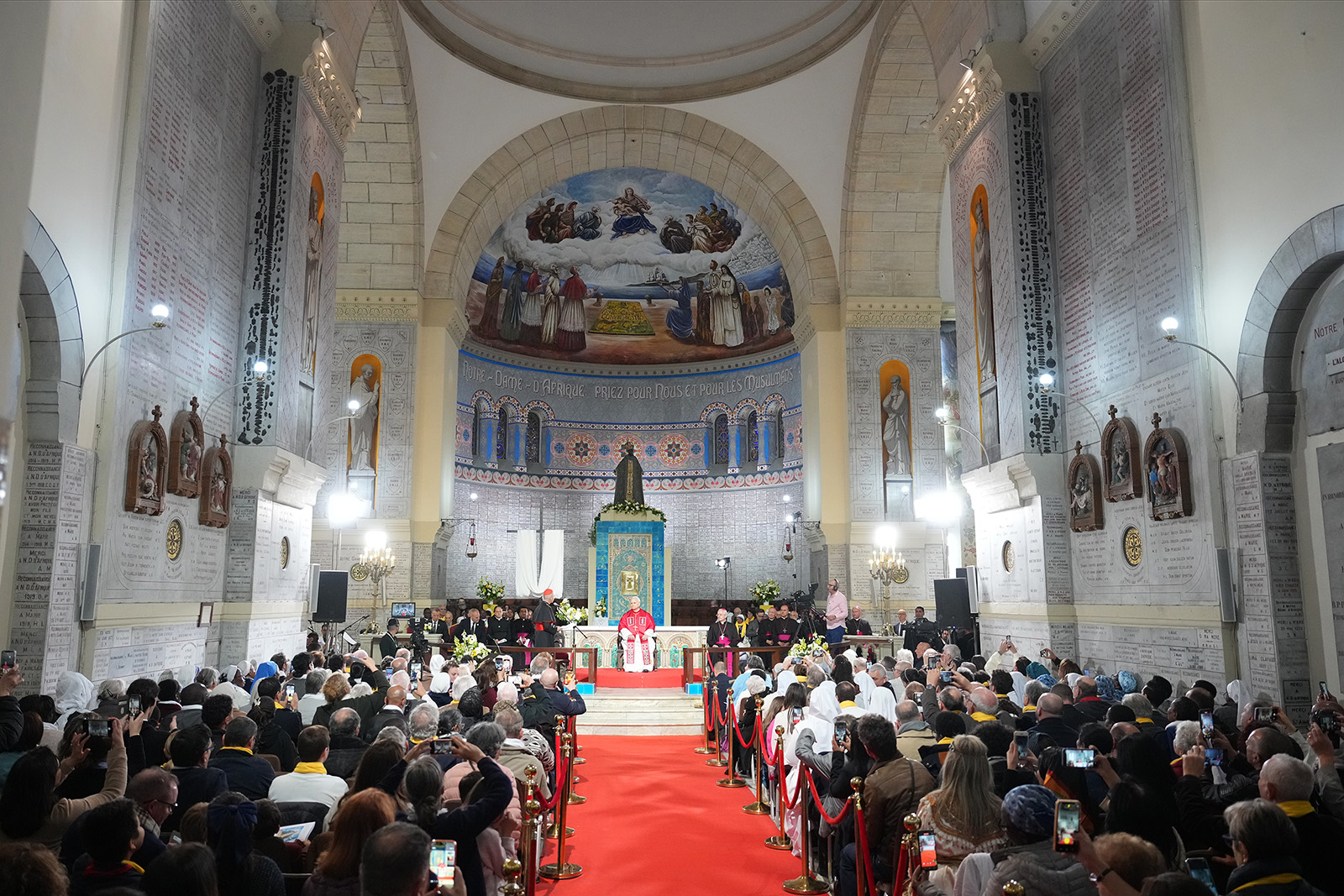
VATICAN CITY (RNS) — Pope Leo XIV’s 10-day trip to Africa comes at a moment of deep global fracture — from wars in the Middle East to rising geopolitical tensions — offering him a new stage to present his message of unity, interreligious dialogue and economic justice far beyond the continent.
Leo’s papal visit, the longest he has taken since his election almost a year ago, began in the context of rapid-fire criticism from President Donald Trump. In a post on Truth Social on Monday (April 13), Trump wrote that the pope is “WEAK on Crime, and terrible for Foreign Policy.”
Leo responded, saying he has “no fear of the Trump administration, or speaking out loudly the message of the Gospel,” while answering questions from reporters on Monday aboard the papal flight to the first leg of his trip in Algeria.
The trip traces a line from Africa’s colonial past to its present struggles, confronting both the legacy of slavery, in which the church itself was at times complicit, and the modern dynamics of economic exploitation that continue to shape the continent. Against a backdrop of rising global tensions, where political leaders increasingly invoke religion to justify war, scholars believe Leo will share a message that rejects an “us versus them” worldview and calls for unity through dialogue.
“I find this trip could not have come at a better time,” said the Rev. Emmanuel Katongole, professor of theology and peace studies at the University of Notre Dame in Indiana. “I feel that if there is a place where you can highlight the modern challenges of our time, Africa provides a very, very good platform” because the “people really refuse to separate the Gospel from this struggle for everyday realities of peace, of justice, and of reconciliation.”
In Algeria, Christians are a minority, representing less than 1% of the population. There are fewer than 20,000 Catholics in the country, mostly expatriates from sub-Saharan Africa, who navigate evangelizing in a place where attempting to convert Muslims is illegal.

Christians and Muslims in Algeria are still working through the legacy of the civil war that tore the country apart in the 1990s. Leo is expected to pay homage to 19 Catholics who were killed during that time and considered martyrs by the church, including seven Trappist monks. Pope Francis beatified them in 2018, paving the way for their recognition as saints.
The Catholic Church in the country operates in dialogue with the Algerian government, seeking paths for collaboration and peaceful coexistence. Cardinal Jean-Paul Vesco is the head of its small Catholic community, having moved there shortly after the civil war, and is the archbishop of its capital, Algiers. Pope Francis made him a cardinal in 2024, and since then he has been an advocate for peace and interreligious dialogue in the country.
Vesco, a passionate runner, competed in the Rome marathon on March 23, alongside his “hero” and friend, Khaled Boudaoui, an Algerian Muslim battling cancer. “It’s easy to talk about fraternity,” Vesco said, but “the road in Algeria is that of friendship,” and “that’s why this year I decided to run this marathon hand in hand with him.”
PER UNA SANTA PASQUA DI PACE!
Lo sport è “Vita in abbondanza”
Papa Leone XIVNella foto: il cardinale Jean-Paul Vesco e lo scrittore musulmano Khaled Boudaoui (al termine della Maratona di Roma, 22 marzo)#Pasqua #SantaPasqua pic.twitter.com/n4nYDQU1Yz
— Athletica Vaticana (@AthVaticana) April 4, 2026
The martyred monks maintained close ties with local Muslim leaders and chose to stay in the country despite growing violence. They saw their mission as being close to the people instead of converting Muslims to Christianity, and many Muslims in Algeria still honor them today.
“They were masters in dialogue,” said the Rev. Giulio Albanese, a member of the council advising the pope on foreign relations at the Vatican’s Secretariat of State. “In light of what is happening today on the international stage — particularly the crisis in the Middle East, which is increasingly taking on the dimensions of a global crisis — our martyrs invite us, above all, to adopt an attitude of dialogue toward every form of otherness. That is something today’s politicians — and I would even say today’s military leaders — often fail to do. The recourse to armed force speaks volumes about how much suffering humanity is being sacrificed on the altar of human selfishness,” he added, speaking in Rome.

On Monday, the pope visited the Great Mosque of Algiers, which is among the biggest in the world and capable of welcoming 12,000 faithful.
Leo’s visit to Algeria is also a chance for him to pay homage to Saint Augustine, the patron of the Augustinian religious order that he belongs to, who was bishop of Hippo, the modern-day city of Annaba. Leo will visit the ruins of the ancient city on the second day of his trip.
“I think he’s seeking inspiration from Augustine to remain firm, to remain clear-headed to the call of the Gospel for such a time as this,” Katongole said, adding that this is especially relevant because of the conflicts in the Middle East and Iran.
“There is an attempt within the geopolitical configurations of dominance to claim an us against them, to begin to see the whole of Islam, the other, as the enemy,” he said, adding that “Pope Leo has stood very, very firmly against that.”
The pope will also visit Cameroon, a country that is actively engaged in a conflict between the Francophone majority and an Anglophone minority, which has caused thousands of deaths and displaced over 700,000 people. The violence escalated in 2016, leading to a government crackdown and the Anglophone rebels declaring the independent state of Ambazonia in 2017. The factions agreed to a ceasefire during the three-day length of the papal visit.
On April 16, the pope will visit the city of Bamenda — an epicenter of the conflict — where he will take part in a peace meeting at St. Joseph’s Cathedral. It will be a chance for the pope to show that no conflict is too big or too small to attempt to find peace in a country where the church is seen as a credible mediator.
“I think he’s making a very political statement,” Katongole said, showing the people “that we are with you in your struggle for civil and political transition, the tentative efforts of peace, of democracy.”
The next stop of Leo’s visit will be Angola, a country still coping with the legacy of Portuguese colonialism while facing today’s challenges of foreign exploitation of its rich oil reserves. On April 19, Leo will pray the rosary in front of the Marian shrine of Mama Muxima, a site where slaves would be blessed and baptized en mass by the Catholic Church before being shipped out to be enslaved in the New World.
Leo is expected to address the church’s own responsibility and legacy in the African continent. The pope chose his name to honor the 19th century Pope Leo XIII, who authored the 1891 encyclical “Rerum Novarum” (“On New Things”) and laid the groundwork of Catholic social justice efforts. The trip will likely provide the opportunity for him to reflect on modern inequalities.
Lastly, in Equatorial Guinea, Leo will meet with President Teodoro Obiang Nguema Mbasogo, who has remained in power since seizing control in a 1979 coup against his uncle. International watchdog agencies have criticized the human rights violations and lack of free elections in the country.
While some at the Vatican have questioned Leo’s decision to visit the country, fearing that it might legitimize its government, Katongole argued that “he’s providing a critique on the kind of forms of leadership and governance in Africa that are self-serving.”
According to the Uganda-born priest, “these are very, very politically calculated moves” by Leo to offer an alternative to violence in achieving peace that is rooted in dialogue. “I think the leaders should actually be wary and afraid of having him because the whole spotlight is going to be on them,” he added.
In Africa, Leo will meet a church that is growing and youthful and, unlike the Global North, does not think along the polarizing terms of left, right, conservative or progressive, Katongole said. “Africa is a laboratory of peace,” Katongole said — a place, he added, where the pope’s message of unity is being tested against the realities of conflict, inequality and exploitation.
These US Jews wanted to show solidarity with Palestinians. Israel deported them.
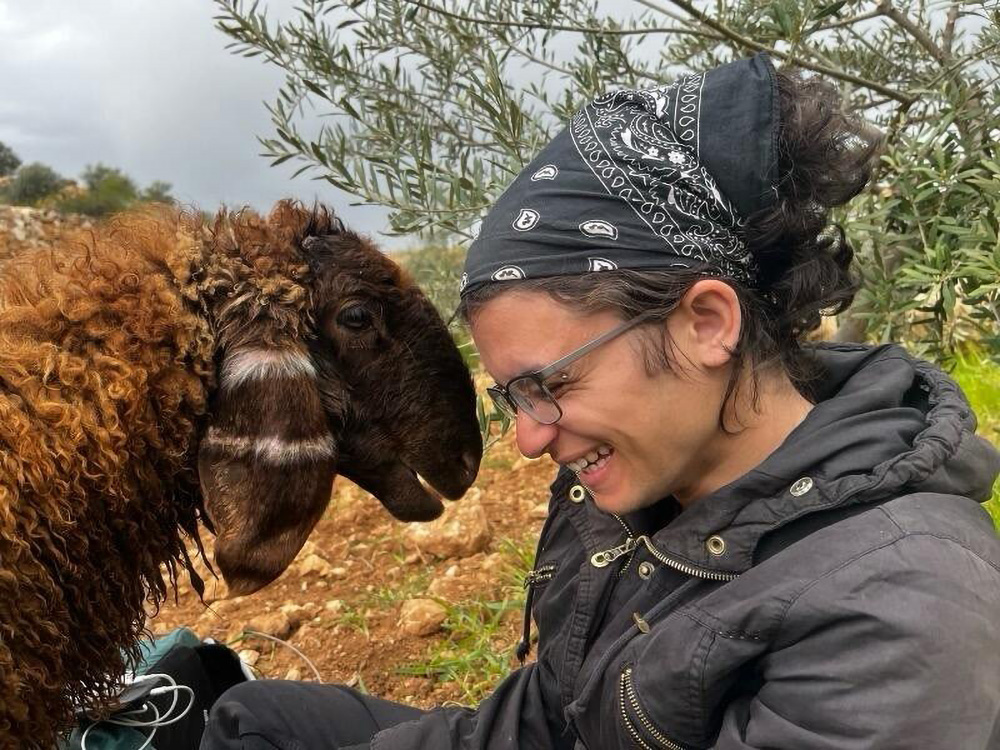
(RNS) — On the morning of March 24, Sophie Drukman-Feldstein, an American Jew and activist, was arrested and jailed for a simple gesture: Hissing at a flock of Jewish settlers’ sheep to get them to move off a Palestinian family’s land where they had been grazing.
After spending five nights in jail, Drukman-Feldstein was deported and driven across the border to Egypt.
The 28-year-old freelance editor from New York City had participated in a three-month solidarity program run by the U.S.-based Center for Jewish Nonviolence that concluded last month. The program, called Hineinu or “here we are,” brings together Jewish activists from around the world to live side by side with Palestinians as part of a practice called “protective presence.”
This year, for the first time since the program began five years ago, its 14-member cohort faced a series of new obstacles. One person was denied entry to Israel. Two people, including Drukman-Feldstein, were deported and six had their digital entry passes revoked.
“The State of Israel is just increasingly cracking down on any kind of dissenter and anyone trying to document what they’re doing, because they just don’t want witnesses to the ethnic cleansing of the West Bank,” said Drukman-Feldstein, who returned to New York City last week after a short stay in Egypt.
The Israeli government has implemented a practice of arresting and swiftly deporting international activists, often branding them as “anarchists” and “terrorists,” or threats to national security.

Since Jan. 1, 2025, at least 52 international activists have been deported, according to the Human Rights Defenders Fund, a nonprofit legal group that represented them in deportation hearings. Dozens of others have been notified by email that their Electronic Travel Authorizations were revoked, which means they will not be able to reenter Israel once they leave.
The exact number of deportations is not known. Israel’s Population and Immigration Authority did not respond to RNS’ request for comment by the date of publication.
Of those 52 deportations, at least a dozen were U.S. Jews who had volunteered with various nonprofits to accompany Palestinians during last year’s olive harvest or this year’s sheep grazing season.
Among those deported are a group of U.S. Jews who say they are motivated by Jewish values to engage in pro-Palestine activism. Many attended Jewish day schools and summer camps in the U.S. Nearly all have traveled to Israel before and have deep connections there. Some have parents who are rabbis or Jewish educators.
But as a group, they are also sharply critical of Israel’s occupation of the West Bank and Gaza and of what they call the system of apartheid that grants Jews legal supremacy over Palestinians.
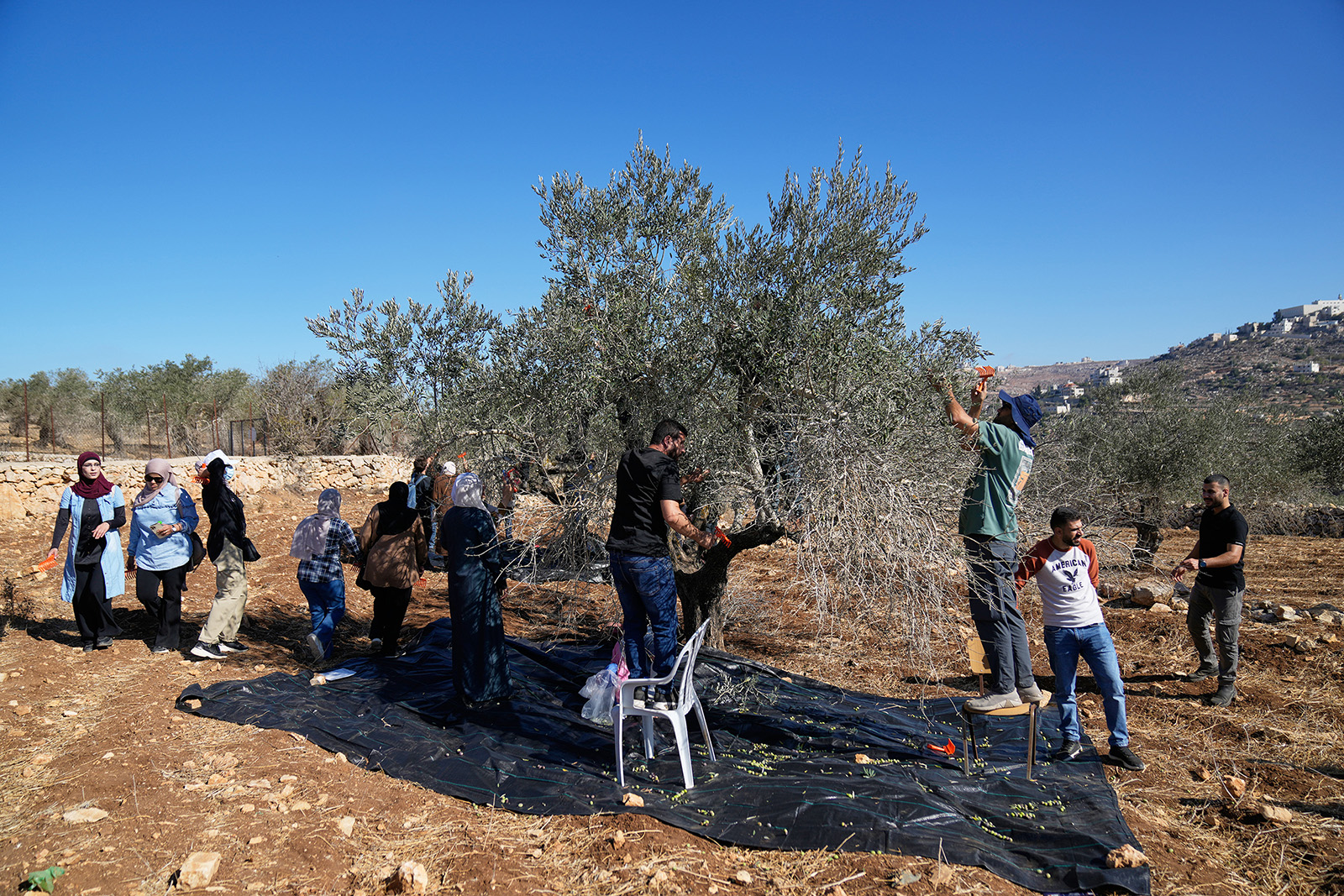
“One of the common factors that I’ve heard from (participants) and felt myself is a need to do something, to show up,” said Daniel Roth, executive director of the Center for Jewish Nonviolence.
RELATED: ‘I was not the right kind of Jew,’ says US Jewish teen deported from Israel
For a while it was thought that Israeli authorities, whether the military or the settlers, would treat Jews from outside Israel with greater deference than Palestinians and therefore they could serve as effective buffers.
“Our presence, which used to bring with it more protection — the idea that settlers or soldiers might hesitate more or be deterred from attacking or carrying out some kind of violent attack — has become less of a sure thing,” Roth said.
The deportation of a second Center for Jewish Nonviolence activist is a case in point. On March 13, the 25-year-old activist, who asked that her name not be used, witnessed a settler hit a 5-year-old Palestinian girl with his car. The activist screamed at the driver to stay put and called for an ambulance. When the ambulance and the police arrived on the scene, the driver demanded the activist be deported. She was.
In the wake of the Oct. 7, 2023, Hamas attack on Israel, settler violence against Palestinians living in the West Bank has spiked, with nearly 1,100 Palestinians killed in the West Bank, according to the United Nations’ humanitarian office. Last year set a record for the most extensive expansion of settlements and planning approvals by government authorities granting settlers permission to grab land belonging to Palestinians.

Drukman-Feldstein has written about sitting alongside Palestinians in “mourning tents,” temporary structures where people gather to be with a bereaved family of a person killed by Israeli settlers or soldiers. The cohort has witnessed dozens of arrests of Palestinians, who are typically forced to kneel and are blindfolded and zip tied as they are arrested.
The Center for Jewish Nonviolence cohort spent much of its three-month stay in Masafer Yatta, a collection of 19 hamlets in the South Hebron Hills that was the subject of the 2024 Oscar-winning documentary, “No Other Land.”
There the activists lived alongside Palestinians, sharing meals and accompanying them on their routines. Some of the hamlets have built guesthouses for the activists, others sleep in families’ houses.
Increasingly, activists say they are being watched by Israeli authorities, their passports scrutinized and photographed during every contact with the police or military.
“My passport and ID had been photographed by Israeli police and IDF soldiers and settlers numerous times and presumably filtered into some kind of (database) or series of databases,” said Sam Sherman, who was part of the three-month Center for Jewish Nonviolence cohort in the West Bank.

Sherman, an actor and playwright who lives in New York City, received an email midway through his stay, informing him that his ETA, or electronic travel authorization, had been revoked.
That revocation is not a deportation order, and it does not mean that the activists had to leave immediately. It does, however, mean Israel will not likely allow people to reenter the country, said Alon Sapir, a lawyer with the Human Rights Defenders Fund.
“For a future visit, they would have to go to the embassy in the U.S. and ask for permission to come to Israel, and it’s very probable that they will not get a visa if the ETA was revoked,” said Sapir.
Those arrested said the police quickly turned them over to immigration authorities for a deportation hearing. In the hearing, the activists said a file on their political views was used as a pretext for their deportations.
“They were asking whether I was affiliated with various organizations, and whether I had attended protests in the U.S., and stuff about my online presence — things that weren’t actually crimes or anything,” said Drukman-Feldstein.

The initial charges for the activists’ arrest are usually dropped.
“They’re being deported for being critical of Israel on social media platforms, or being a part of an organization that is critical of Israel policies in the West Bank,” said Sapir.
The deportation typically bans the activists from Israel for 10 years.
Many of the activists say they weren’t cowed by their expulsions and plan to continue working for justice. Sherman has written a play about his grandfather’s World War II experiences he titled “Kaddish,” using the word of a central hymn praising God. He hopes to stage it in London and Prague.
“I feel it’s my responsibility to try to do this kind of work,” said Sherman, whose travel authorization was revoked. “It really requires me as a U.S. citizen to double-down on trying to advocate for arms embargoes and for boycott and sanctions initiatives that I feel is a real, material way I can try and help my friends — even an ocean away.”
RELATED: Lebanon digs for survivors after Israeli attack kills over 300, as surprise word of talks emerges