Sidebar
Religions Around The World
World Religions News
A Pleasant Stroll, Interrupted by a Mob
 It’s one thing to write about the animosity Jews have been facing on streets around the world-- it’s another to come face to face with that animosity.
The post A Pleasant Stroll, Interrupted by a Mob appeared first on Jewish Journal.
As Stephen Colbert signs off, America loses a prophet

(RNS) — I’ve never been a regular viewer of “The Late Show” because I’m usually in bed by 9 o’clock. But I’ve been feeling a growing sense of loss that Stephen Colbert’s last episode airs Thursday (May 21), not for late night television, but for something more serious: We are losing a great American prophet.
I mean that in a technical sense. The prophet figure appears across religious traditions, and not as someone who primarily predicts the future. The prophet Amos wasn’t predicting anything when he said, “Let justice roll down like waters.” He was looking at what was actually happening — the exploitation of the poor, the corruption of the courts, the performative piety of the powerful — and refusing to look away.
Prophets are intermediaries who stand between us and a truth we cannot yet see. They name what is real when institutions that are supposed to protect people are instead protecting power. In this time of political, environmental and tech-driven crisis, we need all the prophets we can find.
Prophets aren’t usually rewarded for what they do. They speak out anyway because the truth had to be said and no one else was saying it. Colbert knows this all too well. When CBS canceled “The Late Show” last summer — just days after Colbert called Paramount’s $16 million settlement with President Donald Trump a “big fat bribe” on air — he looked straight into the camera and said, “They made one mistake: They left me alive. And now the gloves are off.” Colbert used his remaining months to speak, in his own words, “unvarnished truth to power.”
But now that time is up, and we are losing a prophet.
You might be thinking, isn’t this a bit much? Colbert’s a talk show host, not Jeremiah. But after 25 years studying religious ethics, I think comedians are doing some of the most serious moral work in America right now.

There are a couple of reasons why this works. We experience comedians as outside the institutions that have failed us. They aren’t politicians or even clergy. And their platforms mean they can reach millions of people who would never sit through a sermon or watch a Senate hearing on C-SPAN.
But humor also does something other forms of truth-telling can’t. It gets us to see what’s been right in front of our face. Our laughter is the moment of our moral clarity.
Religious thinkers have understood this for a long time. The religious ethicist Reinhold Niebuhr wrote in “Discerning the Signs of the Times” that “humor is a prelude to faith, and laughter is the beginning of prayer” because it can hold the irrational, complex messiness of life. Sociologist Peter Berger argued in “Redeeming Laughter” that comedy is a signal of transcendence insofar as it is a crack through which something larger can be seen. And the theologian Harvey Cox, in “The Feast of Fools,” suggested that the capacity for irreverence is an essential part of a serious moral life. The religious studies scholars all understood that the joke is not the opposite of the truth. Sometimes, it is the only way to get others to see it.
Colbert, who has spoken often about being Catholic, is not alone in this prophetic comedic work. Jon Stewart, whom one critic described as “a TV preacher, and shame is his drama,” called Immigration and Customs Enforcement a “well-funded paramilitary group” when politicians wouldn’t. Trevor Noah, a South African who see America’s contradictions with the clarity of an outsider, stood on the Grammy stage and said, “I’m going to enjoy tonight because this may be the last time I get to host anything in this country,” a joke highlighting our harsh immigration policy. And comedian Pete Holmes, who calls himself a “Christ-leaning spiritual seeker,” hosts the podcast, “You Made it Weird,” built around the question: What is the meaning of life?
When Colbert goes off air Thursday, we won’t just lose a late-night host. We’ll lose access to a public figure grounded in a serious moral tradition and willing to tell the truth at real cost to himself. There’s a word for that; we just stopped using it.
So, what does Colbert leave us with? When Dua Lipa asked him on air whether his faith and comedy ever overlap, he said comedy is “funny and sad and funny about being sad,” which is rooted for him in the Catholic conviction that death is not defeat. Fear, he said, is what drives people toward darkness. And so, “No matter what happens, you are never defeated. You must find some way to love and laugh with each other.”
(Liz Bucar is a religious ethicist and professor at Northeastern University and the author of “Beyond Wellness.” She writes the Substack Religion, Reimagined. The views expressed in this commentary do not necessarily reflect those of Religion News Service.)
Brussels bans AI ‘nudifier’ apps days before Pope Leo’s AI encyclical
Print Issue: Smart Fighting | May 22, 2026
 A new book by Melanie Phillips challenges the conventional wisdom and offers innovative ideas and practical tools to fight the global surge of antisemitism.
The post Print Issue: Smart Fighting | May 22, 2026 appeared first on Jewish Journal.
Luxury Travel in 2026 Is Not What You Think.
[…]
The post Luxury Travel in 2026 Is Not What You Think. appeared first on Jewish Journal.
America’s faith in war is a spiritual crisis — not just a political one
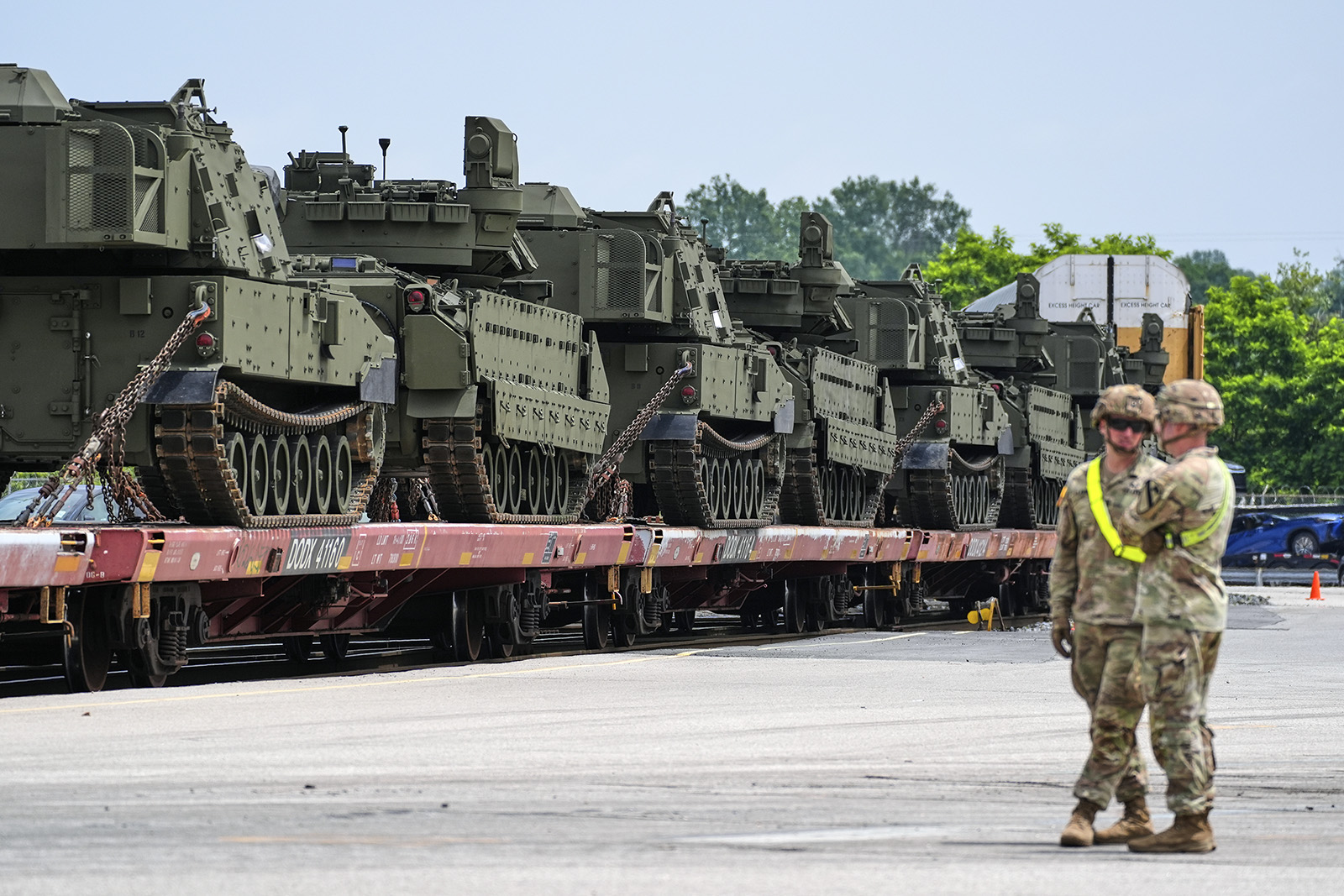
(RNS) — We need to talk about war.
The United States is back at war, this time in Iran, and as the war plays out, we will be having important and necessary conversations about the ongoing conflict. These conversations will happen in churches and schools, around dinner tables and at places of employment, and every one of them will be important. But the current and ongoing war in Iran is not being fought by otherwise irenic nations in a world generally marked by peace. The bombing of Iran — and the inevitable Iranian retaliations against targets in Israel and elsewhere in the Middle East — is taking place in the context of a global landscape marked by wars in places like Ukraine, Gaza, Venezuela, Somalia and Yemen. This means we have to look beyond Iran or any other individual conflict and talk about war itself. We need to ask if military violence is ever justifiable, if militarism is ever reasonable and if warfare ever brings healing and peace.
With clear-eyed honesty we need to reckon with the devastating sorrow, depravation and senseless destruction that military violence inflicts on people who, despite political circumstance, share with us a common humanity, folks who are — according to the teachings of Jesus and the universal values of common decency — our neighbors and our spiritual kin to be loved, not enemies to be killed.
Such conversations can be difficult, especially in the United States, where a deep admiration for the capacity to inflict violence infuses the culture. Militarism — a glorification of military might and a belief that military violence will save us — saturates life in the United States. American culture venerates those who serve in military uniforms. Military imagery is seen as an essential part of nearly every patriotic event. American voters reward obscene spending on the capacity to destroy human lives by electing politicians who are quick to foot the bill for sophisticated high-tech weapons systems, but who balk at allocating funds that might feed the poor, find homes for our unhoused neighbors or make healthcare available to everyone who needs it. In many of our churches, we sing hymns laced with crusading imagery and the theology of war. Few of our preachers use their pulpits to call for an end to war, often because they are afraid to do so.
This has to change. Any society so obsessed with military violence must reckon with that obsession. Given the limited benefits derived from military violence and the extreme destruction and grief military violence inflicts on the world, we need to examine the possibility that militaries aren’t necessary at all. We need to admit the fact that war seldom brings peace. We need to reconsider the idea that some wars are good. We need to acknowledge that military forces commit far more atrocities than they prevent. We need to count the full cost of war. We need to figure out how to untangle our souls from the clutches of militarism.

The grief, bloodshed, hatred, destruction and cruelty that are woven into the fabric of war are entirely incompatible with the spirit and teaching of Jesus, who invites us to love our enemies and pray for those who persecute us (Matthew 5:44), and who names peacemakers among the blessed children of God (Matthew 5:9) and who, in the fullness of time, invites us to beat swords into plowshares and to study war no more (Micah 4:3, Isaiah 2:2-5). In the Gospels, Jesus — echoing the words of Leviticus — asks us to love our neighbors as ourselves (Mark 12:31) and to treat strangers as if they were Christ himself (Matthew 25:31-46). We cannot practice such virtue with guns. No one can love a neighbor with a bomb. No one can make peace with military violence.
And war is just as illogical as it is immoral. If military violence were a useful way to end conflicts, prevent atrocities and make peace between enemies, its destructions and devastations might be excused as a painful way to achieve something better. But war doesn’t work that way. To believe the violence of war can make peace is illogical because it ignores the astonishing human capacity to hold a grudge and to seek revenge. It ignores the plain witness of history, which shows us that wars seldom — if ever — lead to peace. Rather, wars end in one of two ways: They either result in unimaginable and unbearable destruction, or they lead to more wars. Neither result can, in good faith, be called peace.
Though the sin of military violence still abides, we don’t have to be defined by it. By faith I believe transformation is possible. As humans, we can change for the better. In the Christian tradition, we believe humans were created in the image of God, and that divine spark can still burn within us; by grace, that spark can shine with tenacious brilliance.
We don’t have to consider as enemies people we’ve never met (in fact we don’t have to consider as enemies those we have met). We don’t have to hate. We don’t have to kill or maim or leave children orphaned or parents bereft, and we don’t have to overlook such bloodshed in the name of patriotism or support for the troops. We can spend energy once devoted to destruction on the work of helping people and communities flourish. We can be better. We can be righteous. This is the grace of Christian pacifism.
But in order to make this happen, we have to talk about war.
Adapted from “Grace Over Guns: Pursuing Peace in a Militarized World” by Ben Daniel (Herald Press, June 2026). All rights reserved. Used with permission.