A Bisl Torah — God’s Emergent Voice
 With Torah as our guide, God’s voice emerges as we turn towards each other.
The post A Bisl Torah — God’s Emergent Voice appeared first on Jewish Journal.
With Torah as our guide, God’s voice emerges as we turn towards each other.
The post A Bisl Torah — God’s Emergent Voice appeared first on Jewish Journal.
 […]
[…]
The post A Moment in Time: “Shavuot (and Chess) – Between Moves we Choose who we Become” appeared first on Jewish Journal.
 […]
[…]
The post Greek Figs, Jewish Limes appeared first on Jewish Journal.
NASHVILLE, Tenn. — The Academy for Spiritual Formation, a ministry of The Upper Room, is offering a matching grant opportunity designed to help churches, denominational bodies, and Christian organizations invest in the spiritual formation of leaders within their communities.
Through the Encouraging Spiritual Leaders matching grant program, participating institutions can receive matching funds from The Academy of up to $5,000 total to support individuals attending a Two-Year Academy for Spiritual Formation. The next Two-Year Academy, #44, begins October 26, 2026, at Camp McDowell Retreat Center in Nauvoo, Alabama.
The program is intended to make the transformational Two-Year Academy experience more accessible to clergy and lay leaders seeking deeper grounding for ministry, leadership, and faithful living.
“Many spiritual leaders are carrying tremendous responsibility while longing for deeper renewal and sustenance,” said Johnny Sears, Director of The Academy for Spiritual Formation. “This matching grant is one way we can partner with churches and institutions to invest in leaders who are seeking a more rooted, contemplative, and courageous way of living and serving.”
Since 1983, The Academy for Spiritual Formation has guided thousands of participants through an immersive rhythm of worship, silence, learning, covenant community, and spiritual practice. The Two-Year Academy gathers participants for eight five-day retreats over the course of two years, offering a curriculum centered on Christian spiritual formation and faithful engagement with the world.
An independent research study funded by Lilly Endowment affirmed The Academy’s long-term impact, noting participants experienced a deeper relationship with God, stronger practices of self- and soul-care, and renewed creativity and freedom in ministry.
Through the Encouraging Spiritual Leaders matching grant program, The Academy and The Upper Room will match institutional funding up to $1,000 per participant, with a maximum of $5,000 per institution. Participating organizations are encouraged to identify and directly invite individuals who would benefit most from the experience and who can carry that formation back into their communities.
Two-Year Academy #44 will take place entirely at Camp McDowell Retreat & Conference Center in Nauvoo, Alabama. Additional information about the program, session dates, and application details can be found at upperroom.org/academy/retreats/two-year-44
Organizations interested in participating in the Encouraging Spiritual Leaders Matching Grant Program can contact The Academy office at
More information about The Academy, including the dates for all eight sessions, is available on our website. Copies of our brochure are available online or upon request from our office. A media kit with downloadable graphics and a letter to share with denominational leaders is also available for those interested in helping spread the invitation.
###
About The Academy for Spiritual Formation
The Academy for Spiritual Formation is a ministry of The Upper Room dedicated to cultivating communities of prayer, learning, silence, and spiritual practice that nurture compassionate, Christ-centered leadership for the church and the world. Since 1983, The Academy has offered transformational experiences for clergy and laity seeking deeper spiritual grounding and faithful engagement with the world.
About The Upper Room
The Upper Room is a global ministry dedicated to supporting the spiritual formation of Christians seeking to know and experience God more fully. From its beginnings as a daily devotional guide, The Upper Room has grown to include publications, programs, prayer support, and other resources to help believers of all ages and denominations move to a deeper level of faith and service. The Upper Room is a part of Discipleship Ministries. Visit UpperRoom.org to learn more.
Contact:
Johnny Sears
The Academy for Spiritual Formation
Disclaimer: The views and opinions expressed in this article are those of the authors and do not necessarily reflect the official policy or position of RNS or Religion News Foundation.
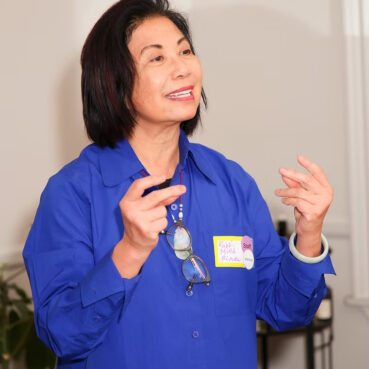
(RNS) — Vanessa Bloom recalls her rabbi gently reminding her that she still had time to walk away. But she felt compelled toward the Jewish faith.
“I knew my fate was already tied to the Jewish people,” she told RNS.
Bloom, a Jewish day school teacher in Los Angeles, was raised in a multifaith family, threw herself into Jewish life at college and co-led local gatherings of the Asian-Jewish Lunar Collective. She’d completed a comprehensive modern Orthodox conversion program study course.
Now the final decision was hers.
So, she stepped into the mikvah, a ritual bath, and chanted blessings that sealed her commitment to God, the Torah and its teachings.
On Thursday (May 21), like millions of Jews around the world, Bloom will celebrate the spring festival of Shavuot, which commemorates the pivotal moment in the Jewish story when God gave the Torah to the Israelites at Mount Sinai, offering a covenant of protection and intimacy, alongside the responsibility of commandments. It’s the culmination seven weeks after Passover that represents spiritual liberation through God’s laws and teachings, after the Israelites’ physical liberation from slavery in Egypt.
For many converts, or “Jews by choice” like Bloom, Shavuot resonates deeply.

“If you’re born Jewish, you’re Jewish no matter how observant you are,” Bloom said. Born in China, Bloom was adopted by an American Jewish mother and Catholic father. “But if you’re like me, as an adoptee, I actively chose it.”
Synagogues commonly read from the Book of Ruth, whose heroine is widely regarded as Judaism’s first convert and is admired for her courage and faith.
“It presents one form of conversion — loving a particular Jew and, through that, coming to love Judaism,” said Hannah D’Alessandro, a graduate student at Harvard Divinity School who converted at age 22 and affiliates with the Jewish Renewal movement. “That’s beautiful, but it’s also just a single one of many paths people take into Jewish life.”
Rabbi Mira Rivera of the Conservative movement said, “Each person who comes into Judaism has a journey with twists and turns,” referring to her own story of growing up in the Philippines, becoming Jewish and later uncovering her maternal grandmother’s hidden Sephardic roots. “Looking back, it all comes into focus.”
This year Rivera is leading a lecture at the Manhattan Jewish Community Center’s Tikkun Leil Shavuot, a traditional all-night Torah study session. Other customs vary widely across communities. Many Sephardi Jews read the Ketubah le-Shavuot, a symbolic marriage contract between God and the Jewish people, while Ashkenazi congregations recite the Akdamut, an Aramaic liturgical poem, before the public reading of the Ten Commandments.
In the U.S., Judaism is seeing unprecedented rates of conversion. Communities are increasingly diverse. Roughly 1 in 7 U.S. Jews are converts, and 1 in 5 U.S. Jews are people of color, multiracial or first- and second-generation immigrants.

Since the Oct. 7, 2023, attacks in Israel, the Israel-Hamas war and the subsequent rise in anti-Jewish incidents worldwide, some rabbis and conversion programs report continued rising interest in conversion despite fears about safety.
Akiva Nachman, a musician, producer and father of six, said Judaism felt like a calling long before he converted.
Born LaDerryl Hart in Detroit, Nachman toured professionally with artists including Missy Elliott and first visited Israel during Elliott’s tour in 2010. He recalls being drawn to the spiritual and historical depth of Jerusalem’s Old City.
Nachman and his family converted to Orthodox Judaism in Irvine, California, and launched the “House of Lev,” an online platform for content about faith, education and lifestyle.
As a musician and producer, Nachman made hip-hop, R&B and pop tracks for decades. Since his conversion, he said he’s continued making music with “the same feel I was raised on,” but with a “sense of holiness” in his content about Torah, Chassidic mysticism and Nachman’s love for Israel, where his family moved in 2024.
“As a parent now, raising Jewish children, Shavuot hits differently, because the faith that me and my wife searched for so long is now the inheritance of my children,” Nachman said.
The conversion process took the family roughly two and a half years. Nachman described it as emotionally difficult but deeply rewarding.
“One of the reasons Hashem gave us the Torah was so we could be a light to the world,” he said. “Shavuot is about receiving the Torah again and again, learning how to live it and use it to make the world better.”

Conversion has held a complicated place throughout Jewish history. In some ancient periods it was common. After the destruction of the Second Temple and the spread of Christianity across Europe and Islam across the Middle East and North Africa, conversion to Judaism often became dangerous and illegal. Public conversion to Judaism only became possible after late 18th-century Jewish emancipation in Europe and subsequent Jewish immigration to the United States.
After the Holocaust devastated the global Jewish population, the postwar decades were nonetheless described by some as a “golden age” of Jewish life in America. In 2026, Jewish conversions continue to increase amid what many see as an uncertain landscape.
Rabbi Phil Kaplan, of Stony Brook University’s Hebrew Congregation, said he relates to converts and the challenges they might face because he himself became religious later in life as a baal teshuva — someone raised secularly Jewish who later embraced observance.
Kaplan works with the New York-based conversion program Project Ruth – which is web-based and has welcomed students from across America and countries as far-flung as India, China, Germany and Turkey. Kaplan said though sometimes Jewish communities don’t know what to make of converts who want to join them, “it should be an affirmation that what we have is valuable and compelling, that people would give things up to take on this life.”
Jewish communities and converts also debate the language surrounding their experiences. Some embrace terms such as “convert” or “Jew by choice.” Others feel those labels fail to capture a deeper spiritual significance.
Bobby Apperson, a New York-based digital strategist originally from Corpus Christi, Texas, said he dislikes the word “conversion” because “it implies you were never Jewish,” Apperson said. “Legally, I wasn’t. But my soul always was.”
Bloom said she prefers the phrase “affirmation” of Jewishness because of her exposure to her adoptive mother’s Judaism growing up.
Rabbi Moshe Webber of Base Logan Square in Chicago, himself a convert, said he identifies most strongly with the Hebrew term “ger,” often understood as “stranger,” “proselyte” or “sojourner.”
Akhila Raju, a business student and tech professional born into a secular Hindu family in Dallas-Fort Worth, said Ruth’s story resonates with her for another reason.
“I think it’s really powerful that Ruth becomes the ancestor of King David,” she said. “Every Jew can relate to an ancestor who is a convert. I love the line ‘where your people go, I will go.’”

Raju, who has documented her Jewish life and conversion to Orthodox Judaism online after moving first to the United Kingdom and later to Israel, said Judaism’s resilience inspired her.
“The Jewish community is incredibly loving,” she said. “It’s a religion that survived thousands of years of persecution and oppression, and I think that says something about the beauty and strength of the Jewish people and the truth of the Torah.”
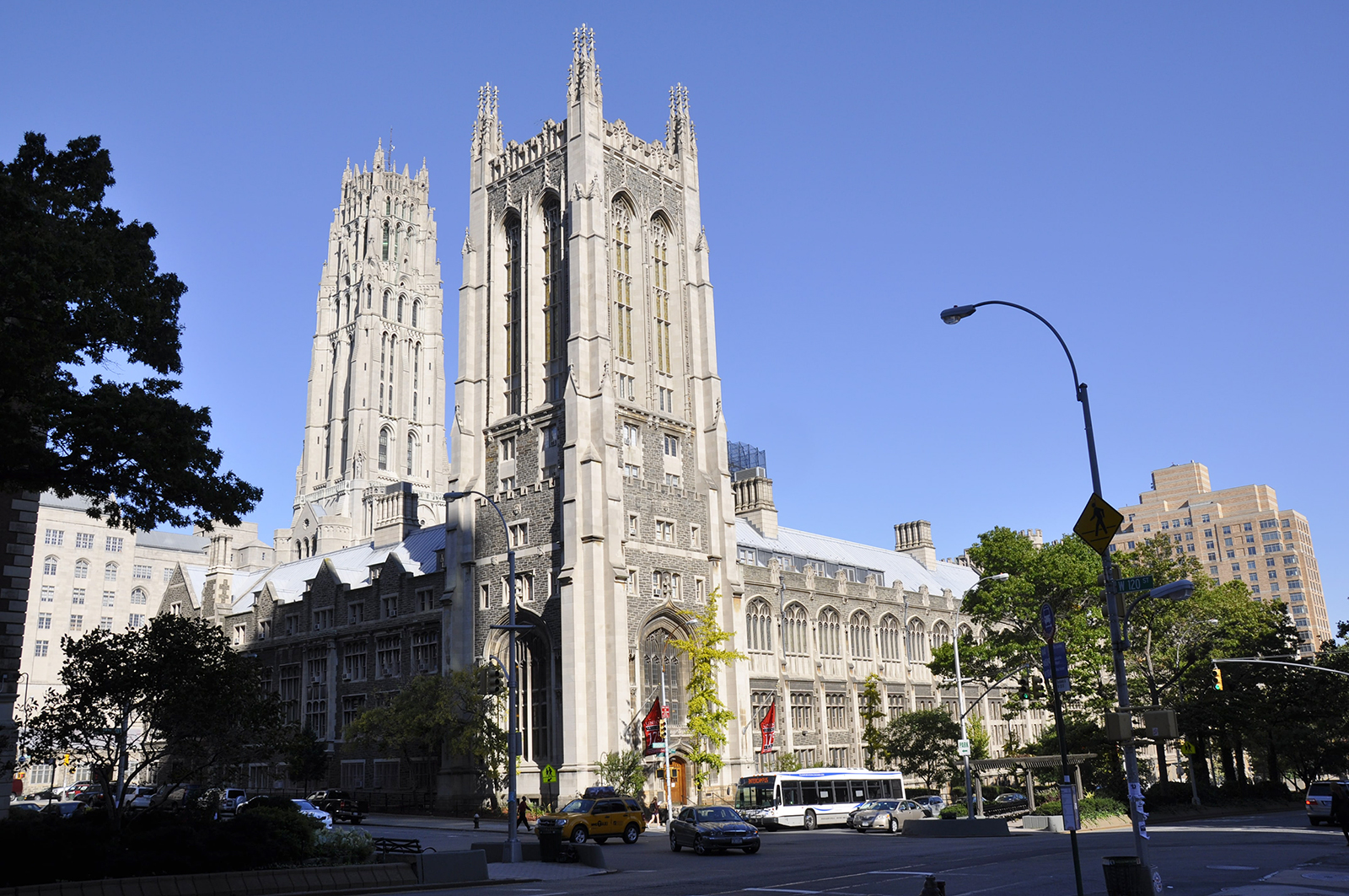
NEW YORK (RNS) — When the Rev. Serene Jones arrived at Union Theological Seminary in 2008, she focused on two jobs: Fix the house, then make a bigger table.
Eighteen years later, as Jones prepares to step down as president in July, the historically Christian and progressive seminary in Manhattan has renovated its aging campus, expanded its interreligious programming and enrolled its largest incoming class in more than 30 years.
“Now the house is fixed, the table is open, and everybody’s pouring in,” Jones said.
In fall 2025, Union enrolled 128 new students; last year it was 102. The growth comes at a precarious time for theological education. Seminaries across the country are facing declining enrollment, rising costs and fewer students pursuing ordained ministry. Many schools have closed, merged, sold campuses because of financial strain or maintenance costs, or moved more of their training online.
In New York, over the past decade, two once-prominent Episcopal seminaries, Episcopal Divinity School and General Theological Seminary, have been unable to maintain a traditional residential-campus model.
“Nearly all seminaries associated with the mainline Protestant world are in decline,” said Mark Tooley, president of the Institute on Religion and Democracy, a conservative Christian advocacy organization. “So, if Union is growing, that is somewhat unique and exceptional.”
Tooley said another factor is fewer and fewer Americans are identifying as mainline Protestant.
“Protestantism has been in decline for 60 years in terms of membership,” Tooley said. “It’s been displaced by evangelicalism and Roman Catholicism, and so much so, many who would have been made Protestant became religiously unaffiliated.”
Since taking charge as the first woman elected president of Union, Jones has pushed the 190-year-old seminary to adapt to a changing religious landscape. Her tenure has been defined by difficult, sometimes controversial decisions that helped stabilize the institution and cement its identity as a progressive seminary at a time when many mainline Protestant schools struggle to survive.
She equates being the president to being the conductor of a symphony orchestra.
“Someone who helps all the parts move together, sets the tempo, chooses the music and infuses it with the passion that it needs so that it can go where it needs to go and make beautiful music,” she said.
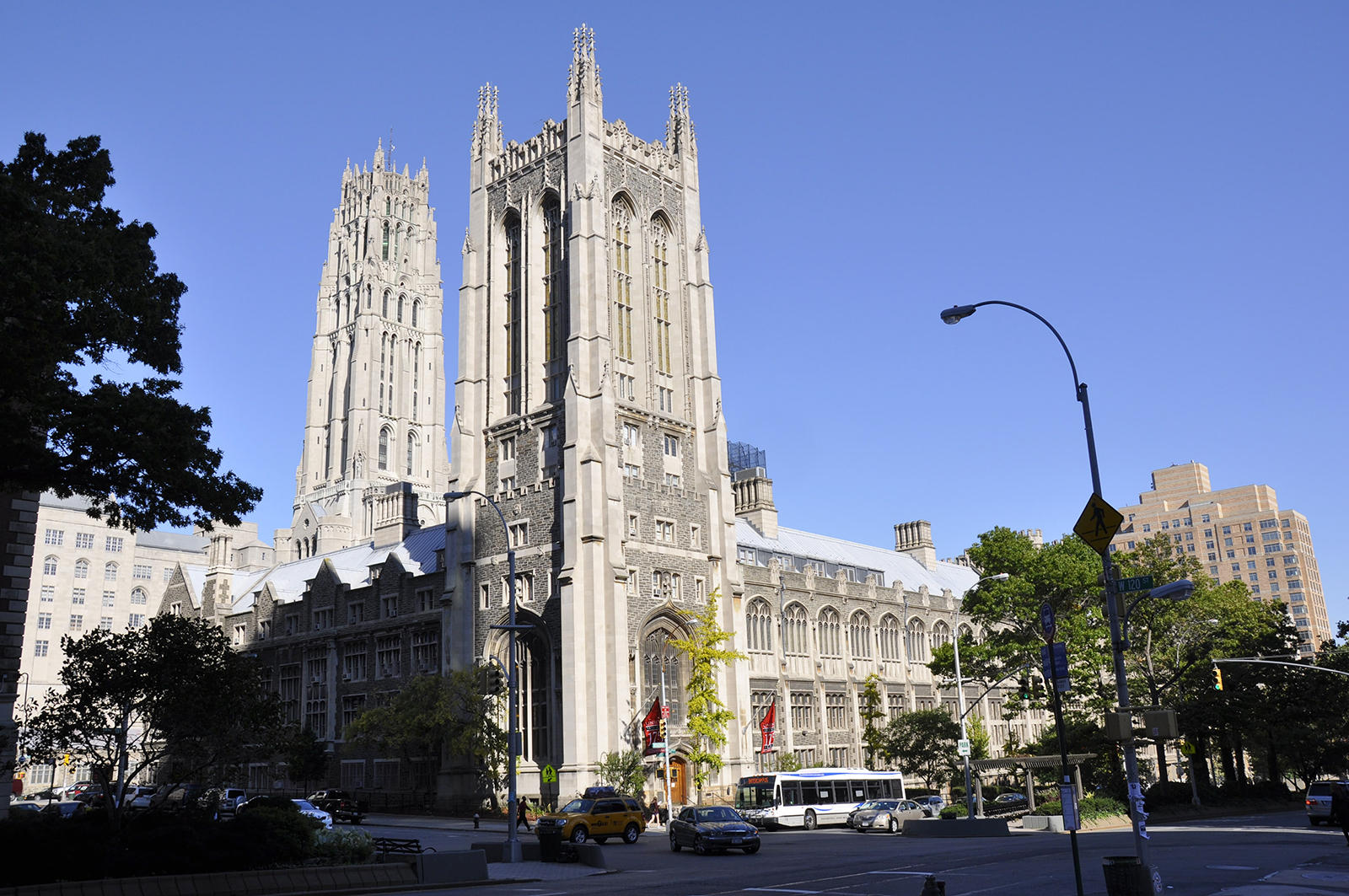
Founded in 1836 by Presbyterians, Union is one of the most influential Protestant seminaries in the United States. Its faculty and alumni have included Lutheran anti-Nazi advocate Dietrich Bonhoeffer, Methodist minister and Black liberation theologian James Cone, German American philosopher Paul Tillich and political activist and public intellectual Cornel West.
Because of that history, Union is still seen as a symbol of progressive Protestantism, even as the institutional influence of mainline Protestantism has waned in the United States.
“This is one thing I came in knowing I wanted to do — make Union what it is now, much more interreligious,” Jones said. “And that’s the future — the table has to get bigger.”
Since 2016, Union has expanded its interreligious offerings, formalizing programs in Islamic studies and Buddhism and hiring its first Sikh faculty member. Jones said the changes are meant to prepare students as Christian ministers to serve communities of different religious traditions and spiritual practices.
The changes have drawn criticism from some Christian observers who say historically Christian seminaries risk losing their theological core if they move too far beyond training Christian clergy. In 2019, Union made headlines for holding a chapel service where participants confessed the “harm that has been done” to plants.
“I think most traditional Christians would say, if your focus is not exclusively on the gospel and training clergy or persons who are preparing to enter into Christian ministry, then you’ve headed off into a different direction,” Tooley said. “And that’s theologically problematic.”
The Rev. Fred Davie, a senior adviser at Union who served as Jones’ executive vice president for 15 years, said he believes Jones’ vision to expand interreligious programming is essential as students learn to navigate religious and political fault lines.
“I think that has been visionary in itself and has allowed the school to be very relevant in this time where interreligious engagement is extremely important,” Davie said.
In February, Union announced it will launch a new religion and public life center in fall 2026 that was housed at Harvard Divinity School before its co-director the Rev. Diane L. Moore, a Union alumni, and Hussein Rashid, the former assistant dean for religion and public life at Harvard, resigned in January 2025.
The announcement of the center drew criticism from right-leaning outlets and Jewish campus groups because the resignations occurred after the program was named in a lawsuit by the Trump administration’s Justice Department accusing Harvard of deliberately allowing antisemitism on campus. The program had also been flagged and criticized by Harvard’s internal antisemitism task force. Program faculty and supporters rejected the criticism, according to the lawsuit, saying it was an effort to limit pro-Palestinian speech.
Jones’ most politicized decision as president came in April 2024, when student protests over the war in Gaza spread across Columbia University’s campus, just blocks from the seminary.
As the former president of Columbia, Minouche Shafik, who stepped down in 2024 after “personal threats of abuse,” called the New York Police Department to clear a student encampment and more than 100 student protesters were arrested, Jones publicly condemned the police response and said Union would support students penalized for participating.
“I reminded our students that the aggressive police action being taken on other campuses across the country will not be taken here. As their president, I have their back,” she wrote in a CNN op-ed.
Union later became the first institution of higher education in the United States to divest from companies it said were profiting from the war in Gaza.
“It was a unanimous vote,” Jones said of Union’s board of trustees. “It was provocative.”
 It’s one thing to write about the animosity Jews have been facing on streets around the world-- it’s another to come face to face with that animosity.
The post Two Smiling Zionists, Interrupted by a Mob appeared first on Jewish Journal.