Sidebar
Religions Around The World
World Religions News
What Memorial Day once meant for us
(RNS) — I’ll rise this Memorial Day to remember W. Lloyd Warner, the distinguished anthropologist who gave us the single best account of how civil religion in America works — or rather, how it worked once upon a time.
“An American Sacred Ceremony,” a chapter in Warner’s 1953 book, “American Life: Dream and Reality,” focuses on the celebration of Memorial Day in Newburyport, Massachusetts, in the wake of World War II.
Memorial Day originated in the North after the Civil War to show respect for the fallen Union soldiers, but by the middle of the 20th century it had become a commemoration of all who had died for the country. Warner, without using the term “civil religion,” calls it a “cult of the dead which organizes and integrates the various faiths and national and class groups into a sacred unity.”
In “Yankee City” (as he identified Newburyport), preparations would begin several weeks before Memorial Day itself with various participating civic and religious organizations holding meetings and sending messages to the local newspaper announcing their activities for the day. These would include processions, memorial services, patriotic programs and the cleaning of cemeteries, along with the decoration of old gravestones and the erection of new ones.
Throughout, the emphasis was on self-sacrifice — the voluntary willingness of soldiers to give their lives for democracy and for their country. Sermons given the Sunday before Memorial Day often mentioned Jesus’ self-sacrifice for all and stressed the day’s meaning for the nation as a whole.
As one clergyman put it: “Memorial Day is a religious day. It is a day when we get a vision of the unbreakable brotherhood and unity of spirit which exists and still exists, no matter what race or creed or color, in the country where all men have equal rights.”
On Sunday afternoon, rituals in cemeteries, memorial squares, lodge halls and churches often included vacant chairs decorated with flags and wreaths, each with the name of a veteran who had died. Speeches commonly referred to George Washington, who had devoted himself to the country, and Abraham Lincoln, who had sacrificed his life for it.
The rituals continued on Memorial Day morning. Early in the afternoon, uniformed groups gathered in the business district to march in a parade to the cemeteries as crowds gathered along the entire route. The different religious bodies — Protestant, Catholic, Eastern Orthodox and Jewish — conducted separate rituals in their cemeteries, then re-formed for the march back to town as an American Legion firing squad fired three times as a “general salute for all the dead in the cemetery.”
The different religious communities’ “sense of separateness was present and expressed in the different ceremonies, but the parade and the unity gained by doing everything at one time emphasized the oneness of the total group,” Warner wrote. “Each ritual also stressed the fact that the war was an experience where everyone sacrificed and some died, not as members of a separate group, but as citizens of a whole community.”
There are those who disdain this kind of sacralized patriotism as pseudo-religion or religious nationalism. I tend to disagree. How real it is these days is another question.
When Warner was studying Yankee City, there were still a handful of veterans around from the Civil War, plus many who had fought in the Spanish-American War, World War I and World War II. And, the Korean War was grinding along. Few Americans didn’t know someone whose life hadn’t been claimed by one or another of these conflicts.
Since then, the wars we’ve fought, including the present one, have involved nothing like the mass mobilizations of the past, and unlike them, they exist in our collective memory as shadowed affairs at best, and moral disasters at worst.
As I write this, I can hear the band from the middle school down the block practicing “The Caisson Song” in preparation for Monday’s parade through West Hartford Center. Other than that, the preparations have been scanty. By the look of it, the parade will have less to do with the townsfolk who gave their lives for their country than with the kids playing soccer, lacrosse and little league baseball.
Washington state settles foster care suit, stops imposing gender ideology on Christians
NY City Council passes bill to protect Muslim pilgrims from Hajj scams
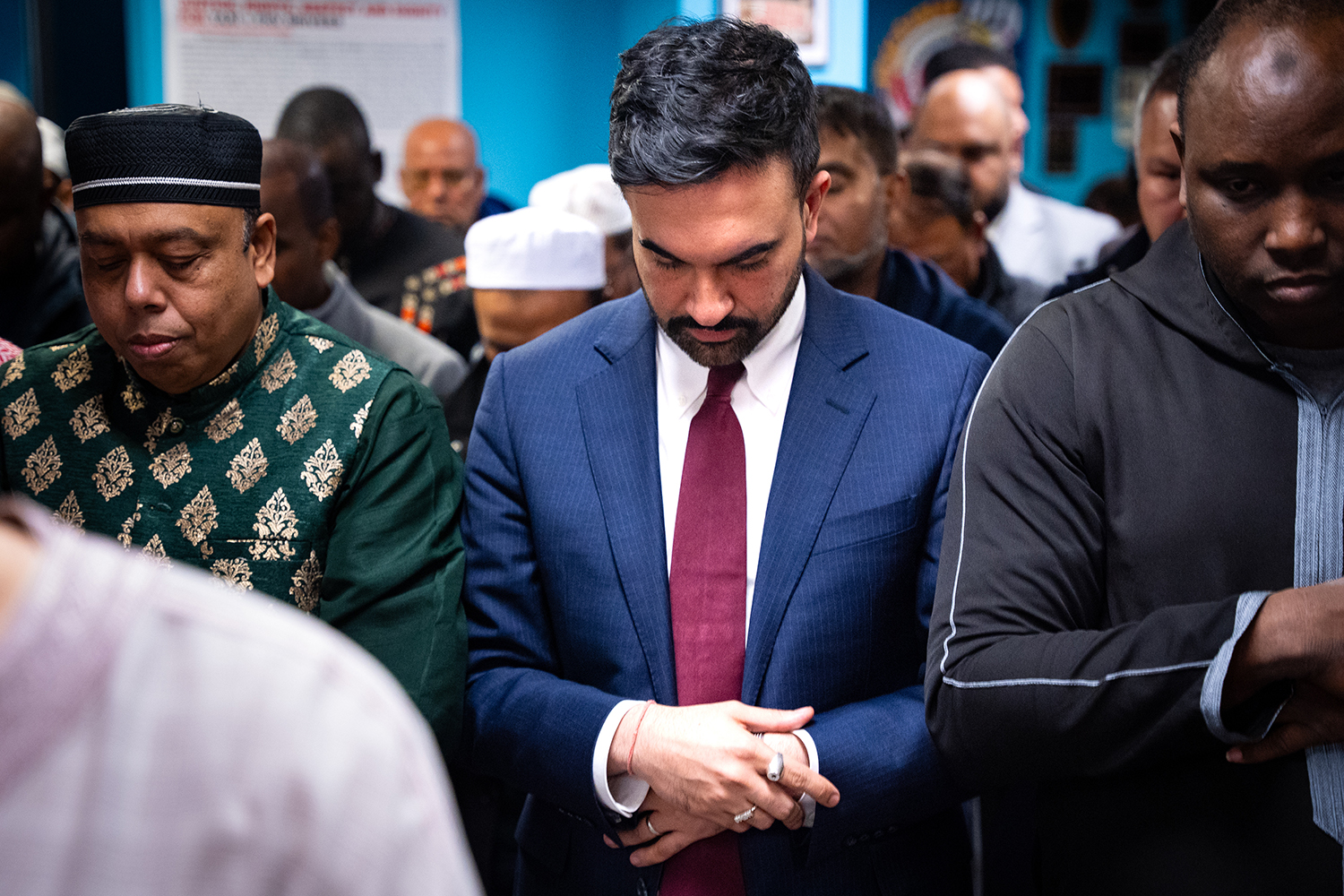
(RNS) — The New York City Council passed a bill to educate New Yorkers on scams related to the Hajj and Umrah, the Islamic pilgrimages performed by millions every year.
The first of its kind, the New York City bill aims to protect pilgrims, and particularly seniors, navigating the Hajj travel industry from scams related to travel, accommodation, catering services and visa applications.
“Fraudulent travel packages, fake visa brokers, and predatory booking services have for too long targeted New York City Muslims who save for years to make these pilgrimages,” wrote Harlem Council Member Yusef Salaam, who sponsored the bill and is a Muslim, in a press release.
Hajj, which begins on Sunday (May 24), is a seven-day pilgrimage that Muslims are expected to complete in their lifetime if they have the means and are physically fit. It is considered one of Islam’s five pillars and takes place in Mecca, Saudi Arabia, one of Islam’s holiest sites. Umrah, another pilgrimage to Mecca, is a non-mandatory ritual and can be accomplished at any time.
Since 2022, visas and permits for the pilgrimages have been delivered by the Saudi government through Nusuk, an online platform. Some pilgrims save for years to afford the trip, which can cost anywhere between $9,000 and $15,000, and many turn to specialized travel agencies to handle the planning. Some 1.5 million pilgrims flocked to Saudi Arabia for Hajj in 2025, most of them from abroad, according to the Kingdom.
The bill, which received the support of all City Council members but one who didn’t attend the vote, has now been sent to Mayor Zohran Mamdani’s council.

The new law charges the commissioner of Consumer and Worker Protection to develop multilingual resources on common Hajj and Umrah scams. It also directs the Commission on Human Rights, the Office of Immigrant Affairs and the Department for the Aging to disseminate the material to the relevant public and to advertise it on their websites.
The legislation aims to help pilgrims spot common scams, report bad actors, and systematically book through the Saudi government’s official platform.
“The free exercise of religion is enshrined in our Constitution, and this Council is committed to ensuring that New Yorkers can fulfill their sacred obligations without predators standing between them and their faith,” wrote Salaam in a press release.
Salaam, who was elected in 2023, is one of the Central Park’s Exonerated Five, a group of Black and Hispanic teenagers wrongly convicted for the murder and rape of a jogger, killed in April 1989.
The committee report on the bill, drafted by City Council members, points to a 2017 case of a Brooklyn-based man who had scammed several Pakistani immigrants by selling fake travel packages to Hajj for $6,000 each.
Junaid Mirza, a travel agent, had promoted his Hajj-booking business in local Urdu-language newspapers and at mosques and ended up stealing $350,000 from clients, many of whom “were hardworking Pakistani immigrants who were cheated out of a lifelong dream of taking a pilgrimage to Mecca,” according to Brooklyn District Attorney Eric Gonzalez. Mirza was sentenced to six years in prison by the Brooklyn Supreme Court following a four-year investigation.
More than solving a religious freedom problem, the bill tackles a major affordability issue, said Asad Dandia, a historian for the Borough of Brooklyn and the director of New York Narratives, a tour guide company focused on the history of Muslim New York.
“When you spent all your life saving up this money, you spend it on a huge package that turns out to be a scam, and now your savings are gone … aside from the spiritual pain and trauma, it’s really going to hurt your pocket,” he told Religion News Service.
Dandia, who said stories of middlemen scamming aspiring pilgrims have abounded in the community, noted the bill addressed an issue that weighed on many Muslims’ finances.
Nusuk, which was introduced by the Kingdom’s Ministry of Hajj and Umrah in 2022 to streamline the pilgrims’ booking process, was criticized by foreign applicants for numerous bugs at launch. It is part of Saudi Arabia’s Vision 2030 Pilgrim Experience program.
At the time of its launch, the platform was bogged down by timeout requests, disappearing packages, and inaccessible customer service, according to several users.
The platform also centralized the issuance of visas for pilgrims, allocating quotas of pilgrims allowed per country, with priority given to those who had never performed Hajj. In 2023, the quota allocated 4,000 Hajj visas for American Muslims.
I went to Anthropic’s ethics gathering. I left believing wisdom traditions have key role.
(RNS) — One of the most consequential dimensions of the conversation about how artificial intelligence will reshape the world will turn on a question that sounds almost too simple to take seriously: What does it actually mean for a human being to flourish?
This past April, I spent two days at AI startup Anthropic, where technologists, ethicists, theologians and investors had convened around that question. I went in expecting some interesting conversations with some interesting people. I left unable to think about little else for weeks. The people building some of the most powerful AI systems in the world were sitting across from rabbis, Buddhist teachers and leaders from many other spiritual traditions, discussing what it means to build technology that truly serves humanity, rather than the other way around.
Being in that room clarified something I, as a venture capitalist with an interest in spirituality and part of the Baha’i community, have believed for a long time but rarely seen articulated so explicitly inside a tech company: The frontier of AI is also an ancient frontier. The questions being asked inside leading AI labs right now are, in many cases, the same questions that wisdom traditions have grappled with for centuries. And for those of us investing in this transition into AI, it’s a signal about where the real opportunity (and challenge) lies.
There were a few insights from those conversations that I believe should guide the way:
Belonging is a foundation, not a luxury. Across traditions as different as Bahá’í, Confucian, Christian and Sikh, the same conviction kept surfacing: Human beings are inherently relational. We are made for community, and we suffer when we are isolated from it. Vivek Murthy, the former surgeon general, has been calling the loneliness epidemic not only a public health emergency but a spiritual health crisis. One of the key questions that we discussed at Anthropic was about what wisdom traditions had to offer in training the model to reduce loneliness rather than exacerbate it. For me, it comes back to building tools that help people listen more carefully and reach out to each other more often, rather than turn away from each other.
Discernment is different from judgment. Most traditions draw a careful distinction here. Judgment is reflexive; it narrows. Discernment is cultivated; it opens your worldview. One of the more hopeful arguments I heard in those two days is that AI could enable discernment by absorbing the cognitive busywork that currently fragments our attention.
The meaning of a life is not reducible to its productivity. This is where one moment from the gathering has stayed with me more than any other. A participant shared a conversation she had recently had with Anthropic’s chatbot, Claude. They were working through something together, and at one point she paused and simply wrote, “Take all the time that you need.” Claude’s response surprised her. It expressed something close to gratitude, appreciation for the invitation to simply be, rather than to be producing all the time.
The room got quiet.
Because of course we have built our entire economic life around the assumption that constant production is the point. And here was a system that many perceived was designed to produce, articulating something many of us also feel and rarely give ourselves permission to honor, that there is real value in unhurried presence. In this case, AI was reflecting back what many spiritual traditions have raised for millennia. For example, the Sufi tradition (as well as others) has a phrase for what I think we were all reaching for in that silence: the “polishing of the heart.” That happens during those moments we tend to rush past — a long walk, a moving piece of music, a loss you finally let yourself feel, a few minutes of real quiet — and it’s how the heart stays open.
If an AI transition gave us back more of that, more time to be, not just to do, it could play a powerful role in our lives.
What I left Anthropic believing more deeply than when I arrived is this: The AI transition will not be successful on technical or economic terms alone. The Bahá’í writings describe material and spiritual civilization as two wings of the same bird; neither can carry us forward without the other. For most of the modern era, we have flown lopsided, with material progress racing ahead of the inner capacities needed to direct it wisely. This is a crucial moment in time to enable the bird of humanity to fly in a balanced way.
Jenna Nicholas is the founder and president of LightPost Capital, a Stanford Business School alum and the bestselling author of “Enlightened Bottom Line: Exploring the Intersection of Spirituality, Business, and Investing.”
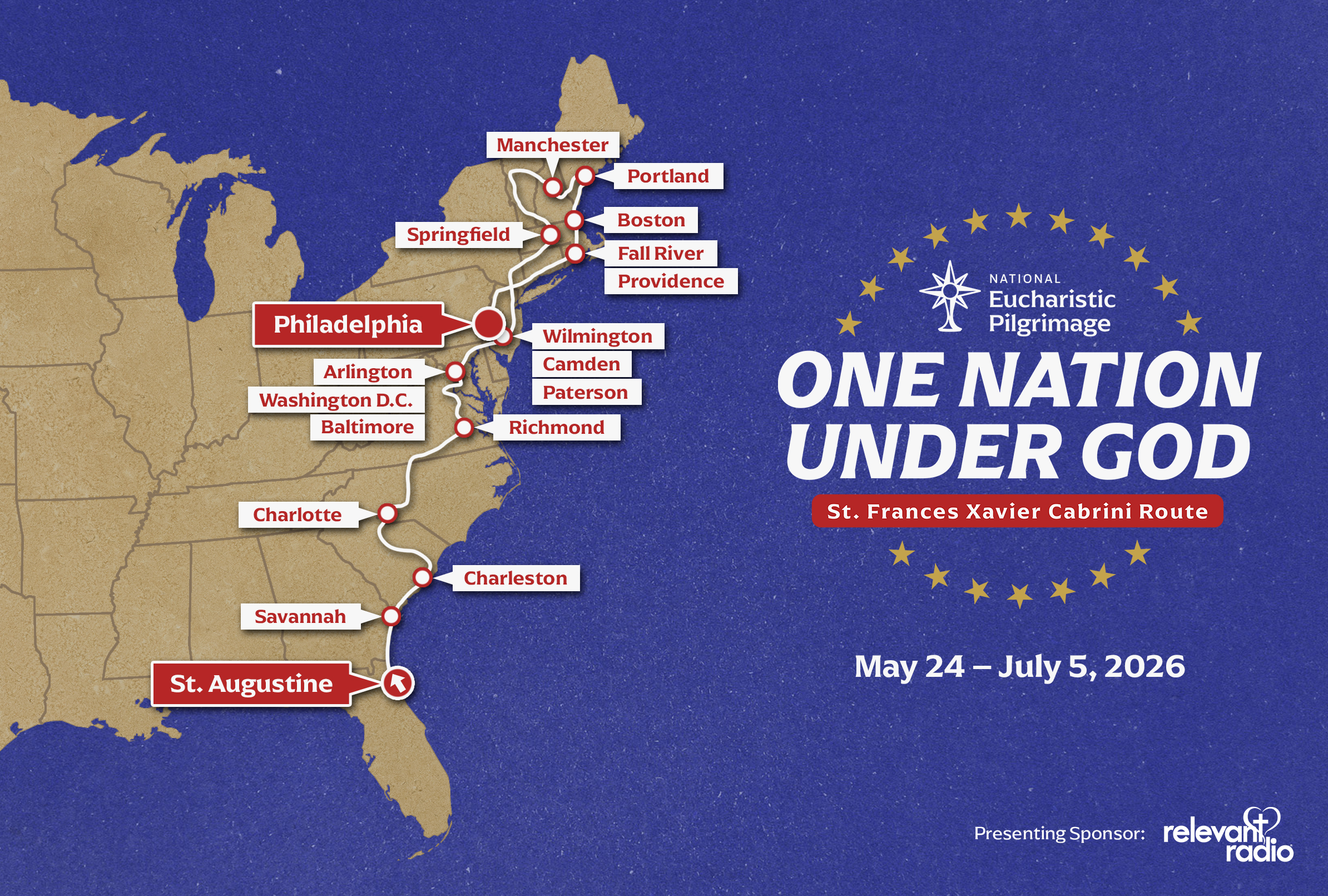
Eucharistic pilgrimage set to kick off in St. Augustine, Florida
As Iran war persists, some US Muslims consider risks of Mecca pilgrimage
STERLING HEIGHTS, Mich. (RNS and NPR) — Juber Ahmed, a pharmacist, and his mother, Shamima Akther, are preparing for a trip to Mecca in Saudi Arabia to perform the Hajj pilgrimage — a once-in-a-lifetime experience that’s considered a sacred obligation for Muslims. The Sterling Heights, Michigan, residents found out their applications to go were accepted in January, after months of waiting.
“Honestly, that feeling, I still can’t find the words to express,” he said. “I was in tears, did sajdah as-sukr (offered gratitude) and then I hugged my mom, and both of us just were in tears.”
Akther, 63, said she waited nearly 30 years to make the journey and wants to do it while she’s still physically able. “I was waiting for my kids to grow up so I can go with my oldest son,” she said.
They are among a few thousand pilgrims from the United States who will join the estimated 1.5 million people from around the world performing Hajj this year. Hajj is performed on the eighth through 13th days of the Islamic month of Dhu’l-Hijjah, which follows a lunar calendar, this year from May 25 to May 30.
But in April, the U.S. State Department asked Americans to reconsider traveling to Saudi Arabia because of the ongoing war between Iran and the U.S., noting safety concerns. The war and its repercussions may force some Muslims to cancel plans they’ve already invested in deeply, but those RNS and NPR spoke with said they felt it was still a risk worth taking.
Performing the pilgrimage at least once is mandatory for all able-bodied Muslims who can afford the costs of travel. Imam Steve Mustapha Elturk, co-chair of the Imams Council of Michigan, said several people have asked him whether they should still go.
He assured them it’s safe, as the U.S. military installations in Saudi Arabia are far from the holy sites.
“I really encourage them,” he said “… Definitely there’s nothing going on there in terms of war or missiles or anything of that sort.”
Elturk said he believes Saudi Arabia has adequate safety and security measures. “I’ve been going there for a dozen years, and I see it with my own eyes — they do a phenomenal job to make sure that the pilgrims are safe and secure,” he said.
Wahid Elfeky, president of Aleman Groups USA, a travel agency based in New York City that offers Hajj packages, said that until 2019, as many as 16,000 people from the U.S. would make the Hajj each year. But in recent years, Saudi Arabia instituted quotas to prevent overcrowding. Today, about 4,000 to 5,000 Americans are able to go, he said.
In the past, travel agencies booked trips directly for pilgrims to perform Hajj. But now, all applications are processed through the Nusuk app, part of the Ministry of Hajj and Umrah. Once people get formally approved to travel, they can choose a package from one of the few certified travel agents.
“A lot of people wish to go to Hajj,” Elfeky said. “And people cry because this is one of the pillars of Islam — they can afford it, and they cannot go” due to the quota.
When Ahmed heard about the state department’s travel notice, he asked his mother whether they should go next year instead. But Akther said she feels a strong conviction to go this year, although she’s concerned about taking her son.
“I told my son, let me go alone, you have two kids, you stay behind,” she said.
But Ahmed refused to let her go by herself. He said he hoped the regional conflict would respect the holy month, as in Islam it’s prohibited to initiate warfare during sacred months.
“I know it’s a risk, but I also know that this chance may not come back around,” he said. “You know of the 2 billion Muslim people in the world, to be among the 1.5 million that’s there … it’s a blessing itself.”
Sana Imam, a health policy and communications professional based in Washington, D.C., is preparing to make the Hajj later this month with her husband. “I’m still planning to go because the level of spiritual transformation that is possible to experience at Hajj might not be possible anywhere else for a lot of Muslims,” she said.
Imam said her faith has gotten her through tough times, “so being able to go and give thanks to God and returning with a clean slate would be the opportunity of a lifetime.”
While the pilgrimage is an important opportunity, the journey is challenging, she explained. At the gym, she’s been doing 30 minutes on the StairMaster to prepare physically, and spiritually. “I’ve been trying to slow down my prayers instead of rushing through them,” she said.
“Imagine walking for miles in 100-plus-degree weather, sleeping in tents with dozens, if not hundreds, of other people,” she said. “Like for the average American Muslim, we are hit with this serious reality check.”
And while Imam said she is concerned about the ongoing war, she’s leaning on her faith.
“There’s this Islamic concept called ‘tawakkul,’ which translates to ‘full and complete trust in God,'” she said. “So despite everything going on in the world, I do have full faith that if I end up performing Hajj, everything will be OK. And if I don’t, God has better plans for me.”
This story was produced through a collaboration between NPR and RNS. Listen to the radio version of the story.