Sidebar
Religions Around The World
World Religions News
Staying Present in a Life That Isn’t What You Expected

“To live without arriving is to learn how to stay.” ~attributed to the Buddha
For most of my life, I assumed that arriving was the point. Like many people, I believed adulthood would eventually deliver a clear role, a measure of security, and a sense of belonging I could point to and say, This is it. This is who I am. I trusted that if I worked honestly, followed what mattered, and stayed true to my values, that moment would come.
Now, much later, I’m facing the possibility that it never will.
I know I’m not alone in this, even …
Pope, an avid athlete, extols physical and spiritual benefits of sport in Olympic message
ROME (AP) — Pope Leo XIV, an avid tennis player and sports fan, marked the start of the Winter Games on Friday by extolling the positive values of sport and fair play while warning that the pursuit of profits and performance risked corrupting sport entirely.
In a message entitled “Life in Abundance” issued on the same day as the Milan Cortina opening ceremony, Leo traced the history of Christian philosophers and popes who had identified sports and leisure activity as beneficial for both physical and spiritual development.
And he repeated his call for world leaders to respect the ancient tradition of an Olympic truce.
But drawing on his own experience as an athlete, Leo delved into a nuanced exploration of the value of sports and the risk when the “dictatorship of performance” posed by doping, match-fixing and other forms of corruption win out over fair play.
“Such dishonesty not only corrupts sporting activities themselves, but also demoralizes the general public and undermines the positive contribution of sport to society as a whole,” he warned.
He called for sport to be accessible, to both poor people and women especially, and for fans to refrain from turning sport into a fanatical religion. Athletes, too, he said, must refrain from narcissism and becoming obsessed with their image and success.
“The cult of image and performance, amplified by media and digital platforms, risks fragmenting the person, separating body from mind and spirit,” he warned.
True sport, he said, calls for a “shared ethical accord” between competitors, where the rules of the game are accepted and the integrity of the contest is respected.
“Accepting the limits of one’s body, the limits of time and fatigue, and respecting the established rules means recognizing that success comes from discipline, perseverance and loyalty,” he said.
A sporty pope
Popes have a long history of engaging the sporting world to promote values of peace, solidarity, and friendship, with the Olympics offering them regular opportunities to recall the ancient tradition of an Olympic truce.
On Sunday, Leo called for an Olympic truce to accompany the Games, urging especially world leaders to take the opportunity of the Games to “make concrete gestures of detente and dialogue.”
Leo, 70, is famously sporty: He religiously plays tennis and swims at his country house where he escapes from Monday to Tuesday each week, and is a longtime fan of the Chicago White Sox baseball team.
Before becoming pope, then-Cardinal Robert Prevost would also work out at the Vatican-area Omega gym two to three times a week, with hourlong sessions focusing especially on posture and cardiovascular health, according to his personal trainer at the time. Prevost’s workouts, described as suitable for a man in his 50s, would last up to an hour and focus especially on the treadmill and exercise bike, trainer Valerio Masella told The Associated Press last year.
When Leo was elected, the Italian Open was underway and one of Leo’s first audiences was with former No. 1 tennis player Jannik Sinner of Italy, who gave him a racket.
Leo drew on his experience as a tennis player in his message Friday, noting the cultural and spiritual benefits of the so-called “flow experience,” of being challenged beyond one’s level, that both fans and players alike can experience in a prolonged tennis rally.
“The reason this is one of the most enjoyable parts of a match is that each player pushes the other to the limit of his or her skill level,” Leo wrote. “The experience is exhilarating, and the two players challenge each other to improve; this is as true for two ten-year-olds as it is for two professional champions.”
Perhaps also drawing on his personal experience, Leo urged athletes to always remember values of sportsmanship and graciousness in both victory and defeat. Playing fair, he said, brings people together and values the journey as well as the end result.
“It teaches us that we can strive for the highest level without denying our own fragility; that we can win without humiliating others; and that we can lose without being defeated as individuals,” he wrote.
A history of popes engaged in sport
Leo’s athleticism and attention to the spiritual and social values of sport is nothing new.
St. John Paul II, who was elected pope at the age of 58, was an avid skier and mountain trekker.
Pope Benedict XVI preferred solitary walks in the mountains. Pope Francis wasn’t athletic at all – he was known as “hard foot” as a child because of his poor soccer skills — but he was a lifelong fan and member of the Argentine soccer club San Lorenzo.
Francis also spoke out frequently a bout the positive values of teamwork and camaraderie in sport, especially for young people, and during his pontificate the Holy See began fielding track and cycling athletes in international competitions as team Atletica Vaticana.
Last year, on the occasion of the 2025 Holy Year, the Giro d’Italia passed through the Vatican.
Francis also warned of the downside of sport, especially at the professional level, often calling out doping, match-fixing and corruption that he said had tarnished people’s trust in fair play.
___
Associated Press religion coverage receives support through the AP’s collaboration with The Conversation US, with funding from Lilly Endowment Inc. The AP is solely responsible for this content.
Architect aims to rebuild a church and help restore a quake-hit Turkish city’s multicultural past
ANTAKYA, Turkey (AP) — Architect Buse Ceren Gul is on a mission: restore a 166-year-old Greek Orthodox church that was long a beacon of her hometown’s multicultural past. She believes restoring the church left mostly in ruins by the earthquakes in southern Turkey three years ago will help locals reconnect to their city.
The magnitude 7.8 earthquake on Feb. 6, 2023, and another hours later were among Turkey’s worst disasters. In Antakya, the quakes destroyed much of the historical town center.
After years of planning, campaigning and fundraising, Gul’s team recently uncovered St. Paul’s Church from the rubble that reached up to 5 meters (16 feet).
“The old city is central to the earliest memories of anyone who grew up here,” the 34-year-old Gul told The Associated Press, strolling around the church.
“‘Have we vanished?’ I asked myself when I first saw the site in the aftermath of the quakes,” she said.
The quakes destroyed or damaged hundreds of thousands of buildings in Turkey, leaving more than 53,000 people dead. Another 6,000 people were killed in neighboring Syria.
An estimated 10,000 Christians lived in Hatay province before the earthquake, a tiny part of the overall population but one of the largest Christian concentrations in Turkey outside Istanbul.
Antakya was one of the hardest-hit cities, with the destruction threatening to erase one of its oldest streets, Saray Avenue, a hub for Christians, Muslims and Jews of different sects. The street is home to the Greek Orthodox St. Paul’s Church, which belongs to an Arabic-speaking community.
The neighborhood, like others in Antakya, has become “unrecognizable to its residents,” said Gul, who belongs to the Alevi Muslim community. “But raising the old city on its feet might prove that Antakya’s roots can be preserved once again.”
Saving its rich history
Gul was studying and working on the St. Paul’s Church’s renovation since before the earthquakes. Of the 293 cultural heritage sites damaged in the province, the church is among the few that already had approved architectural drawings, which Gul was drafting.
“When I was working on those plans, one of my mentors told me to draw in a way that the church can get rebuilt if it gets demolished,” Gul said. “I never thought this grand structure could actually be obliterated, but I drafted a point-by-point plan.”
Known as Antioch in the Middle Ages, Antakya is a biblical city dating to the sixth century B.C.E. Over centuries, its Hellenistic, Roman and Ottoman layers — and its diverse ethnic, religious and linguistic communities — survived at least five earthquakes of magnitude 7.0 or higher since 115 C.E., disasters that killed hundreds of thousands of people and leveled much of the city.
St. Paul’s Church, a part of Greek Orthodox Patriarchate of Antioch, on the eastern bank of the Orontes River, was completely rebuilt in 1900 after being destroyed by an earthquake in 1872.
After saving the rebuilding plans from the ruins of her office right after the quakes, Gul secured the support of the World Monuments Fund, a nonprofit that works to preserve endangered cultural heritage.
With the fund’s technical and financial contributions, Gul’s team cleared tons of rubble and set aside the stones they recovered intact. The team continues project planning and technical assessments for the reconstruction stage, but the work on site has stalled until more funding arrives.
“We used to be a financially self-sufficient foundation that was able to help families in need,” Fadi Hurigil, president of the Greek Orthodox Church Foundation of Antakya, which oversees the reconstruction project, told AP. “We lost up to 95% of our income after the earthquakes.”
The rents from church-owned shops on Saray Avenue that catered to tourists provided the church with its main income. Their reopening will be key to help the congregation start generating income as post-earthquake monetary aid from the Greek Orthodox Patriarchate in Damascus and other donors has dwindled, Hurigil said.
Since the beginning of the year, the Ministry of Environment, Urbanization and Climate Change has contracted a company for the redevelopment of the shops.
Challenges of rebuilding after the earthquake
The main challenge for the Antioch Orthodox Christians is the return of people who once filled the St. Paul’s Church’s courtyard and the Saray Avenue district. With most houses in the historical city center still in ruins, the majority of the city’s Greek Orthodox community are displaced from their ancestral homes.
Hurigil said 370 to 400 families lived in central Antakya before the quakes, of whom only about 90 have returned, though others visit the city for commemorative ceremonies.
“The community’s biggest need to be able to return to Antakya is the reconstruction of their homes and commercial properties,” he said.
Many in the Christian Orthodox Community with damaged or destroyed properties live outside of Antakya in smaller districts of Hatay province or in surrounding cities, in the absence of a wider urban planning for restoration of Antakya’s historical center.
Evlin Hüseyinoğlu is one of them. She had a family home only a few minutes walk from Saray Avenue that was rebuilt just before the earthquakes.
It had only minor damages in the quake, but the family found it financially risky to restore and settle back in the house in the absence of a decisive urban plan. They are living in Arsuz, a three-hour drive from Antakya, in what used to be their summer house.
Residents and community leaders who lived in the city for generations fear that the extended displacement of different religious and ethnic groups from the city will upend the long-established intercultural harmony that characterized Antakya.
“We grew up in Saray Avenue, now there is no Saray Avenue,” says Dimitri Dogum, 59, a St. Paul’s Church official whose family lived in Antakya for the past 400 years. “So many people have left the city already and it could take another five years until Antakya recovers.”
Dogum, who is Christian, fears that his son and the children of his Sunni Muslim friends will not form the sort of friendships and interfaith dialogue he enjoyed when he spent long days of his boyhood playing on the street together.
“People are gone now,” said Dogum. “My fear is that we will lose the culture of living together.”
___
Associated Press religion coverage receives support through the AP’s collaboration with The Conversation US, with funding from Lilly Endowment Inc. The AP is solely responsible for this content.
The Bittersweet Love Story of The Bab and His Beloved Wife
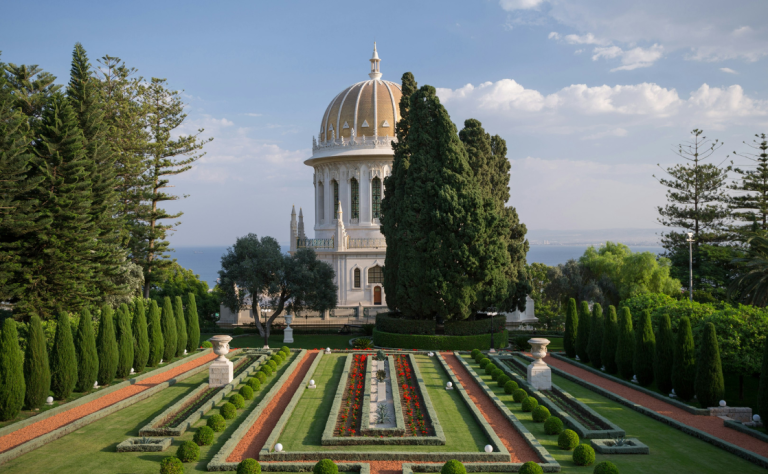 As an intense romantic, I love nothing more than reading a compelling love story – and when the story is true, that’s even better! One of my favorite stories chronicled...
The post The Bittersweet Love Story of The Bab and His Beloved Wife appeared first on BahaiTeachings.org.
His former diocese ‘most likely place’ on itinerary if Pope Leo XIV visits Peru
The Rev. William Barber II: Fighting Autocrats Starts at the Grassroots
“This Is Our Selma”—and a debate challenge to Speaker Mike Johnson.
Turn out 1,500 more voters per county in North Carolina. That’s the threshold. The Reverend William Barber II has analyzed the numbers and believes that’s where districts flip. Gerrymandering typically assumes 45% turnout. At 50%, the map changes.
Barber’s ‘s launching “This Is Our Selma” February 11-14 in Raleigh—a mobilization focused on organizing around voting rights, healthcare, and wage policy rather than resistance messaging.
Barber, who led the 2013 Moral Monday protests, contends the strategy requires state-based county-level organizing rather than federal action alone. In every battleground state, voters earning low wages make up 36-42% of the electorate.
Last cycle saw a notable shift: for the first time, voters earning under $50,000 favored Trump over Democrats by roughly 1%. The campaigns took different approaches. Trump visited rural Eastern North Carolina counties. Democrats focused on Charlotte and Greensboro. Barber says former candidate Pete Buttigieg confirmed that consultants discourage using the word “poor,” preferring “affordability.” The poverty rate remains unchanged—Barber cites data showing 800 daily deaths connected to poverty.
The competing visions raise questions about campaign strategy, vocabulary, and which voters get visited.
Separately: Speaker Mike Johnson recently stated he’s “happy to have this lengthy debate” about whether biblical commands to welcome strangers apply to governments or individuals. Barber accepted the debate challenge.
This transcript was generated using AI tools and may contain minor transcription errors.
Amanda Henderson
From RNS and the Institute for Religion, Politics and Culture, this is Complexified, a podcast for the religiously curious and politically frustrated. I’m Amanda Henderson. Today, our guest is Bishop William Barber, president of Repairers of the Breach, Professor in the Practice of Public Theology and Public Policy at Yale Divinity School, and architect of the Forward Together Moral Movement. Bishop Barber, welcome to Complexified.
Bishop William Barber
Thank you so much.
Amanda Henderson
Bishop Barber, right now in February 2025, with ICE raids happening, clergy confronting federal agents, sometimes getting shot with pepper rounds or getting arrested, lives are on the line. What’s actually stopping harm to those most vulnerable right now? What’s working?
Bishop William Barber
Well, they’re getting shot with bullets, not just pepper spray. People getting murdered at point blank range and being lynched. I think they’re lynchings, murders, because of what’s undergirding them. So to talk about what’s happening, what’s working, you first have to talk a little bit about what’s wrong. What’s happened today is that whether it’s the ICE raids, whether it’s the killing of persons who are trying to simply protect fellow humanity or stand up for fellow humanity, whether it’s passing bills that you know in advance will kill 51,000 people, whether it’s 800 people dying a day from poverty, what gives people the okay is religious nationalism. It is this attempt to flip the gospel ethics, declaring that empathy is bad, that sympathy is bad, that reaching out and lifting up your fellow human is a bad thing, and that we need, quote, a more masculine religion. We need a religion that basically says that whoever has power has the authority, that money is what matters most, that a certain party is operating the agenda of God.
So what’s working is when we stand up to that. What we are seeing in Minneapolis and other places is now clergy, just like it happened during slavery when the church split before the nation split, or when the Social Gospel movement stood up to the evils of industrialism, the church, people of faith standing up, putting their bodies on the line, declaring that this is immoral, this is unrighteous, this is contrary to our deepest faith. People are not just singing together, they’re saying we are one. Wherever we are seeing moral fusion come to light, bringing people together across all different religious spaces and places and deciding that we have a call, a theological call to, in fact, be eternally discontent. That’s what’s working. When that happens, the ICE agents start running, the politicians want to get away from it.
Amanda Henderson
Yeah, I hear you saying that part of what is working is these movements that are popping up that we’re seeing every day, new movements popping up of resistance and people putting their bodies on the line. I want to talk about this tension that plays out with our dichotomous relationship between strong central leadership. There are these two different paths, one that is relying on waiting for this pinnacle leader to tell us where to go and what to do, and the other is this dispersed leadership that is really growing in our time, where there’s so much anti-institutionalism and our technology is leading to further communication. How do you think about what a moment needs or doesn’t need in terms of a pillar leader or dispersed leadership?
Bishop William Barber
Well, first of all, I don’t use that language. I don’t think it’s dichotomous. I think it’s all needed. It’s servant leadership, it’s anointed, it’s calling. So you need both. I think we create these false dichotomies. We say things like, Dr. King, was he? No, he wasn’t. Dr. King never said that. There were seven people that spoke on the march. We just don’t talk about the other six. There were 600 actions going on in American cities around the country. We just tend to follow this kind of popularized way of remembering history. There were 12 churches involved, not just the one that Dr. King pastored. There was a synagogue in Selma that was just as engaged as others. So what we have to do is recognize God has always used both.
Amanda Henderson
Yeah. How do you think of that in yourself, in your own leadership? Is there a time when you pivoted or rethought how you were leading a movement and speaking into a movement?
Bishop William Barber
I never thought of myself as leading a movement. I thought of myself as servant. I don’t think about it in terms of leadership. I think that’s anti-Christian. He said the greatest among you, let it be your servant. So whatever leadership grows out of servanthood. I’m not speaking for Barber. When I stand up to articulate, I’m articulating the cries of the people, but I’m also inviting the people in, which is why in the moral movement, in our framework of moral fusion, we believe in movement you have to have what we call moral analysis, moral articulation, moral agenda building, and moral action that’s deeply rooted in our nonviolent traditions.
Now in order to have moral analysis, you need people that can do the analysis. You need think tanks, you need anecdotal lessons, you need facts, you need all of that. And then in order to articulate it, you have to find language that’s moral and not just tied up in the politics. So you will never hear me talk about the left and the right. I don’t know such thing as a left Christian or a right Christian and a conservative versus a liberal. I mean, sometimes I’m conservative, sometimes I’m liberal, depending on what you’re talking about. I want to conserve everything that God says about love and then liberally spread it to everybody.
So we have to avoid these traps. I was taught in a tradition of disciples that we invite everybody to the table, that we all have a form of shared ministry, maybe not the same, but ultimately he that is greatest among you, let him be a servant. Now, my disciple tradition also washed feet. So we were taught that service, kneeling down and washing feet, is from that kneeling that you get the authority to stand. Dr. King, when he first stood up, wasn’t so much standing up because he was a leader. He was standing up because he was a pastor, and pastoral ethics required him to care about what was happening to his people. To not care would have been to disqualify him as a pastor.
And so I think in terms of, we don’t need a dichotomy, we need all of it. I believe that you engage in servant leadership. Now also though, you have to model that. So for instance, if you look at anything I’ve tried to do, whenever there’s a stage, you won’t find me standing up there by myself. I think that’s problematic. You always should have the people there, impacted people. The people should have the mic, not politicians, moral leaders, impacted people. That’s a standard for us. You look at the March on Washington, I get bothered sometimes when we have these massive gatherings and people get on the stage and they go up there by themselves. That was not the model of yesteryear. Notice Dr. King is speaking. Look at how many people around him. All those people around, he didn’t want to just be up there as an individual by himself. That’s Trumpian. That’s not Jesus. Jesus was always, where two or three are gathered.
Amanda Henderson
You’ve resisted a comparison to King because you see yourself as an heir of Ella Baker. Is that right?
Bishop William Barber
No, I don’t know where you got that from. No, no, I’m not. No, I resist being compared with anybody. We learn from all, yeah, but what I resist is these false ways that we’ve popularized Dr. King. Because what I get bothered by is if a black man stands up and says two words as a preacher without stuttering, they automatically say, King, that’s King, that’s King. No. Ella could do the same thing. Ella was, and Ella wasn’t always just giving stuff away to the people. She was a leader. She knew how to shut stuff down. She knew how to stand up and make things happen. What we do is we learn from the best. I’m an heir to Frederick Douglass and his strength. My father was an organizer and a preacher who left the North when he could have stayed away from the South, came back home, went to Eastern North Carolina, brought white farmers and black farmers together, brought white mill workers and black mill workers together to fight for better wages. My mother was the Rosa Parks of her era.
Yeah, when you see me mobilizing a moral movement, I’m doing what, I’m following Jesus. Didn’t Jesus do that? Didn’t Jesus lay out a vision, rather than just resistance, in Pentecost? What we need right now is a political Pentecost where people are afraid of authoritarianism, they’re afraid of a system that will crucify you, the state will kill you simply for loving folk. But something happens, and the spirit comes, and people lose their fear and they stand up. So no, I’m honored, all right, but I don’t live in that.
Amanda Henderson
Yeah, yeah. You have not been shy about criticizing Democrats specifically for their failure to address poverty. In the last election, Trump won more people living in poverty than the Democrats did for the first time. Why can’t Democrats seem to take action to address poverty, and why don’t they pay attention to poor voters? What are they afraid of?
Bishop William Barber
Well, let me kind of clear it up. As a movement, we’ve been critical of everybody. When the Social Gospel movement in late 1800s, 1900, was addressing poverty and low wages, it was centerpiece in most American churches, the big pulpits, Riverside. And why? Because clergy were not backing away from the issue. In other words, you can’t criticize Rome if you become Rome. You can go to church all year long and never hear a sermon, not even a series on good news to the poor, recovery of sight to the blind, healing to the brokenhearted. So there is this lack of moral articulation, which then creates a vacuum of moral courage.
Now for the Democrats per se, this was the first year that people making $50,000 a year and below in a family of four voted, I think, 1% higher for Trump. What did Trump do the Democrats didn’t do? He went, they talked among the poor. He lied to them, but he went there. He went to the communities that oftentimes the consultants tell them not to go to. For instance, Trump came to Eastern North Carolina. He went out east, he went up west, he went to these small counties where the Democrats do the I-40 corridor, Charlotte, Greensboro. He talked about money. Now, he didn’t do anything about it. He’s against raising the minimum wage, but he at least said something about it.
But the Democrats, Pete Buttigieg told us one time that the consultants tell them, don’t even say the word poor. If you listen to it, listen to it now, we’re trying a new term, affordability. Yeah, I wanted to talk to you about that term. Why not use the terms in the Constitution, promote the general welfare? Why not use the terms in the Bible? It’s right there in the Constitution. You swear to do it. But what happens is poverty has been so marginalized and talked about as though it’s a black, brown issue, rather than an American issue. 43% of our nation, 140 million people, mostly white in terms of raw numbers, mostly black in terms of percentages. But it’s been pushed over here. It’s been, and Democrats have helped to allow that. Republicans certainly have done it. But somewhere we have lost the ability to honestly deal with our realities, which is why we really do need a reset of our moral values, why we do need this kind of love forward together effort that forces people to see all the reality of our nation.
Amanda Henderson
Let’s take a break and dive into that.
Amanda Henderson
You’re marching on the North Carolina State Legislature, February 11th to 14th, launching a movement you’re calling Loving Forward Together. It seems like this is out of the Moral Monday playbook you started in 2013, and that worked. Back in 2016, you unseated a governor. Do you have an equivalent win that you’re looking for with this event and this movement? Is there a chance of redistricting reform?
Bishop William Barber
Well, I think, let me just say this, the movement is called This Is Our Selma: It’s Time to Love Forward Together. We don’t need another resistance mobilization where we’re just constantly talking about Trump and MAGA and what they’re doing, because we continually reinforce what they’re saying. What is our vision? If you go to the march on Selma and Dr. King speaks at the end, he doesn’t lay out what they are doing. He lays out what we’re going to do. Give us the ballot, and we will so and so. Give us the ballot, we will do this. He says that the greatest fear of the oligarch is for the masses of Negroes and the masses of poor white people to join together with others and form a voting bloc that can fundamentally shift the economic architecture of the country and bring in the beloved community.
So our first win is to shift the moral narrative, to have people move from just talking about what they’re against to what they’re for. It doesn’t mean you don’t talk some about what you’re against, but you don’t stay there. But secondly, we’ve looked at the numbers, and it is very possible that gerrymandering can become dummy-mandering, because they base gerrymandering on 45% of the vote turning out. So if you turn out 50% of the vote, everything shifts. Thirdly, a very real outcome is we can change the Senate from North Carolina. A massive turnout of the vote can shift who gets to the United States Senate. If you pick up a couple of United States Senate seats, everything shifts now because you have a Senate, and if you have the House, you now have buffers. You can have a Congress that retakes its role as a check and balance on the executive, check and balance on what’s going on.
So what we know lastly is we’re hoping also to model what is the only way out of this. You will not undermine authoritarianism from DC down. You can’t just count on the courts to do it. History tells us that authoritarian movements that we see now have to come from state-nationalizing, state-based movements doing micro organizing at the county level, where you’ve looked at the numbers. Here’s the numbers real quick: 7,000 votes is the difference between the Congress we have now and the Congress we could have. When 90 million people didn’t vote, in North Carolina, 83,000 people didn’t vote, almost 400,000 black people, 1.1 million poor, low wage. 1,800 votes per county, you turn out 1,500 votes per county more than normally would vote, it shifts everything. The at-large positions and in certain districts, there’s not a state in this country where poor, low wage people don’t make up somewhere between 36 and 42% of the electorate. There’s not a state in this country where if you have 20% of poor, low wage people that haven’t voted, already registered but just vote infrequently, if they were to vote around an agenda, a moral agenda, a love agenda, could not shift.
Now, some people say it’s ambitious. Well, authoritarianism is ambitious. They didn’t just get this way overnight. They started from way back from the bottom, school boards, churches, laying out a different narrative, and we have to do the same now.
Amanda Henderson
How does that look? You have been focused on North Carolina, which is your home state. How does that look as you work together with states across the country? What does that look like for you?
Bishop William Barber
Well, it’s interesting. When we first announced this and people called me and said, will you come to my state and lead the same thing? I said, no. They said, why? I said, you got to do it. Now, I will come and train with my team, but that, now that’s the kind of leadership I resist. Real moral movements don’t try to elevate a celebrity. Real moral movements want to see all the people progress in power. So what I’ve said to those folks, and many of them are doing it, come walk with us for three days, come look at what we’re doing, and then go back and do it in your state, because it needs to happen in every battleground state.
In every battleground state, there should be a massive gathering in the state capitol where the clergy and impacted people and other moral activists come together. No politicians taking the stage. They lay out the people’s vision. They lay out a love vision. They lay out a vision that they will fight for regardless of who’s in office. It’s not what I’ll fight for because Trump’s in office, it’s what I will fight for, what I believe in regardless, and what I’m calling this government and nation to be about, irregardless. We’re trying to follow that kind of moral Holy Spirit vision of mobilization.
Amanda Henderson
Bishop Barber, I don’t know if you have seen the news this week, but recently, Speaker Mike Johnson made some theological assertions touching on biblical interpretations about immigration and borders and the role of government seen in scriptures. Here’s what he said. He said, “What’s also important in the Bible is that assimilation is expected and anticipated and proper. When people cite passages out of the Old Testament, they say, well, you’re supposed to take care of the sojourner and the neighbor, treat them as yourself, welcome them in. Yes, but that is an admonition to individuals, not to the civil authorities.” And then he went on to say, “Sovereign borders are biblical and good and right. They’re just, because it’s not because we hate people on the outside. It’s because we love the people on the inside.” And then he finished by saying, “And that is biblical and right and just. And I’m happy to have this lengthy debate with anybody at any time they want to.” Bishop Barber, what do you think?
Bishop William Barber
I want to have that debate. That would be amazing. We’d be proud to host that one. First of all, he reveals that he doesn’t know the Bible. He reveals that he certainly doesn’t know Jesus. There’s no Jesus in anything he just said. They don’t like Jesus. That’s why they never call his name. They don’t quote Jesus. They don’t like Jesus. Jesus undermines them. They would call Jesus a socialist, a communist. They would crucify Jesus. Let’s be up front. They don’t deal with Jesus.
To even say some of that stuff means, number one, he knows two things. He knows he’s talking maybe to some reporters that don’t know how to question it. He knows you can get away with it in a sound bite and it’s gonna get repeated, because that’s what they do. They know they got eight minutes. They talk all the eight minutes, and then you don’t have time to redirect the question. And three, it shows really how unredemptive their attitudes are, because the stuff they say means one or two things. It means that they are terribly misguided or intentionally subversive. Now, he is right, you can find some scriptures in the Bible that are terribly…
Amanda Henderson
Racist, xenophobic and racist.
Bishop William Barber
Yes, corrective. To do what he’s talking about doing, you literally have to take about 2,000 scriptures out of the Bible and tear them apart and throw them away, and the Bible, of course, would fall apart.
Amanda Henderson
Well, I look forward to that conversation, that theological debate with Speaker Johnson. I hope he takes you up on it. One last…
Bishop William Barber
A revival, they might get saved. There you go. What can I do to be saved? I would love to lead a revival on public theology, interpretation of the Bible, theology has to be debated because the damage of it is too horrific. But this lying in public and using those lies to formulate and format dangerous public policy must be challenged.
Amanda Henderson
Yeah, that’s dangerous. Is there anything else you want to share about this upcoming Loving Forward Together movement that launches this weekend?
Bishop William Barber
Go to repairersofthebreach.org. Everything you need is there. If you want to join us one day, come. Certainly on the 11th, join us on the 14th, whether you’re in North Carolina or not, wherever you are. On the flyer that you’ll get, it says if you love voting rights, expanded voting rights, if you love health care, if you love living wages, if you love a society where people are not scared about being shot and ICE agents coming in snatching them out and our communities are not militarized, I won’t go through all of it, but if you love, then join us for this mobilization. It’s wonderful, because it’s time for hate to have the microphone taken from it, or at least to have a counter to it. It’s time for love to speak. It’s time for justice to speak. We’re talking about a sturdy, strong, committed love.
This is not a Democratic gathering. It’s not a Republican gathering. It’s a gathering of people of faith. It’s a deep heart gathering. And it’s not just a moment, it’s a movement. And then learn from it and do it at home. I would love to see it break out in Georgia and Kentucky and Mississippi and Texas, wherever, all over the state. And then lastly, if you can’t come and you want to donate, go to the site and just bless us with a donation so we can keep on running this race.
Amanda Henderson
Wonderful. Thank you so much for your time, Bishop Barber. It has been a pleasure.
Bishop William Barber
Grateful. Thank you so much. Take care now. Have a good one.
Amanda Henderson
Complexified comes to you from the Institute for Religion, Politics, and Culture at Iliff School of Theology in partnership with Religion News Service.
Senior Producer is Jonathan Woodward
Associate Producer is Josh Perez
Consulting Producer is Paul O’Donnell
I’m Amanda Henderson.
The world needs us now! We need more thinking, more questions, more curiosity- more complexified!
Share this episode with three of your closest friends.
Email me right now at
that’s complexified @ I-L-I-F-F dot E-D-U
This week on Complexified – The Reverend William Barber
That’s the Complexified podcast from RNS.