(RNS) — At first, last week’s investigative report by Middle East Eye journalists, revealing a secret U.S.-Israel plan to end Jordanian custodianship of Jerusalem’s most contentious holy site, seemed far-fetched. The plan purports to replace Jordan’s administrative body with an Israeli-appointed one that would reframe the Muslim site, allowing public access to a “multifaith center.”
When questioned, U.S. Secretary of State Marco Rubio appeared surprised. “I’m not even aware of those reports. … I’ve never heard that,” he said in a congressional hearing about the matter. Rubio then stressed the “great” partnership between the U.S. and Jordan.
But those on the ground were not surprised by the report. The long-standing status quo, dating back to 19th-century Ottoman rule and reinforced by international resolutions and the 2014 U.S.-Israel-Jordan agreement, has been to preserve the site for Muslim worship and allow visitors of other faiths. But in practice, that agreement has been eroding for decades, increasingly so since the war in Gaza in late 2023.
The 14-hectare compound, which includes Al-Aqsa Mosque and the Dome of the Rock, holds deep significance for Islam; Muslims believe that the Prophet Muhammad ascended to heaven from there to receive divine revelations. Together, the two structures that make up Haram al-Sharif/Al-Aqsa Mosque are a UNESCO World Heritage site and are considered the third-holiest site in Islam.
Israeli police have restricted mosque entry from Palestinians during holidays, citing security concerns. And Israeli police have increasingly allowed Jews, who believe that the Temple Mount beneath Al-Aqsa is the location of the ancient First and Second Temples, to perform rituals and prayers inside the complex, despite the 2014 meeting in Amman where Israeli Prime Minister Benjamin Netanyahu and Jordan’s King Abdullah II, in the presence of U.S. Secretary of State John Kerry, affirmed that “Al-Aqsa is for Muslims to pray and for all others to visit.”

Since Ariel Sharon’s provocative breach of the mosque in 2000 and the removal of Jordan’s waqf guards from the Mughrabi Gate, Jewish extremists have entered the mosque without permission from Jordanian waqf authorities. Jewish settler visits, accompanied by armed Israeli forces, have surged by more than 18,000% since 2003, according to statistics released by the Jordanian authorities, from 289 to over 53,000 in 2024.
Researchers have warned that, under the rhetoric of religious and historical ties, Israel is steadily expanding its influence at the site. What began as a police revision permitting greater Jewish prayer has become a broader precedent.
Israeli media reports in early 2026 indicated that Netanyahu supported a decision by Israel’s national security minister, Itamar Ben-Gvir, allowing Jewish prayer at Al-Aqsa. Israeli media coverage also notes that the prime minister said the policy changes were coordinated with him and that he dismissed warnings that such moves breached decades‑old arrangements.
On May 14, Ben-Gvir personally led a Jewish extremist group into the Al-Aqsa compound and raised an Israeli flag, danced, sang and declared that “the Temple Mount is in our hands.” The incident underscored the high-stakes nature of policy shifts and the urgency of careful stewardship and inclusive dialogue to prevent escalation.
Concurrently, a draft bill advanced by a right-leaning Israeli ministerial committee seeks to regulate the call to prayer by requiring mosques to obtain prior authorization to use loudspeakers, with security forces empowered to intervene more readily. Penalties would include steep fines and confiscation of equipment, effectively creating a regime where permission is the default and prohibition the exception, potentially suspending a core element of Islamic worship at moments deemed to violate the permit. The proposed fines — around $17,300 for operating loudspeakers without a permit and about $3,500 for noncompliance — underscore the seriousness of the shift.
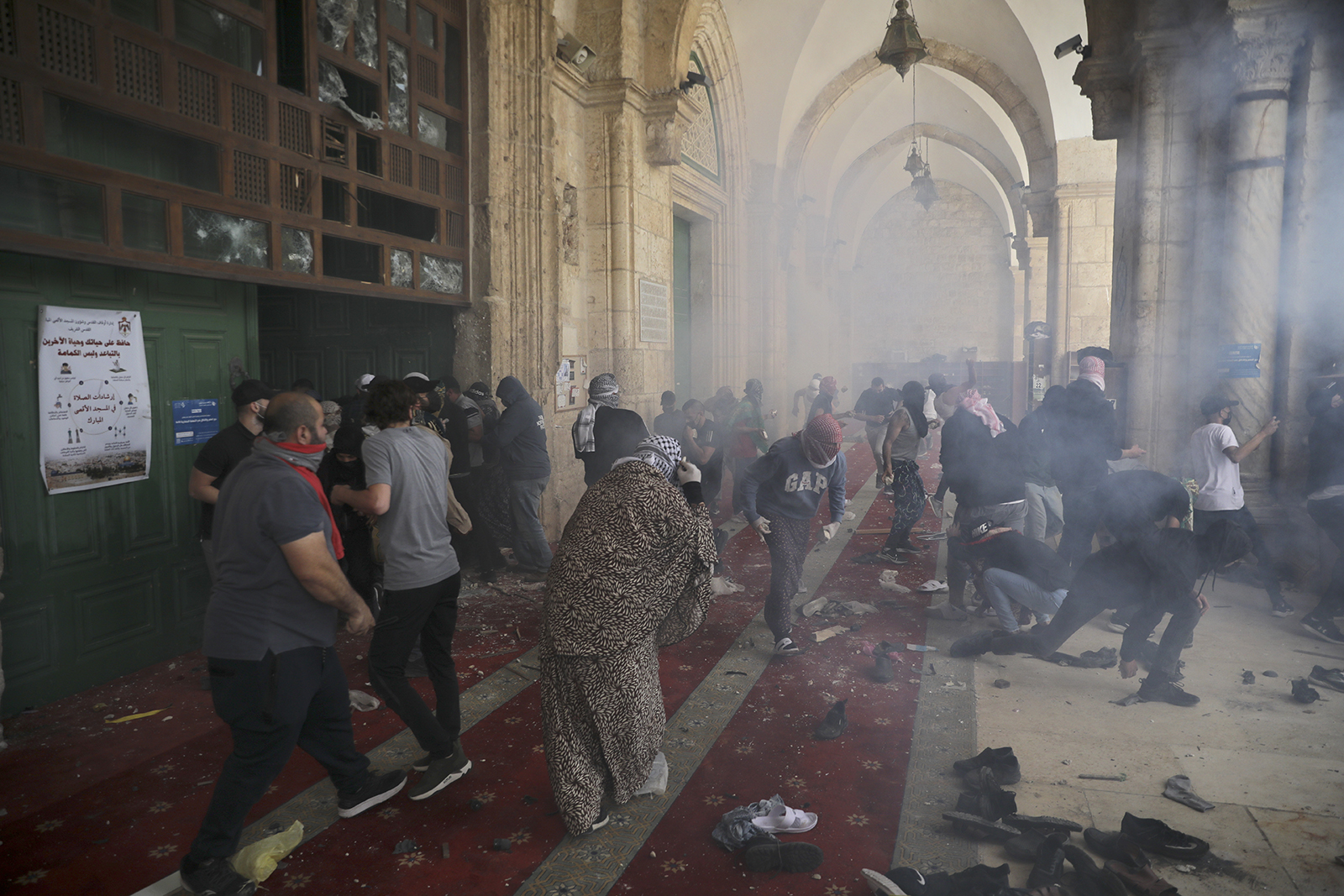
The Islamic-Christian Commission for Supporting Jerusalem and Holy Sites has expressed profound concern over escalating Israeli measures targeting Al-Aqsa Mosque.
“Obstructing restoration, maintenance, and preservation work, hindering repairs to facilities and gates, and delaying vegetation removal and hazard mitigation reflects a deliberate policy to paralyze the waqf administration and strip it of its authority,” the commission said in a June 2 statement.
The long-standing agreement scaffolding the site’s governance was carefully formed on the basis of religious legitimacy, historical memory and a web of legal instruments intended to prevent flare-ups in a city that can ignite regional and even global tensions.
Religious legitimacy for the Hashemite custodianship derives from the Hashemite lineage’s ties to the Prophet Muhammad and from the widely understood duty to guard Al-Aqsa as a sacred obligation. Consolidated in 1924, the custodianship has endured despite shifting sovereignty, linking Jordan’s national identity to the city and its governance. Legally, it is reflected in international and bilateral instruments recognizing shared stewardship of Jerusalem’s holy places, a framework invoked in diplomacy to avert crises.
The Hashemite custodianship of the holy sites is a responsibility upheld by King Abdullah II and is firmly recognized and documented in international treaties and agreements, including Article 9 of the Jordan-Israel Peace Treaty. Jordan has also stressed that Israel, as an occupying power, has no authority under international law or United Nations Security Council resolutions to alter the historic and legal status quo of Jerusalem.
Al-Aqsa Mosque remains a focal point where faith, history and geopolitics intersect, and changes to its custodianship, access rules or administration carry implications far beyond a single site, affecting regional stability and international diplomacy.
A sustained commitment to the 19th‑century status quo, the trilateral understandings of 2014 and ongoing diplomatic efforts is essential to prevent escalation and to preserve a framework that accommodates worship, history and peace for all who revere Jerusalem’s sacred places.
(Daoud Kuttab is the senior communications officer of the World Evangelical Alliance. The views expressed in this commentary do not necessarily reflect those of Religion News Service.)
Original Source:
https://religionnews.com/2026/06/04/the-status-quo-at-jerusalems-al-aqsa-mosque-is-deteriorating/