Sidebar
Religions Around The World
World Religions News
Phoenix Seminary to be acquired by Biola University

(RNS) — After three decades of independent operations, Phoenix Seminary is set to be acquired by the Talbot School of Theology at Biola University. The acquisition will elevate Talbot as the second-largest interdenominational seminary in the country and, with campuses just outside Phoenix and Los Angeles, the leading site of theological education within the two largest metropolitan areas west of the Rocky Mountains.
Founded in 1988, Phoenix Seminary is a nondenominational conservative evangelical Christian educational institution. Located in Scottsdale, Arizona, the institution’s faculty includes professor emeritus Wayne Grudem, who is best known for his seminal work, “Systematic Theology,” and for co-founding the Council on Biblical Manhood and Womanhood, which promotes a complementarian approach to marriage and gender.
Ed Stetzer, the dean of Talbot School of Theology located in La Mirada, California, told Religion News Service that Phoenix Seminary’s board of directors reached out to Biola University to initiate the acquisition of its assets in early January. Biola University’s board of trustees unanimously approved the plan.
In a comment to Christianity Today, Phoenix Seminary chairman Ron Ogan emphasized that the move resulted not from crisis but instead from “prayerfully considering” the merger for over a year. Ogan added in a statement released by Biola University that the acquisition will extend and strengthen the legacy of Phoenix Seminary.
Chris Meinzer, senior director of administration and chief operating officer of the Association of Theological Schools, told RNS the decision “reflects two schools with shared commitments who believe they have found an approach to strengthen their missions in the near and longer term.”
Meinzer also acknowledged the acquisition reflects a broader trend in the U.S. in which theological schools “continue to seek a variety of ways to fulfill and bolster their missions, often in light of changes in enrollment patterns and theological education finances.”

In recent years, higher education institutions have increasingly faced difficult choices. In 2025 alone, Inside Higher Ed reported that 16 nonprofit institutions announced closures due to enrollment and financial challenges; similarly, 16 nonprofit institutions announced their closures in 2024 and 14 did so in 2023.
Ogan told CT that Phoenix Seminary recognized the contracting market and decided to seek an acquisition while the institution was still financially secure.
Talbot School of Theology was established within Biola University in 1952. Biola University is an interdenominational conservative evangelical Christian educational institution. It shares many of Phoenix Seminary’s central theological principles, such as a commitment to scriptural inerrancy.
A spokesperson for Phoenix Seminary told RNS the new Talbot Seminary Phoenix is anticipated to begin operations in mid-August. The combined enrollment of Talbot Seminary Phoenix and Biola’s Talbot School of Theology will establish Talbot as one of the largest interdenominational seminaries in the country, second only to Dallas Theological Seminary.

Anti-Zionism and antizionism: it’s all about the hyphen
(RNS) — It was a beautiful Sunday morning in New York City, exactly 45 years ago this week, when I stood on the ornate bimah inside Temple Emanuel and was ordained as a Reform rabbi.
Five years before that, on the day of America’s bicentennial celebration, I landed in Israel to begin my rabbinical studies. It was also the day of the Entebbe rescue, which explained why there were people dancing at Ben Gurion Airport when I arrived.
In the course of my 50 years within the Jewish professional world, I have participated in the largest and deepest issues that have confronted Reform Judaism: intermarriage and LGBTQ inclusion.
But I cannot recall a time that has been as challenging for American Jews, and in particular the Reform Movement, as this one.
The question: Should the seminary of the Reform movement, Hebrew Union College, admit and ordain rabbis who are anti-Zionist?
Or, is it antizionist?
One hyphen; one nuanced conversation.
(HUC President Andrew Rehfeld has responded to this week’s criticism of his institution for doing so, arguing that it’s “an unfortunate but necessary risk” of a liberal education. His response is worthy of your attention.)
Once upon a time, there was anti-Zionism — with a hyphen.
One group of anti-Zionists were classical Reform Jews — or, at least, a substantial number of them. Forty-five years ago, when I began my career, I encountered Jews in my synagogue who found the singing of “HaTikvah” to be offensive — it was not their national anthem, they told me loudly.
My Reform ancestors believed Jews were not a nation; we were a religious community. Zionism was a regression into ethnic tribalism. It raised the specter of dual loyalty. That was the position of the American Council for Judaism, founded in 1942 — at the very moment the Nazis were murdering European Jews by the millions.
Another group of anti-Zionists was the General Jewish Labour Bund – or, simply, the Bund. They were secular, socialist and Yiddishist. They argued that Jews should transform the societies where they lived. Their anti-Zionism was principled, passionate and, in the end, tragically overtaken by history. Molly Crabapple’s new book, “Here Where We Live Is Our Country: The Story of the Jewish Bund,” tells that story with the seriousness it deserves.
Yet another group of anti-Zionists, Satmar Hasidim, believes that restoration of Jewish sovereignty in the Land of Israel must await the Messiah. For them, Zionism is the political equivalent of a ham and cheese sandwich.
On May 14, 1948, Israel was created, and those arguments became dated. (Many members of the American Council for Judaism left the organization on that day.) To argue about Israel’s existence became as relevant as debating the existence of, say, France.
Today’s conversation is radically different. It is no longer about anti-Zionism — with a hyphen — a debate on the future of the Jewish people. It is about antizionism — no hyphen — and that is something else.
Adam Louis-Klein, a Ph.D. candidate and founder of the Movement Against Antizionism, has argued that antizionism is a triangle of three hateful sources: the former Soviet Union, which created the libels of Israeli genocide and apartheid; radical Islam; and academic jargon, which codes Zionism as “settler-colonialism.”
This is the performative antizionism of “from the river to the sea;” the antizionism of the kaffiyeh as fashion statement; the antizionism that parades itself outside of synagogues; the antizionism that targets Jewish restaurants, cultural events and Jews on the street; the antizionism that is terrorizing Jews in the United States; the antizionism that is complicit in creating an atmosphere of “ambient antisemitism.”
When a movement has made Jewish students afraid to identify themselves on college campuses, what do we call it?
When a movement has forced Jewish communities around the world to spend far more money on physical security than on education, what do we call it?
When a movement has forced Jews into wondering, “Should I wear a kippah in public? Should I remove the mezuzah from my doors?,” what do we call it?
When a worldview treats the mere existence of a Jewish state as an ongoing crime against humanity, and its Jewish supporters as complicit in that crime, what do we call it?
We call it a hate movement.
Let us understand what the Hebrew Union College controversy is not about.
It is not about the right of rabbinical students, and all Jews, to criticize Israeli policies, as well as right-wing politicians. Those are conversations about Jewish values. They are the arguments of people who want Israel to be better. Our young people deserve and need those conversations.
It is not about academic freedom at Reform Judaism’s seminary. That is precious and it should reveal itself in conversations over various forms of Zionist ideology, as it should in conversations about theology and the meaning of sacred text. Frankly, a good time to do that would be during the students’ Year in Israel program, using as much Hebrew as they can muster.
It is not about establishing litmus tests for entrance into rabbinical school. It is about something else: cultural fit.
As Rabbi Samantha Kahn has written, a Reform seminary would most likely not admit someone who does not believe in LGBTQ inclusion or the inclusion of women in Jewish life.
That is why we adopted a resolution on Jewish peoplehood at the recent Re-Charging Reform Judaism conference in New York City.
It reaffirmed every statement on Zionism in the Reform movement, dating back to 1937.
It affirmed that “the State of Israel represents the modern and living expression of Jewish peoplehood, self-determination, and collective aspiration in our ancestral homeland” and that “Reform Judaism recognizes Zionism as a central and indispensable component of contemporary Jewish identity, religious life and communal responsibility.”
And, this is crucial: “All candidates for HUC-JIR’s educational programs — rabbinical, cantorial, educational and nonprofit management — will be committed to a Zionism that echoes the commitments of Reform Zionism.”
This is who we are, as a Reform movement. We are committed to Reform Zionism — the crossbreeding of Zionism with such values as justice, the image of God within each person and religious freedom — which just happen to be the ideals of Israel’s Declaration of Independence.
Reform Judaism is not alone in this battle of ideas. It is true in every non-Orthodox movement in American Judaism — over the meaning of Zionism, anti-Zionism and antizionism. It is a large, exhausting conversation about how wide our tents should be open. This will be the struggle of our time — and smart, good people are engaged in it.
Yisrael means struggle.
That is what we Jews do.
And we do it so well.
ICE protesters who interrupted Minnesota church service won’t face state charges, prosecutor says
ST. PAUL, Minn. (AP) — Dozens of anti-immigration enforcement protesters who face federal criminal charges after they interrupted a Minnesota church service in January, accompanied by former CNN journalist Don Lemon, will not additionally face state charges, a prosecutor said Wednesday.
St. Paul City Attorney Irene Kao said in a statement that “current evidence is insufficient to meet that standard for criminal charges under Minnesota state statutes,” a determination heavily criticized by the lead pastor at Cities Church, where the protest occurred.
“This decision should not be interpreted as an endorsement of unlawful behavior or public disorder,” Kao said. “The right to peacefully protest is protected, as is the right to exercise one’s religious beliefs. Balancing these equally important rights is paramount to our decision today.”
The U.S. Justice Department brought federal civil rights charges against 39 people, including Lemon and another independent journalist, after a livestreamed video showed a group of people interrupting services at Cities Church on Jan. 18 by chanting “ICE out” and “Justice for Renee Good.” Good, a 37-year-old mother of three, was fatally shot by a U.S. Immigration and Customs Enforcement agent in Minneapolis amid a surge in federal immigration enforcement.
The protesters had learned that one of the church pastors was also an ICE official who had been overseeing the intensive operation in Minnesota.
“According to the St. Paul City Attorney’s logic, it is perfectly fine for agitators to invade a mosque, a cathedral, or a temple, intimidate the families and children inside, and shut down their religious gathering. Just call it a ‘protest,’” Cities Church lead pastor Jonathan Parnell said in a written statement.
Violence, destruction of property and threats to public safety remain serious concerns, Kao said, but none of that occurred during the demonstration.
Attorneys for the church said that just because the protesters did not break windows or destroy property doesn’t mean they didn’t break the law.
At least four states — Idaho, Louisiana, Oklahoma and Kansas — adopted laws this year making it a crime to disrupt worship services.
Dutch court allows rapper Ye concerts in the Netherlands
AMSTERDAM (AP) — A judge in Amsterdam on Wednesday rejected an appeal by a Jewish organization to block two performances by the rapper Ye, formerly Kanye West, ruling that the concerts are not a threat to public order.
Ye has drawn widespread controversy in recent years for a series of antisemitic remarks, leaving Dutch authorities under mounting pressure to cancel the gigs on June 6 and 8.
The Central Jewish Council filed the emergency lawsuit on Tuesday, arguing that Ye should be banned from the country for voicing admiration for Adolf Hilter and selling T-shirts featuring swastikas.
According to the Amsterdam District Court, there were no grounds to bar Ye from performing. “There are no indications that West’s presence in the coming days will lead to concrete public order dangers,” the court said in a statement.
The Central Jewish Council expressed disappointment with the ruling. “The feeling we are getting is that it is okay if you are antisemitic,” Chanan Hertzberger, the organization’s chair, told The Associated Press.
Lawmakers in the Netherlands supported a motion to bar Ye from entering the country but the country’s immigration minister said there was no legal basis for such a move. Ye’s remarks were “reprehensible” but there was “no reason to bar him,” Bart van den Brink told journalists last week.
The 48-year-old was set to perform his first European dates in more than a decade. In April, he was barred from entering the U.K. over his remarks, setting off a series of cancellations. Shows in Italy and Poland have been scrapped.
More than 100,000 fans turned out in Istanbul on Saturday evening to watch Ye’s first performance in Turkey.
Concert organizers say 70,000 tickets have been sold for the two upcoming shows at the Gelredome in the eastern Dutch city of Arnhem.
Ye apologized in January through a full-page advertisement in The Wall Street Journal, stating that his bipolar disorder led him to fall into “a four-month long, manic episode of psychotic, paranoid and impulsive behavior that destroyed my life.”
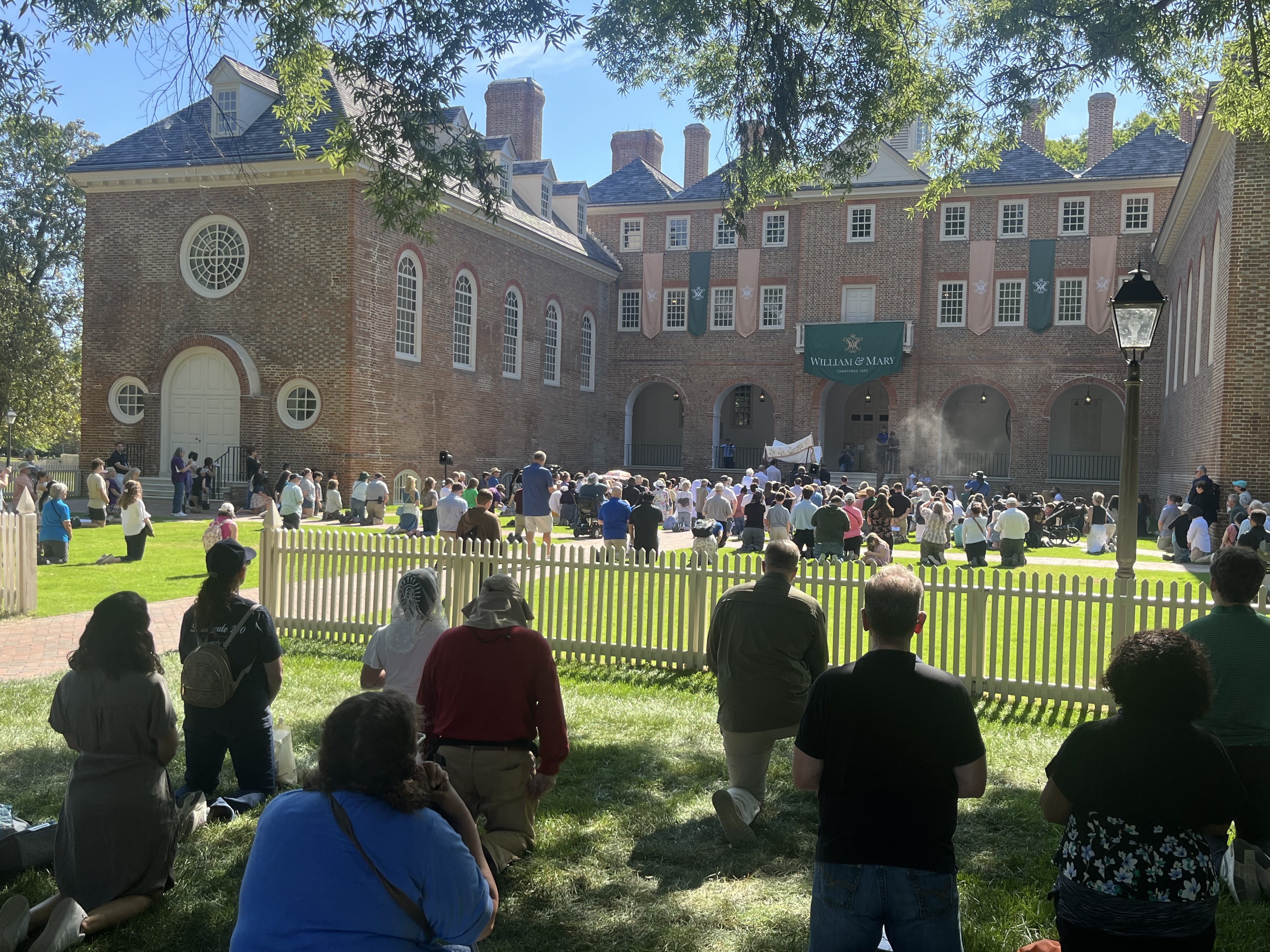
Hundreds of Catholics turn out for Eucharistic procession in historic Williamsburg, Virginia
Meet the pastors who support the ICE raids
(RNS) — Pastors and other clergy have made headlines over the past year for their roles in protesting U.S. Immigration and Customs Enforcement crackdowns in places such as Chicago and Minneapolis.
They’ve been hit by pepper balls and tear gas during protests; sued to gain access to ICE facilities and to block ICE raids on houses of worship; and called on their flocks to welcome immigrants, not fear them. Earlier this year, hundreds of clergy flocked to Minneapolis for a two-day training on how to resist ICE.
Jim Garlow is not one of them.
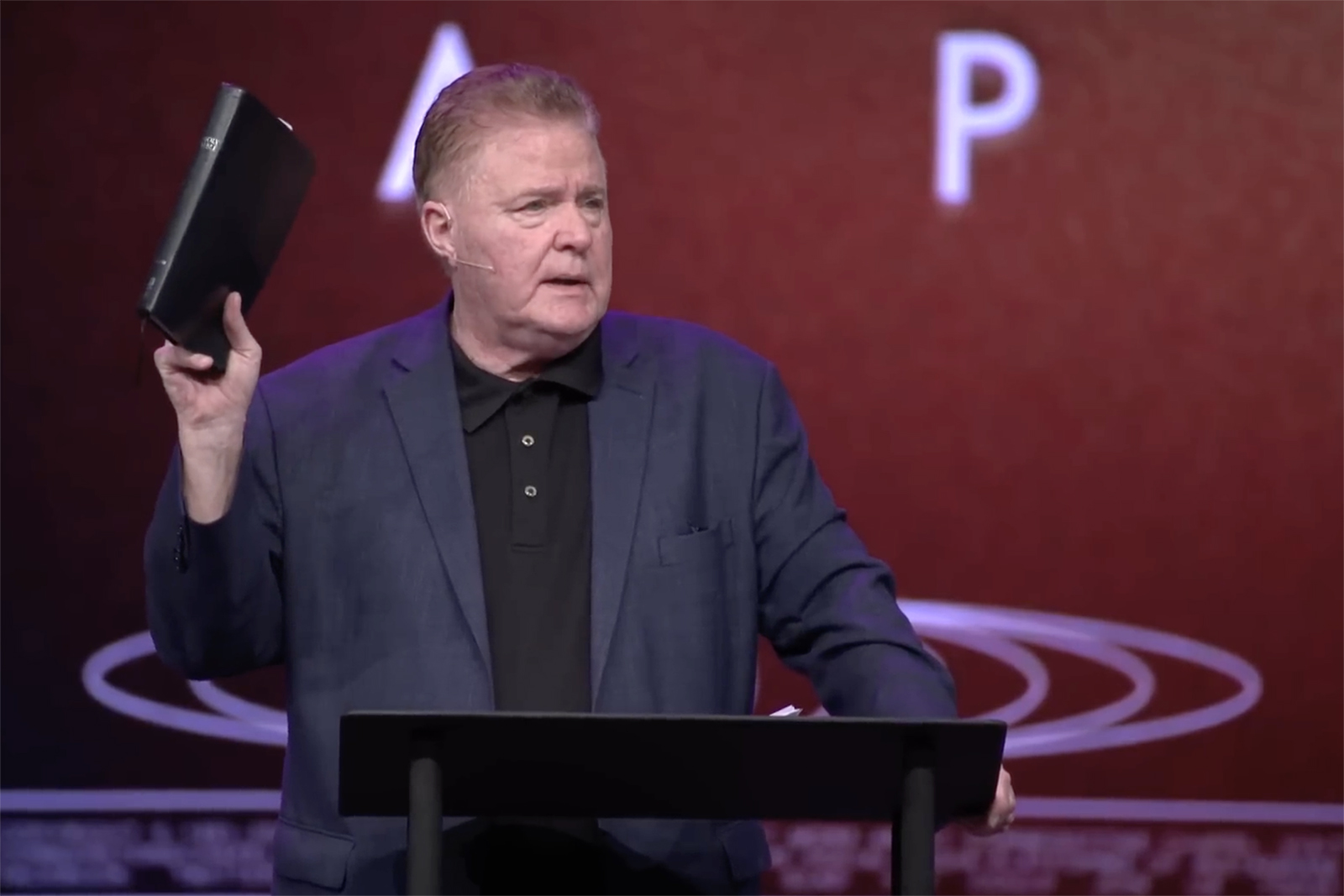
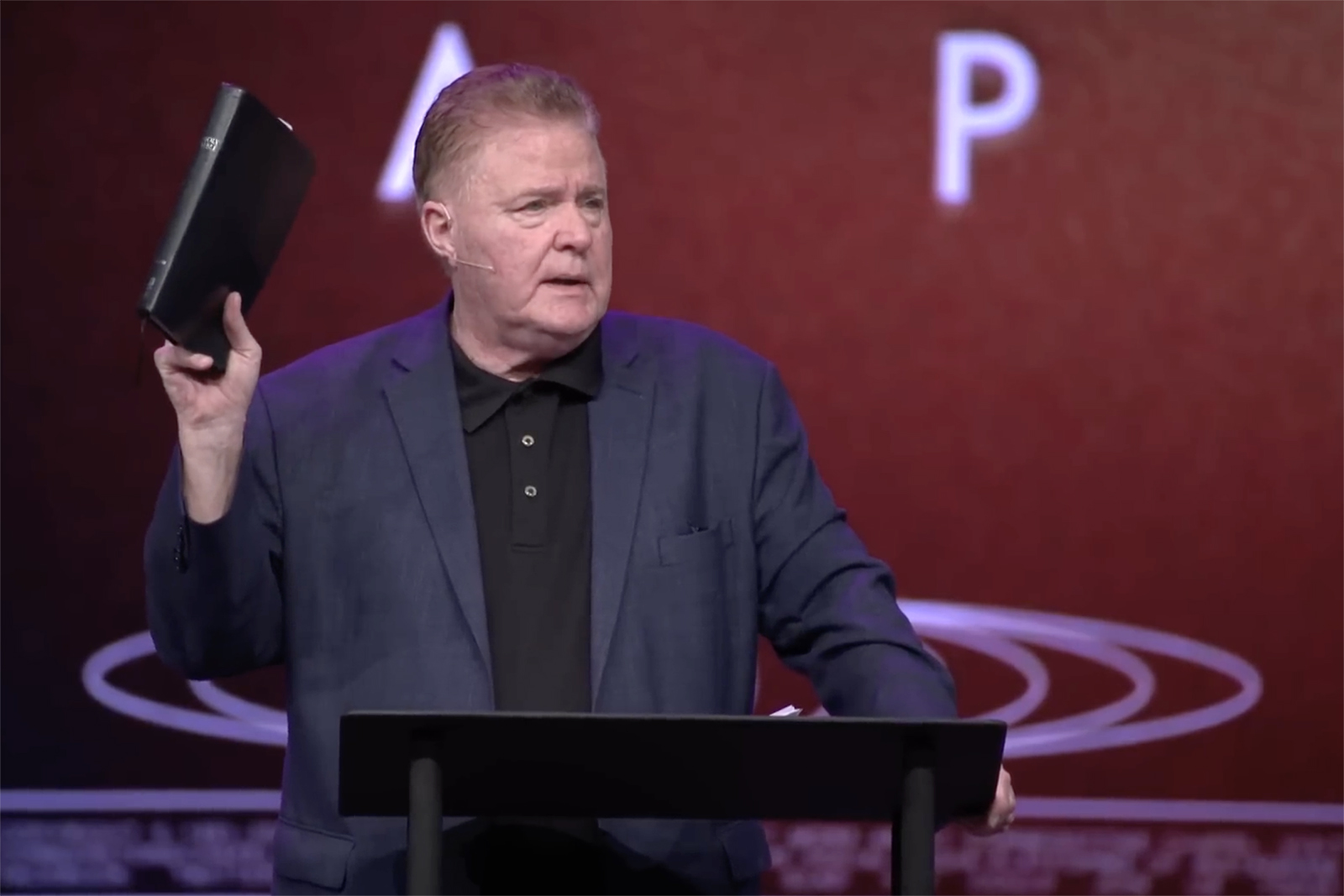
“It’s not wrong for a government to have borders and to enforce its borders,” said Garlow, the former longtime pastor of Skyline Church near San Diego and founder of Well Versed, a ministry to conservative politicians such as U.S. House Speaker Mike Johnson.
Garlow is part of a group of evangelical clergy who, invoking Scripture and morality, support the Trump administration’s immigration policies. Some say they back deportation only for those with criminal records. Others say they want anyone in the country without permanent legal status removed and want churches and pastors to encourage immigrants to self-deport.
What unites them is the belief that immigration enforcement and Christian compassion are not in conflict and that the progressive protesters citing the Bible are doing so selectively.
That view will likely be debated during the upcoming Southern Baptist Convention meeting, set for Tuesday and Wednesday (June 9 and 10) in Orlando, Florida. A proposed resolution for the meeting approves of “lawful immigration enforcement” and affirms that “Christian compassion and hospitality do not negate lawful order or excuse indifference to public justice and social peace.”
Unlike previous statements on immigration from the nation’s largest Protestant denomination, the new resolution makes no mention of a path to legal status for those in the country without it.
Last year, the SBC’s public policy entity withdrew from the Evangelical Immigration Table, which supports immigration reform, in part because the issue had become too divisive. (That SBC entity, known as the Ethics and Religious Liberty Commission, had helped found the EIT back in 2013.)
Dean Inserra, pastor of the Tallahassee-based City Church, a Southern Baptist congregation, told RNS in an interview that while the Bible commands Christians to treat everyone with respect, there are still limits.
“Christians get in trouble when they say all people are made in the image of God, so that means that there’s a free-for-all and we should have open borders,” Inserra said. “Well, the same Bible where you claim that we should care for the immigrant, which the Bible does say, is the same Bible that has borders and nations and walls.”
He sees no contradiction between saying all people are made in God’s image and deserve respect and care and saying that laws should be enforced. He also believes that the Trump administration should focus primarily on deporting those with criminal convictions.
“I mean, it’s a no-brainer to me,” he said.
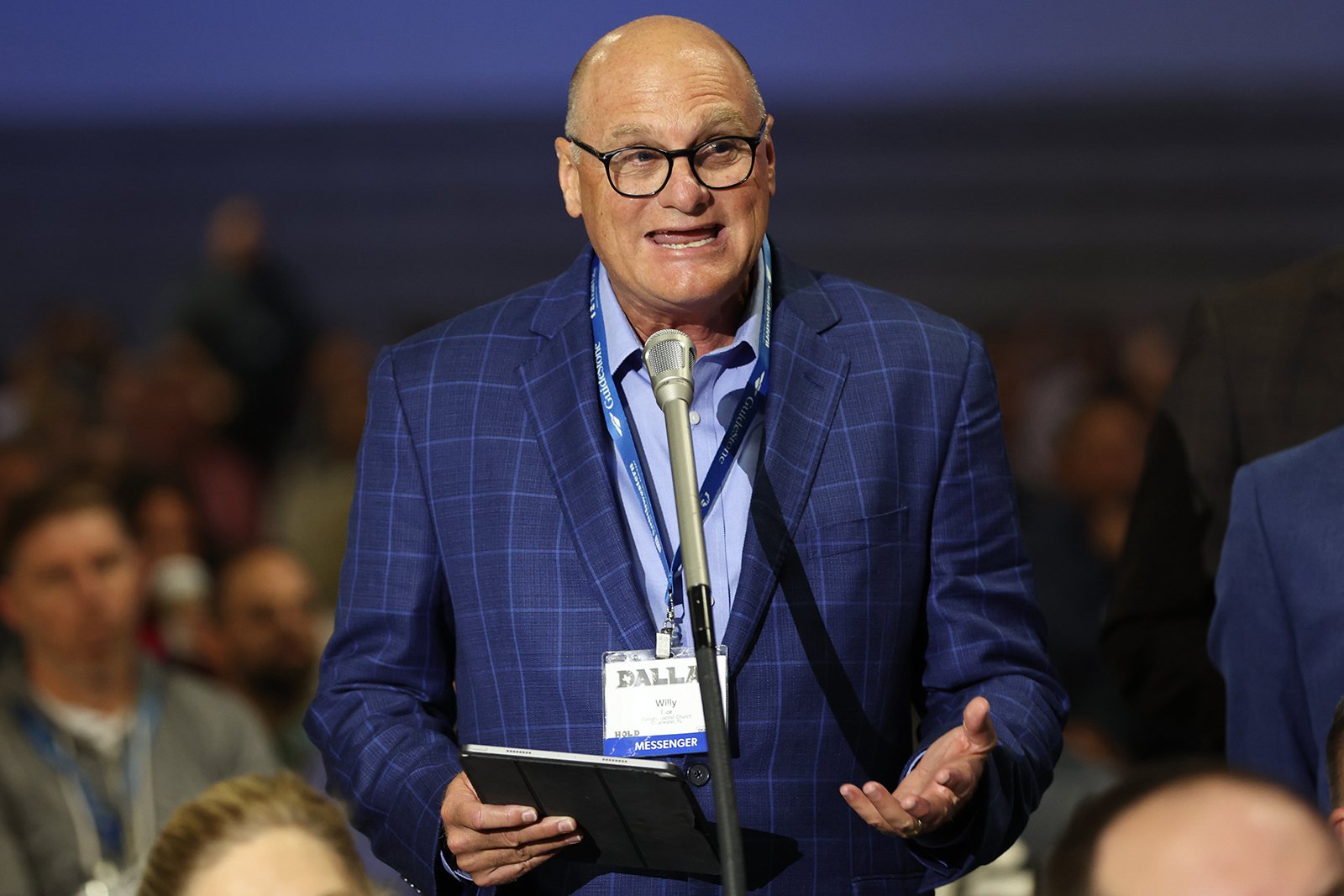
Willy Rice, one of two pastors vying for the office of SBC president this year, also supports the Trump administration’s policies. Rice said he respects immigrants, especially their perseverance, and appreciates the struggles that they overcome in relocating from their home countries to the United States.
But he also said that he believes in the rule of law and that countries need to have secure borders and an orderly immigration process. The hard part, he said, is figuring out what to do with folks living in the country without legal status. Removing them is going to be painful and complicated.
“Everybody knows that when you engage in deportation, there are going to be difficult, heart-wrenching, gut-wrenching cases,” he said. “I know that the laws should be enforced. I hope they’re applied justly and fairly.”
Like other pastors interviewed by RNS, Rice said much of the blame for the current tensions over immigration should fall on past administrations for failing to secure the border. That’s allowed the number of people in the country without full legal status to grow. A Pew Research report from last year found that the number of “unauthorized immigrants” — including those whose status is impermanent or precarious — grew from 10.2 million in 2019 to 14 million in 2023.
Federal immigration officers deploy pepper spray at protesters after a shooting, Jan. 24, 2026, in Minneapolis. (AP Photo/Abbie Parr)
For progressive pastors, ICE’s crackdown in Minneapolis earlier this year, which resulted in the killing of two Americans, galvanized opposition to ICE and the Trump agenda. Evangelical pastors like Rice say the situation in Minneapolis was chaotic, but they place more blame on protesters than on ICE.
“What they don’t show you are the people stalking ICE, mocking them, getting in the way, trying to interfere with the just enforcement of law,” he said.
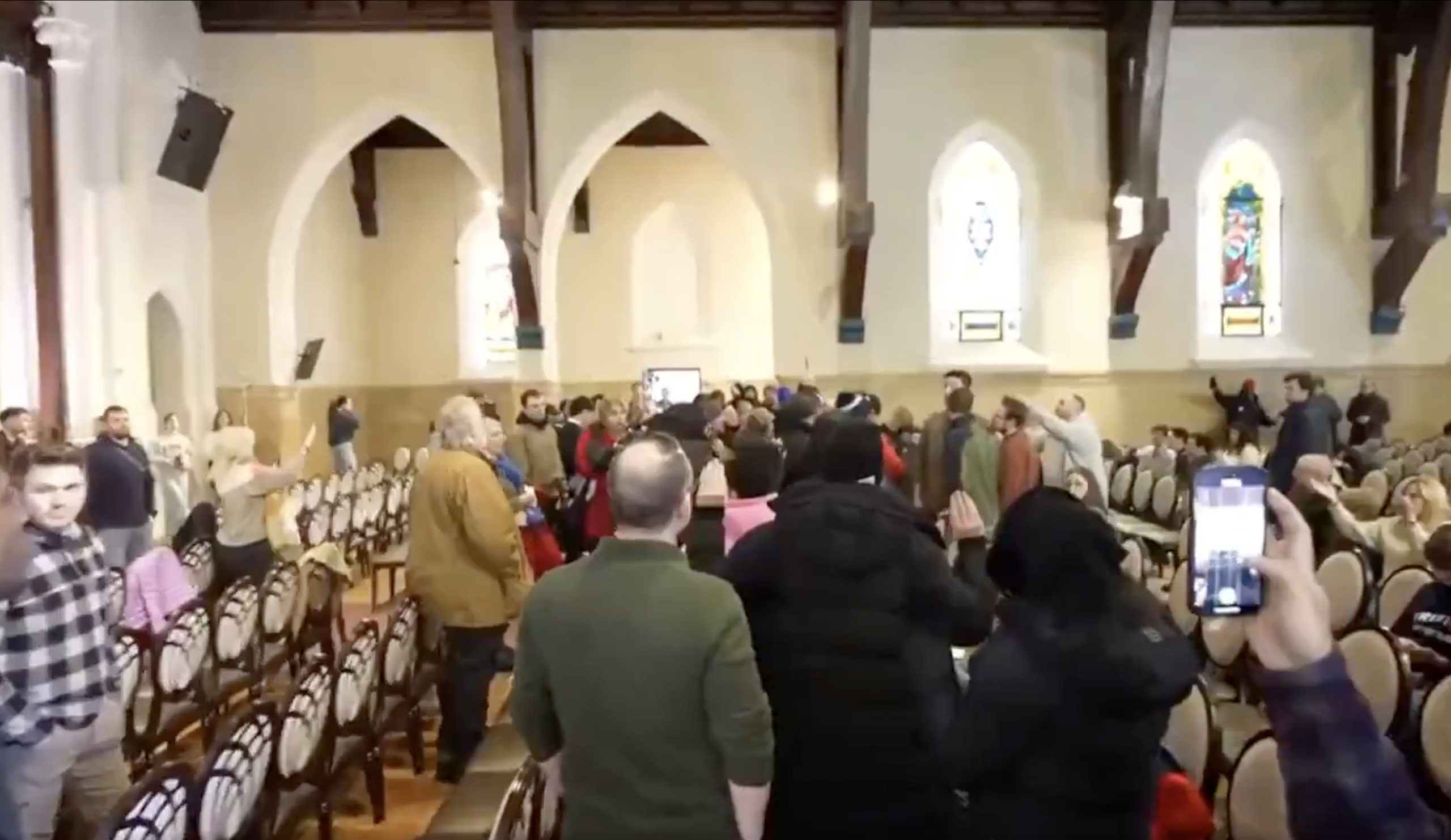
He was particularly concerned about an anti-ICE protest at Cities Church in St. Paul, Minnesota, that disrupted a worship service. That church is part of the SBC, and one of its lay leaders works for ICE. The protesters and two journalists covering the protest have been charged with violating federal law.
“You can have debates, you can have a difference of opinion, but you don’t get to burst into a public worship service,” Rice told RNS in an interview.
It’s not clear how many or how deeply pastors support the Trump immigration crackdown.
A recent survey from Lifeway Research, an evangelical research firm, found that nearly 1 in 5 Protestant pastors (18%) believes the number of deportations in the U.S. should be increased, while 1 in 4 (24%) believes the government is deporting the right number of people. A March report from Public Religion Research Institute found that while the Trump administration’s approach to immigration is unpopular with most faith groups, evangelicals remain strong supporters.
RELATED: His arrest went viral. Now Rev. Michael Woolf is preaching what he calls ‘Sanctuary values.’
As the threat of deportation increases for all immigrants, Catholic bishops as well as immigrant advocates have pushed back and said deportations should be reserved for convicted criminals.
But some of the evangelical pastors who are staunch supporters of the Trump immigration agenda go much further, seeing large-scale immigration as an existential threat to U.S. culture and calling for the mass deportation of anyone in the country without legal status.
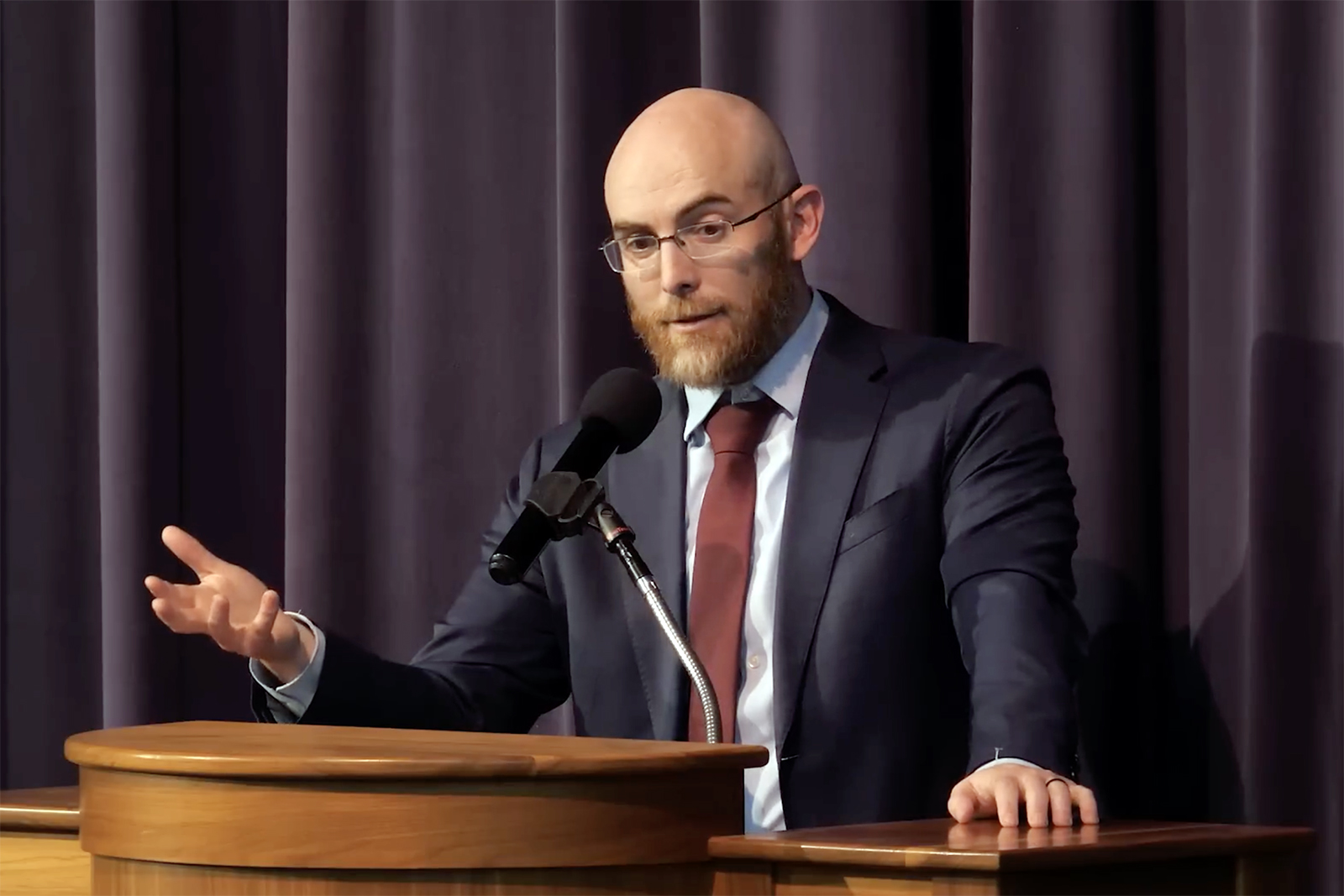
“I think all of them need to go,” said Joe Rigney, an associate pastor at Christ Church in Moscow, Idaho, and author of “The Sin of Empathy.”
Rather than joining protest lines, pastors should be encouraging those in the country without legal status to self-deport, Rigney said. That’s better than waiting for ICE to come and arrest them.
He points to what he calls a “very generous” offer made by the Trump administration to immigrants who will self-deport — a free flight and a cash bonus of $1,000. In late May, the Department of Homeland Security upped the ante— and began advertising what it called a “historic and generous CBP Home Deal” of a flight and a $2,600 cash bonus.
“That’s a very generous, compassionate way of attempting to deal with this problem,” Rigney said.
Rigney wants to see a 30-year moratorium on all immigration. He argues that the changes to immigration law in 1965, after what’s known as the Hart-Celler Act passed, were a mistake. That law opened up immigration from Asia and Africa — before then, the law favored immigrants from Europe. This past week, Republican Congressman Andy Ogles of Tennessee, a fierce opponent of immigration, introduced a bill to repeal most of the 1965 law.
Rigney believes the 1965 law eroded America’s common culture. That and the decline of religion in America — about 30% of Americans claim no religious affiliation — has made it harder to hold disparate groups of Americans together, Rigney told RNS in an interview.
“You end up with what we have now,” he said. “Which is largely a kind of balkanization, where multiple tribes are competing and vying for political and cultural power in the country, because we don’t know what we are.”
He argues that a moratorium on all immigration would give the country time to rebuild “a common culture.” That common culture has to be Christian, in his view, echoing sentiments raised by Doug Wilson, the senior pastor of Christ Church, a church widely seen as Christian nationalist and with ties to Defense Secretary Pete Hegseth.
“Jesus is the only hope of finding a cultural core,” Rigney said.
To Rigney, mass immigration to the United States is a judgment from God for the decline in religious affiliation in the country. “We’ve turned away from God, and now, with the aid of our political leaders, are being overrun by foreigners. Like, that’s, that’s, this is a judgment.”
He has little faith that people from different cultures can learn to live together. “If you are constantly saying that we’re going to just be from all different cultures, all different religions, all different languages, and just good luck everybody — I just think that’s a recipe for resentment.”
That view likely goes too far for many evangelicals. The proposed new SBC resolution, for example, supports legal immigration and rejects “nativism, racial or ethnic hostility, ethno-nationalism, discrimination, and all ideologies or rhetoric that deny the equal worth and dignity of any people group, regardless of immigration status.”
Inserra, whose great-grandparents immigrated to the U.S. from Italy, said immigrants are good for the country. His relatives emigrated in search of a better life, and he is glad they did.
“I think it’s a non-Christian posture to try to say that people coming to this country for the sole purpose of finding a better life is a threat to our culture,” he said. “I just don’t think that’s Christian or American.”
Esther Valdes Clayton, an immigration lawyer and daughter of a Southern Baptist pastor who emigrated from Mexico, often advises pastors and evangelical churches about immigration. Garlow, for example, said he often recommends her as an expert for speaking to churches.
Clayton disagrees with calls to end all immigration. She said the country needs new immigrants. That’s the demographic reality, as there are not enough American workers.

But there should be more ways for immigrants to enter the country legally, she said.
Clayton believes that illegal immigration hurts immigrants, saying she has frequently seen immigrant clients who have been victims of abuse, often because of their lack of legal status.
“Immigrants feel the brunt of criminal illegal immigration, more than everybody else,” she said. “Their kids are the ones sexually abused. Their kids are the ones living in poverty. So, by and large, most everyone understands that enforcement has to happen.”
She also supports workplace raids on companies that employ those who are in the country illegally. Those companies, she said, exploit Hispanic workers, seeing them as cheap labor. She also says that churches need to stop fighting ICE enforcement, especially when it comes to deporting those with criminal backgrounds.
“We need to stop defending the criminals that live in our communities. They need to go home. They have no right, and there’s no way to legalize them in America,” she said.
She, like Rigney, has concerns about the impact of unfettered immigration on national identity, saying the influx of non-Christians is making the country less Christian. “America, as the last bastion of Christianity, must win this, and we must be able to defend our border,” she said.
But Clayton wants the Trump administration to be more lenient, especially with the families of members of the U.S. military. “They need to stop deporting the parents and spouses of military servicemen and women and veterans,” said Clayton, who has represented military family members in court. “I think every single American wants that to stop. And I do too. That’s easy.”
Garlow, who was a faith adviser to President Donald Trump during his first term, also wants to see the immigration system reformed. In “Re-Versed,” his 2016 book about the Bible and the government, Garlow laid out his vision.
Immigrants who are in the country illegally, he told RNS, should pay “a reasonable fine,” take classes in speaking English and citizenship, be “taught allegiance to America” and then be granted legal status.
He also said the government should apologize “for letting people in and then saying ‘you’re illegal.'”
But in a sign of how the immigration debate has shifted within the evangelical movement, Garlow no longer believes that vision he laid out 10 years ago is realistic. The country, he said, is too polarized for politicians to cooperate on immigration reform.
Now he thinks that immigrants should self-deport if they are in the country illegally but should be able to return through a legal process — especially if they have family in the country or job opportunities. Current immigration law bars those who self-deport for at least three years and as many as 20 years or more, depending on how long they had been in the country without permission.
“Our country ought to work with them because they have got roots here,” Garlow said.
But self-deporting should come first.
“Is that easy?” he said. “Of course not, but I think the government could treat them in an honorable way.”