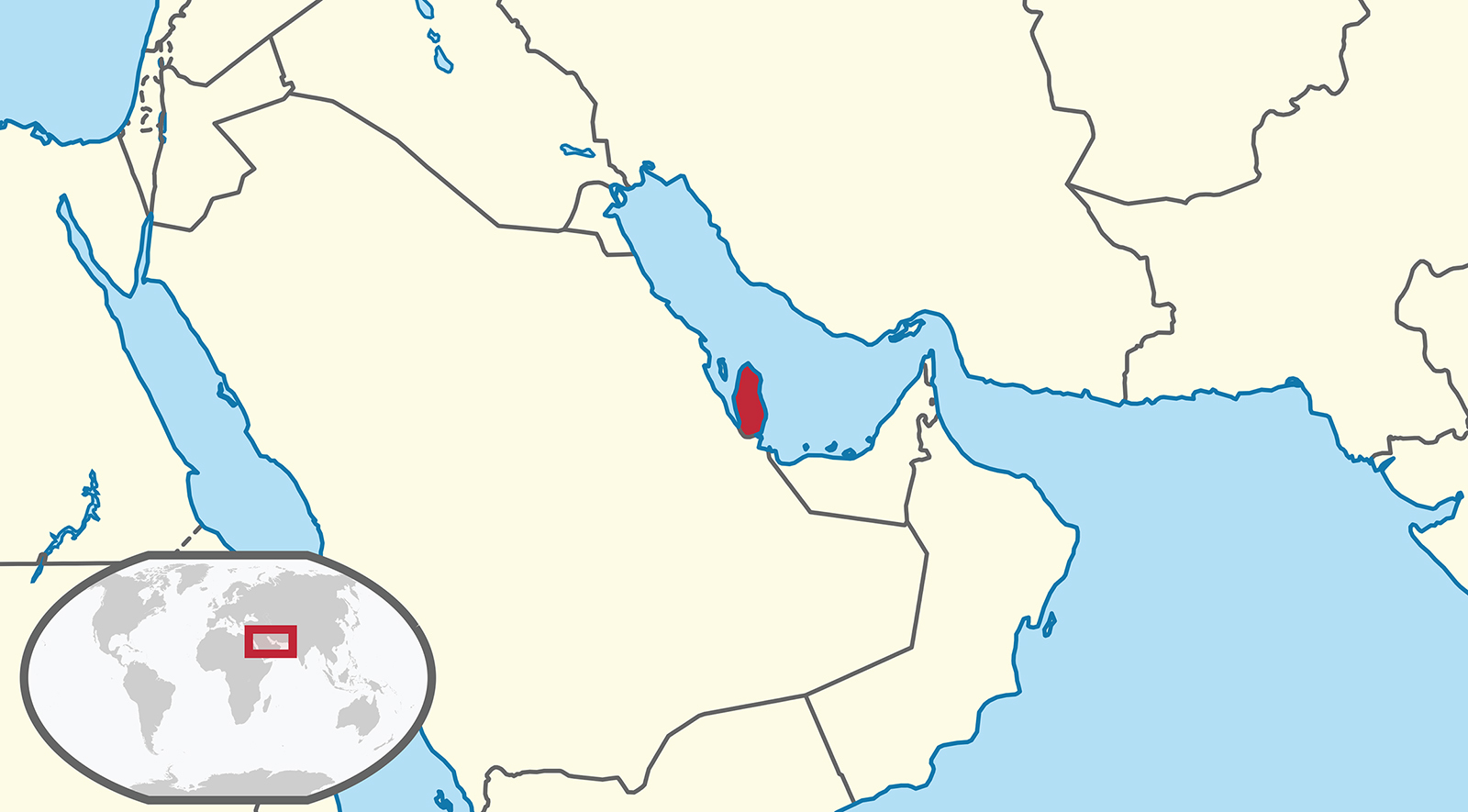
(RNS) — For eight decades, Qatar has positioned itself as a promoter of peaceful coexistence, mediating some of the world’s most fraught conflicts, including participating in efforts to defuse the ongoing war between Iran and the United States. Yet in the past few weeks, it has inexplicably risked its global standing by sharply escalating a campaign of harassment and arbitrary deportations targeting its own tiny, peaceful and ethnically diverse Baha’i community.
Qatar’s marked discomfort with Baha’is — a community of only a few hundred in the country — is not new. Although the Qatari Constitution includes a freedom of religion or belief provision, Baha’is have been denied legal recognition and citizenship. This is despite many Baha’i families having lived in the region for generations, dating back to before Qatar’s recognition in 1971. Since its creation, Doha has repeatedly reminded the Baha’is, by intermittently and arbitrarily detaining and deporting them, that they do not belong.
Recently, in 2025, the case of Wahid Bahji drew international attention. Born and raised in Qatar and a member of the National Spiritual Assembly of the Baha’is, he was forced to leave and subsequently blacklisted — forbidden from returning to the country he called home his entire life. His case illustrates how the Qatari government operates: Over decades, the Baha’is most targeted for deportation have been those more active in serving the Baha’i community, all in a voluntary capacity.
Also last year, a distinguished businessman and Baha’i leader, 71-year-old Remy Rowhani, was detained and sentenced to five years in prison for allegedly violating a cyber crime prevention law by posting passages of Baha’i teachings on a social media account. Eventually, a Qatari court reversed the baseless lower-court verdict against Rowhani, and he was released. The reversal received worldwide praise, leading some in the international religious freedom community to read it as a positive sign that the Qatari government was willing to turn over a new leaf.
That proved not to be the case. In recent weeks, nearly half of the remaining Baha’is in the country have been threatened with detentions, non-renewal of work permits and forceful deportation. And this time, not only Baha’i leaders are being targeted, but also its rank-and-file members.
Consider the recent case of Moin Yeganeh. His father was one of Qatar’s first dentists. A successful businessman at 55, Yeganeh has called Qatar home his entire life, as have two generations of his family before him. Last month, he was detained and slated for deportation.
Another case involves an elderly couple with disabilities who are cared for by their daughter. The daughter, informed by the authorities of their termination of residency, would be separated from her husband and children because they hold different passports. She knows no other home but Qatar and faces a serious risk of forcible return, along with her parents. Like many other Bahá’ís, her family built their business from scratch and contributed to the country’s economy for decades. Being forced to leave would also require terminating their employees, causing many families to suffer financially. (To protect the family from retaliation, their names are being withheld.)
For a country that prides itself on dialogue, this is confounding. The Bahá’ís who remain in Qatar are hardly a threat to national security. On the contrary, they are known for promoting peace, the unity of humanity and the equality of men and women.
The United States has taken notice. For the first time since its creation over 25 years ago, the United States Commission on International Religious Freedom added Qatar to its Special Watch List this year, signaling ongoing concerns and prompting other U.S. government agencies to take notice.
Historically, U.S. government agencies have closely monitored the state of religious freedom abroad because its deterioration often signals deeper political instability and social unrest. Given that Qatar hosts one of America’s largest military installations in the region, it is in the strategic interest of the U.S. to understand Qatar’s position. Furthermore, the Department of State and the Treasury have powerful tools — including sanctions and visa restrictions — that can be used to hold officials and their families accountable for acts of religious discrimination. The U.S. has already deployed these tools against government officials who have violated religious freedom in countries like China, Iran and Myanmar, forbidding them, among other things, from visiting the U.S.
The international community has also taken notice. Last month, a group of United Nations experts raised concerns about administrative deportations “across different employment fields and ages,” and said the acceleration of the campaign affects “the very viability of the Baha’i community of Qatar.”
Recently, Majed al-Ansari, the Qatari Foreign Ministry spokesperson and special adviser to the prime minister, said that being an “energy provider and peace facilitator” was a matter of Qatar’s national pride. This is a lofty aspiration, but one could argue that a nation cannot aspire to be a peace facilitator if it cannot promote it in its own backyard.
Qatar still has time to prove it values pluralism. Doing so would affirm the very image Doha has worked so carefully to cultivate: a small country capable of tremendous leadership worldwide.
(Kristina Arriaga is a Cuban American writer and the former vice chair of the U.S. Commission on International Religious Freedom. The opinions expressed in this commentary do not necessarily reflect those of Religion News Service.)
Original Source: