NEW YORK (RNS) — When the Rev. Serene Jones arrived at Union Theological Seminary in 2008, she focused on two jobs: Fix the house, then make a bigger table.
Eighteen years later, as Jones prepares to step down as president in July, the historically Christian and progressive seminary in Manhattan has renovated its aging campus, expanded its interreligious programming and enrolled its largest incoming class in more than 30 years.
“Now the house is fixed, the table is open, and everybody’s pouring in,” Jones said.
In fall 2025, Union enrolled 128 new students; last year it was 102. The growth comes at a precarious time for theological education. Seminaries across the country are facing declining enrollment, rising costs and fewer students pursuing ordained ministry. Many schools have closed, merged, sold campuses because of financial strain or maintenance costs, or moved more of their training online.
In New York, over the past decade, two once-prominent Episcopal seminaries, Episcopal Divinity School and General Theological Seminary, have been unable to maintain a traditional residential-campus model.
“Nearly all seminaries associated with the mainline Protestant world are in decline,” said Mark Tooley, president of the Institute on Religion and Democracy, a conservative Christian advocacy organization. “So, if Union is growing, that is somewhat unique and exceptional.”
Tooley said another factor is fewer and fewer Americans are identifying as mainline Protestant.
“Protestantism has been in decline for 60 years in terms of membership,” Tooley said. “It’s been displaced by evangelicalism and Roman Catholicism, and so much so, many who would have been made Protestant became religiously unaffiliated.”
Since taking charge as the first woman elected president of Union, Jones has pushed the 190-year-old seminary to adapt to a changing religious landscape. Her tenure has been defined by difficult, sometimes controversial decisions that helped stabilize the institution and cement its identity as a progressive seminary at a time when many mainline Protestant schools struggle to survive.
She equates being the president to being the conductor of a symphony orchestra.
“Someone who helps all the parts move together, sets the tempo, chooses the music and infuses it with the passion that it needs so that it can go where it needs to go and make beautiful music,” she said.
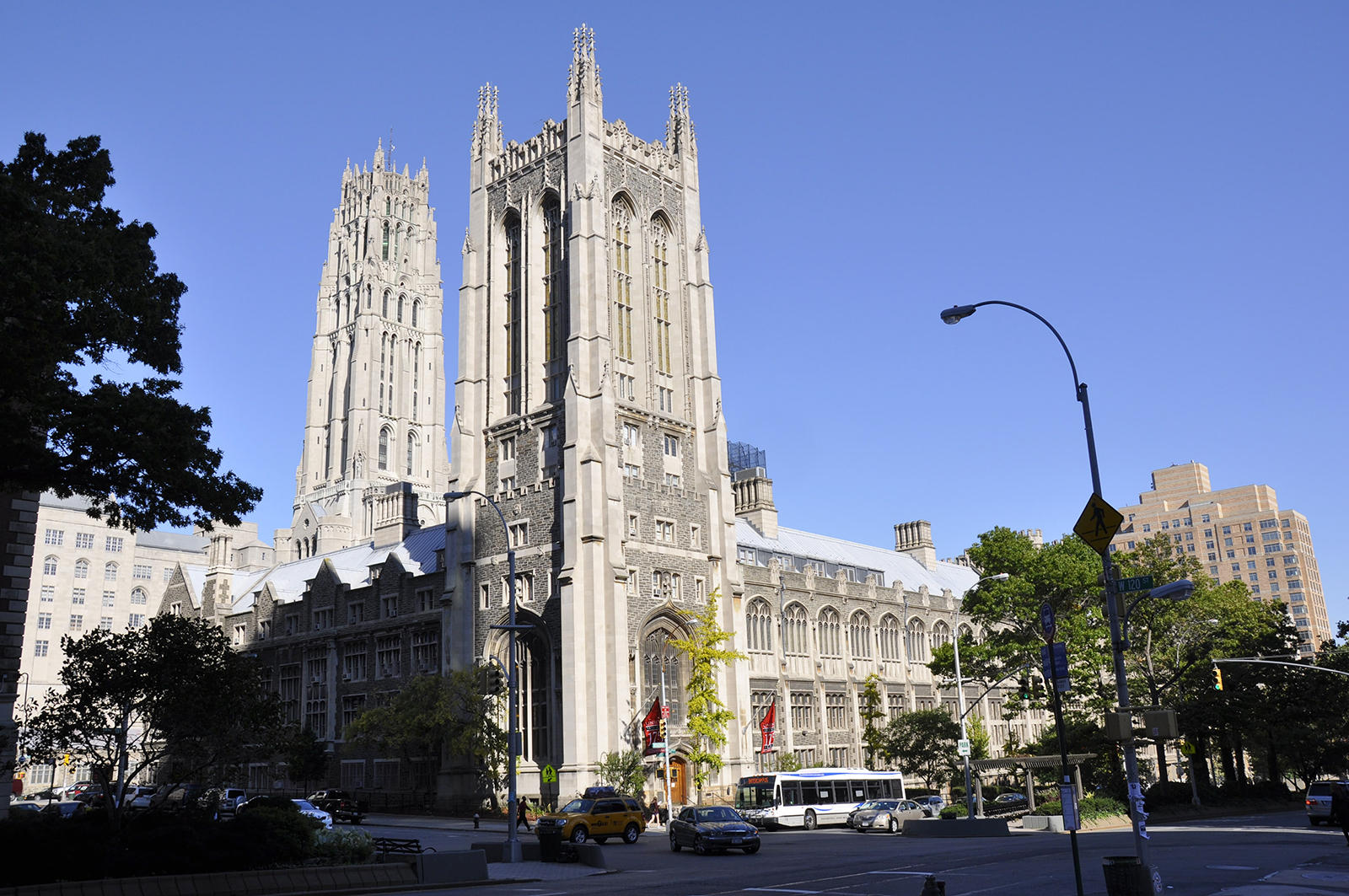
Founded in 1836 by Presbyterians, Union is one of the most influential Protestant seminaries in the United States. Its faculty and alumni have included Lutheran anti-Nazi advocate Dietrich Bonhoeffer, Methodist minister and Black liberation theologian James Cone, German American philosopher Paul Tillich and political activist and public intellectual Cornel West.
Because of that history, Union is still seen as a symbol of progressive Protestantism, even as the institutional influence of mainline Protestantism has waned in the United States.
“This is one thing I came in knowing I wanted to do — make Union what it is now, much more interreligious,” Jones said. “And that’s the future — the table has to get bigger.”
Since 2016, Union has expanded its interreligious offerings, formalizing programs in Islamic studies and Buddhism and hiring its first Sikh faculty member. Jones said the changes are meant to prepare students as Christian ministers to serve communities of different religious traditions and spiritual practices.
The changes have drawn criticism from some Christian observers who say historically Christian seminaries risk losing their theological core if they move too far beyond training Christian clergy. In 2019, Union made headlines for holding a chapel service where participants confessed the “harm that has been done” to plants.
“I think most traditional Christians would say, if your focus is not exclusively on the gospel and training clergy or persons who are preparing to enter into Christian ministry, then you’ve headed off into a different direction,” Tooley said. “And that’s theologically problematic.”
The Rev. Fred Davie, a senior adviser at Union who served as Jones’ executive vice president for 15 years, said he believes Jones’ vision to expand interreligious programming is essential as students learn to navigate religious and political fault lines.
“I think that has been visionary in itself and has allowed the school to be very relevant in this time where interreligious engagement is extremely important,” Davie said.
In February, Union announced it will launch a new religion and public life center in fall 2026 that was housed at Harvard Divinity School before its co-director the Rev. Diane L. Moore, a Union alumni, and Hussein Rashid, the former assistant dean for religion and public life at Harvard, resigned in January 2025.
The announcement of the center drew criticism from right-leaning outlets and Jewish campus groups because the resignations occurred after the program was named in a lawsuit by the Trump administration’s Justice Department accusing Harvard of deliberately allowing antisemitism on campus. The program had also been flagged and criticized by Harvard’s internal antisemitism task force. Program faculty and supporters rejected the criticism, according to the lawsuit, saying it was an effort to limit pro-Palestinian speech.
Jones’ most politicized decision as president came in April 2024, when student protests over the war in Gaza spread across Columbia University’s campus, just blocks from the seminary.
As the former president of Columbia, Minouche Shafik, who stepped down in 2024 after “personal threats of abuse,” called the New York Police Department to clear a student encampment and more than 100 student protesters were arrested, Jones publicly condemned the police response and said Union would support students penalized for participating.
“I reminded our students that the aggressive police action being taken on other campuses across the country will not be taken here. As their president, I have their back,” she wrote in a CNN op-ed.
Union later became the first institution of higher education in the United States to divest from companies it said were profiting from the war in Gaza.
“It was a unanimous vote,” Jones said of Union’s board of trustees. “It was provocative.”
Original Source: