NAIROBI, Kenya (RNS) — As the war in Sudan enters its fourth year Wednesday (April 15), the bombed Episcopal Church of Our Savior in Khartoum’s Omdurman constantly reminds Christians of the brutal conflict.
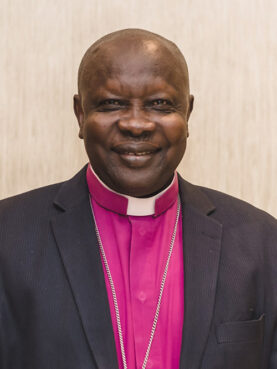
The church that stood for 81 years is now in ashes after it was bombed in 2023. On its ruins in Sudan’s capital city, Episcopal Archbishop Ezekiel Kondo stood days before the war’s third anniversary and told Christians, “God is with the people in good times and difficult times.”
“We thanked God for His protection during the three years of the war,” he said at the site where shelling in the early months of the conflict brought the church down, destroying its roof and burning everything inside – including the pews, Bibles and hymnals.
Sudan is a Muslim-majority country where only an estimated 5% of the population is Christian, according to Pew Research Center. But Kondo told RNS that over 5,000 Christians — including leaders from other denominations — had on Friday gathered at the site of the church, which was also in the past a traditional convening point for Episcopalian Christians on Easter Monday. The coronavirus pandemic, and later the war, stopped the meetings.
The war began on April 15, 2023, as a dispute between the Sudanese Armed Forces, the government army led by Chief Gen. Abdel-Fattah Burhan, and a powerful paramilitary group, Rapid Support Forces, commanded by his former deputy, Gen. Mohammed Hamdan Dagalo, also known as Hemedti.
Clerics in Sudan recalled how the war sent Christian leaders in the capital and other parts of the country fleeing. Many of them, including Kondo, settled in Port Sudan, a Red Sea port city in the northeast of the country.
But the archbishop has now returned to Khartoum as more people are coming back to rebuild their city.
“I am pleased to let you know that on Sunday, I presided over Easter celebrations at All Saints Cathedral, Khartoum, for the first time after three years of the war,” he told RNS. “The congregation was not that big, (but) I praised God that the cathedral resumed its activities fully.”
Kondo considers the small congregation as a good indication that life is coming back to Khartoum, and he hopes it will happen in all of Sudan. There are inadequate basic services in some areas in Khartoum, he noted, but the government is working to restore them, including security, water, electricity, health care resources and schools.
“I have observed that NGOs and the U.N. are now returning to Khartoum,” he said. “There are now daily flights from Port Sudan to Khartoum, including (humanitarian service) flights, which I think is a good sign of progress in terms of peace.”
In North Darfur, the Rev. Daramali Abudigin, an Anglican priest who became the last pastor in the besieged city of El-Fasher, called for increased efforts to end the war, while highlighting the plight of ordinary people.

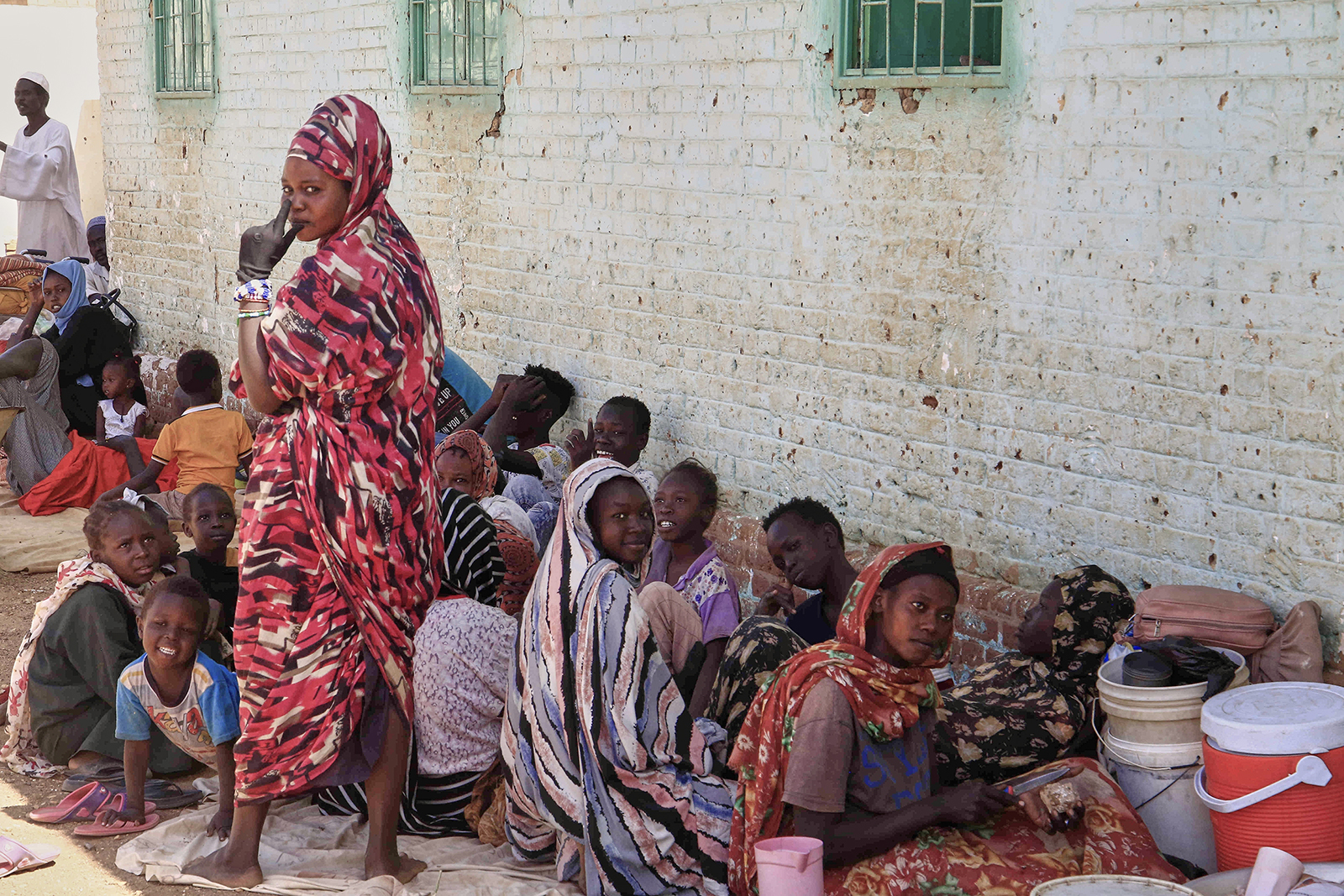
“We are seeing immense suffering,” Abudigin said in an interview from Tawila, North Darfur, where he cares for several Christians. “The people need food, medicines and proper shelter. There is some food aid distributed in the camp, but not everyone can access it. Those who came late in the camp have to work to get something to eat.”
According to World Vision, the Christian global humanitarian organization, 33.7 million people in Sudan need humanitarian assistance. Nearly 14 million have been forced to flee their homes in search of safety and 28.9 million require support for food security and livelihoods. More than 4 million people are acutely malnourished and 800,000 children are living with severe acute malnutrition, according to World Vision. An estimated 10.5 million children are out of school. Death toll estimates vary widely.
“Escalating aerial attacks have recently resulted in civilian casualties and damage to critical infrastructure, including health facilities and schools in Kadugli, Darfur, White Nile and Blue Nile,” said Simon Mane, World Vision’s national director in Sudan, whose organization provides support such as clean water, food assistance, health care, nutrition services and child protection.
Mane urged all parties involved in the conflict to come to a peace agreement to save lives.
“Peace is the beginning of a better life in Sudan,” he said. “Humanitarians are not a target. Civilians are not a target. Do not attack critical infrastructure. The parties must facilitate access for humanitarian workers so that they can bring assistance closer to the people, wherever they may be.”
Catholic Bishop Yunan Tombe Trille of the Diocese of El Obeid, Sudan, said it’s important to consider the people behind the statistics — the mothers searching for food, children robbed of education, youth forced from their homes and families mourning loved ones, he said.

“It has strained the resilience of our churches, mosques, traditional leaders, humanitarian agencies and every community struggling to keep hope alive,” Trille said in a statement to RNS. “Peace in Sudan will not come through weapons or foreign interests, but through deliberate, inclusive and just peace processes rooted in the dignity of every Sudanese.”
The war in Sudan is also weighing on South Sudan. Catholic Bishop Christian Carlassare of Bentiu, South Sudan, said the unplanned arrival of refugees and returnees in the hundreds of thousands has created tensions in the neighboring Unity State, causing further overcrowding and worsening food and shelter shortages.
“It is also a pastoral challenge for the church to be in solidarity with refugees and returnees and serve them with very limited structures,” he said, warning of possible re-arming of groups, exploiting the porous border.
The bishop cautioned there was a real risk that the war would remain forgotten or a silent catastrophe, citing limited global media attention amid other crises with more international attention, such as those in Ukraine, Gaza and Iran, where there are further American interests.
Original Source: