(RNS) — Ten-year-old Waleed ran for days to escape the fighting after men with guns came to his town. He lost track of the grandmother who had been caring for him and traveled with strangers, sleeping wherever he could.
When he finally reached a camp for displaced people, he had no idea where his family was. He was hungry, scared — and yet still found the courage to keep going alone.
This is what the crisis in Sudan looks like for children right now.
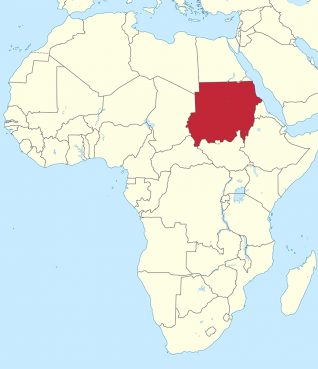
Sudan’s war is displacing more people than any other crisis in the world. As violence escalates, families are uprooted again and again — often with little warning and nowhere safe to go. In the chaos, children get separated from their families and are left alone.
In one recent surge of violence in Darfur, our teams reported that more than 22,600 people were newly displaced. Nearly two-thirds of them were children. As families flooded into displacement centers, World Vision staff noticed a deeply troubling pattern: more children arriving alone, without a parent or caregiver. In just one camp, staff recorded nearly 200 children who had arrived by themselves.
And that is only one location.
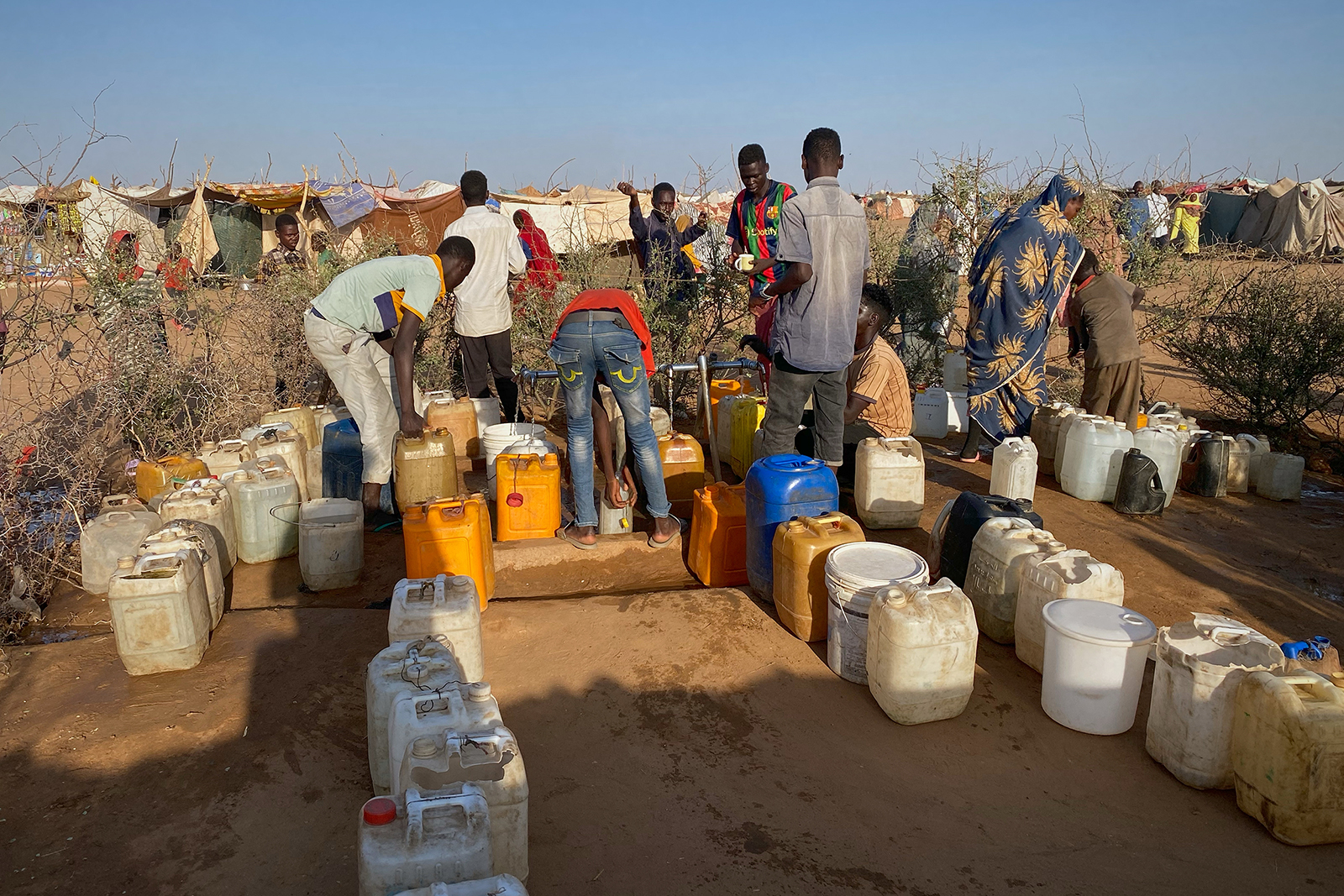
Across the country, the scale of suffering is staggering. More than 5 million Sudanese children have been displaced by the conflict. Nearly 4 million children under the age of 5 are acutely malnourished. More than 13 million children are out of school. United Nations agencies warn that in parts of North Darfur, more than half of all children are acutely malnourished, as severe food insecurity and hunger spread and a collapsing health system turns treatable illnesses into deadly threats.
World Vision teams in Sudan and neighboring countries are helping. Since launching our scaled response in 2023, we’ve reached more than 5 million people — most of them women and children — with lifesaving support, including food assistance, health and nutrition services, clean water, sanitation and child protection.
For us as Christians, these numbers carry an even deeper weight — because behind every statistic is a child who is precious in God’s sight.
Scripture is unambiguous about how God sees children and how central they are to God’s kingdom. Jesus said in Matthew 19:14, “Let the little children come to me, and do not hinder them, for the kingdom of heaven belongs to such as these.”
And yet, when we look at suffering like this through a biblical lens, it can feel as though children are being hindered at every turn. Instead of experiencing fullness of life, the full weight of the sins of the world — power, greed, hatred and selfishness — has fallen squarely on their shoulders. They are suffering the consequences of a war they had no part in creating. And many are bearing the brunt of it alone.
But God’s Word declares a different story. The full weight of the sins of the world has already been borne — by Jesus himself. On the cross, Jesus took on every sin, every injustice, every burden, so that brokenness would not have the final word.
Children should not bear the brunt of the world’s sins, and in Christ, they do not have to.
That truth is what compels us at World Vision to keep going. It is why we work to end extreme poverty, serving as the hands and feet of Jesus where it’s hard to be a child.
Because the work Jesus finished on the cross frees us to join him in restoring hope, dignity and opportunity for every child. World Vision has served vulnerable children for over 75 years, and that history matters — because while crises change, the call does not.
Across decades and disasters, we have leaned on a consistent truth: Our work is rooted in our faith. Jesus’ love powers everything we do at World Vision. That is not rhetoric. It is our operational reality.
Long before we provide food for malnourished children or create child-friendly spaces, we begin with a conviction: We must see children through the eyes of Jesus. When we use this lens, both their suffering and their God-given potential are visible to us.
At the camp, Waleed saw other children playing soccer and approached them. They led him to a woman who was caring for children who had lost their parents. She welcomed him, gave him food and offered him a place to sleep alongside her own children. Eventually, she helped reunite him with an uncle who had also made it to the camp.
Sudan’s children are resilient. But they should not bear the brunt of war alone.
When we look at the numbers, the complexity and the needs — around the world and here at home — it is easy to feel powerless. But there are simple, meaningful ways we can respond.
We can pray with specificity: for protection, for peace, for access, for those serving on the ground and for children separated from their families.
We can give generously, because lifesaving work requires resources, especially as needs escalate and systems strain.
We can get our churches involved, because churches and organizations working together can sustain a presence in families’ lives, strengthen local capacity and care for children in both body and spirit.
And we can refuse to look away, because we know Jesus sees these children, loves them and calls us to do the same.
Sudan’s crisis is a moment when Christians are called to see clearly, to pray boldly and to act faithfully — so that the world might see the promise Jesus offers to all.
Edgar A. Sandoval Sr. is the CEO and president of World Vision. The views expressed in this commentary do not necessarily reflect those of Religion News Service.
Original Source:
https://religionnews.com/2026/04/15/sudans-children-should-not-face-war-alone/