(RNS) — Ahead of the midterm elections this fall, Pastor Mike McBride, a longtime Black voter mobilization strategist, is spearheading an initiative for church and community leaders to sit down together for Sunday dinners to learn from each other.
Several dinners have been held in U.S. cities — and more are scheduled through June — to bring together dozens of people in 10 municipalities from the San Francisco Bay Area to Atlanta, all to discuss the treatment of immigrants by Immigration and Customs Enforcement agents and other concerns related to politics across the country. The events were created by McBride and Live Free, a nonprofit focused on community violence reduction and voter engagement he founded 15 years ago, in an effort to build community involvement before voters head to the ballot box.
“The idea is to unite congregations within cities and regions, to bring our people into a shared space, to hear each other’s stories, to share a meal and strengthen our bonds of connection,” McBride, a Black Pentecostal minister at The Way Christian Center, based in Berkeley, California, told Religion News Service in an interview. “It’s impossible, from the Black prophetic tradition, to say, ‘Oh, we’re not going to respond to the pain of our immigrant loved ones,’ whether they be from Latin America, Africa, the Caribbean, because we’re all connected together.”
Live Free is also collecting individual signatures for a “Love Free” pledge whose commitments include “showing up, taking action, and working with others to defend democracy, defeat authoritarianism, and build shared power in my community.”
McBride is among several Black Christian leaders starting grassroots initiatives for bridge building and organizing that they say look back to the Civil Rights Movement to look ahead to the midterm elections and beyond.
RELATED: Black church leaders aid Minneapolis, seek laws curtailing federal agents’ mask usage
The Rev. Cece Jones-Davis, known for her anti-death penalty work in Oklahoma, has started online talks called “Just People on a Zoom” in response to a need she felt to bridge political divides after President Donald Trump was elected for a second term.

“We want to create a middle place — a place of belonging where folks can come and find some sort of shelter, some sort of camaraderie, some sort of conversation partners that can talk with them through where we are and where we need to go,” Jones-Davis, a Christian Church (Disciples of Christ) ordained minister who now runs a consulting firm from northern Virginia, said in an interview. “It’s not a place to bash anybody. It’s not a place to talk down on anybody. It’s not a place of ‘I told you so.’ It’s a place of ‘What now?’”
She said her decision to create a digital space that may include confession, repentance and accountability is shaped by lessons of the Civil Rights Movement, when leaders such as the Rev. Martin Luther King Jr. sought to find common ground despite facing racism and white supremacy. She referred to King’s speech after the Montgomery bus boycott, where he said, “As we go back to the busses let us be loving enough to turn an enemy into a friend. We must now move from protest to reconciliation.”
Jones-Davis asked Jon Mays, a white former missions pastor of an evangelical megachurch who now is a Christian practitioner at The Good OKC, a small Oklahoma City spiritual community, to serve as co-host for the sessions. Together, they have interviewed Pamela Hemphill, a grandmother who rejected a pardon and has apologized for her participation in the Jan. 6, 2021, attack on the U.S. Capitol; the Rev. Rob Schenck, a former religious right activist; and Sister Mary Margaret Funk, author of “Renouncing Violence.”
“It is modeling humility and compassion through disagreement,” said Mays, adding that his spiritual community has a similar goal and supports discussions where speakers and listeners come from different vantage points.

Faith Out Loud, a new project led by the Rev. Traci Blackmon, is seeking to get Black church leaders outside the four walls of their buildings and meeting needs in their communities. Launched in 2025, it is working in 15 Southern cities with regional groups that also want churches to “move from just the talking and believing to the actual embodying of our faith and of our belief around issues, particularly those that are critical in this moment.”
In each of the cities, one church serves as an anchor for a group of congregations that work with faith-based organizers and groups, including Live Free and Texas’ Black Faith Coalition, said Blackmon, who formerly served as an associate general minister in the United Church of Christ and is based in St. Louis.
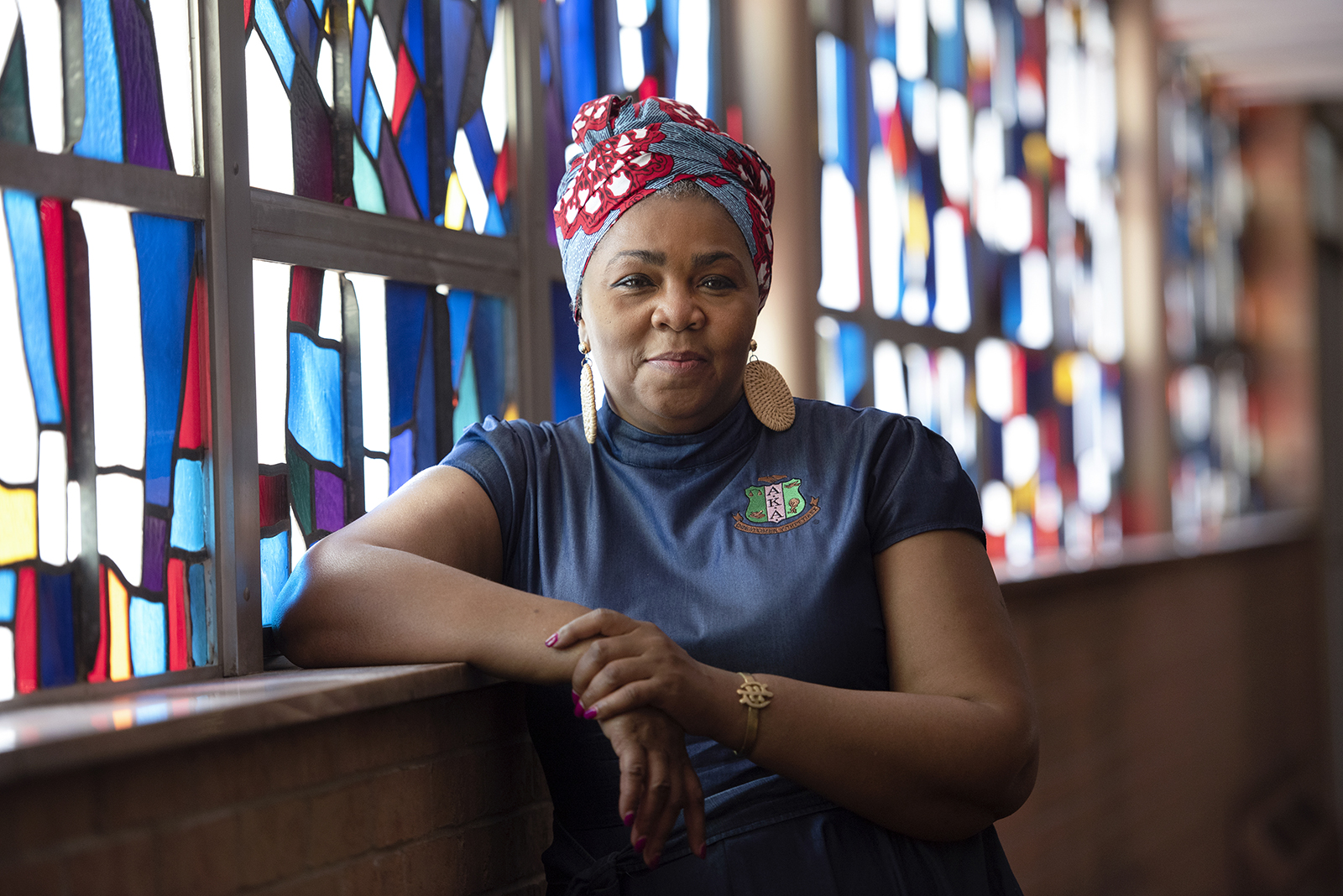
“We hope to provide the impetus for transformation that goes with the demonstration,” she said of Faith Out Loud, whose first gathering before it became official last June featured pastors, religious scholars and community activists who work in the streets rather than in the sanctuaries.
In January, Faith Out Loud members suspended their leadership meeting in Atlanta to speak on the killing of Renee Good by an ICE agent in Minneapolis, with Black and Latino leaders saying “solidarity is not selective” and calling lives taken with violence “a moral failure that demands collective response.”
Blackmon, whose initiative is also a supporter of “Just People With a Zoom,” said both her and Jones-Davis’ groups are “significantly” tied to the midterm elections, as Congress considers the SAVE (Safeguard American Voter Eligibility) Act and the Supreme Court weighs a provision of the Voting Rights Act — both of which could disproportionately affect Black communities if implemented.
“We are definitely gearing up to defend our right to have voice and vote in the United States,” said Blackmon, noting that she views her and Jones-Davis’ initiatives as part of a “continuous fight” in a timeline that includes work of civil rights veterans. “That is not a partisan decision. That is a people decision, a constitutional decision.”
While some view the work of groups like those of McBride, Jones-Davis and Blackmon as part of a surge in activism by a new “religious left,” others say the Black church and leaders rooted in its traditions don’t fit neatly within one pole or the other that some may use to describe a divided society.

“I don’t believe that the gospel is right or left,” Blackmon said. “I believe the gospel is the gospel.”
The Samuel DeWitt Proctor Conference, a predominantly Black faith-based organization, included a “Sacred Strategy” session on voter mobilization ahead of the upcoming elections at its February annual meeting. The Rev. Damien C. Durr, the conference’s new general secretary, said there also were workshops on civic literacy and “what it means to consistently engage beyond just one encounter, and what it means to be persistent” to register new voters. Attendees, who included more than 600 pastors, seminarians and other participants, also viewed video clips from a two-day “truth-telling commission” sponsored in January by the conference and McCormick Theological Seminary that included testimonies from community members who had direct experience with ICE raids in Chicago.
Durr, whose organization is partnering with groups such as Faith Out Loud, is creating a cultural and civic literacy curriculum called “Moving the Needle” for pastors to share with their congregants. “It’s also rooted in trying to get 18-year-olds registered to vote in light of how many 18-year-olds did not vote in the last election,” he said. “And then, of course, knowing in the state of Illinois, you can register to vote at age 17.”
Durr, who was ordained in a Black Baptist church, said civil rights books by King, such as “Where Do We Go From Here: Chaos or Community?” and by theologian Howard Thurman, such as “Jesus and the Disinherited,” have “reentered the conversation heavily,” he said.
Jones-Davis also said Black organizers like herself are pulling such books off the shelves and revisiting the stories of Rosa Parks and Fannie Lou Hamer, whose images adorn her wall.
“Just going back through our files, dusting off our books to remember who these people were and what they did and under what circumstances,” Jones-Davis said, “because those things are heavily informing and reminding us of what we’ve done and what we’re still capable of doing.”
RELATED: Faith leaders push back against proposed ‘Souls to the Polls’ voting restrictions
Original Source: