(RNS) — “I don’t have a belief in any form of resurrection,” declared the Rev. Duncan Littlefair, then-pastor of Fountain Street Church in Grand Rapids, Michigan, to NBC’s Frank McGee on the “Today” show in April 1973.
Wearing a white turtleneck and navy blazer, the pastor explained that he viewed the idea of Jesus’ physical resurrection as “absurd” and the notion of being saved only through Christ as a “totally provincial, Western view.”
In the days that followed, both NBC and Fountain Street faced backlash as viewers caught wind of the pastor’s unconventional beliefs. But even in the 1970s, Fountain Street, a historic church founded in 1869 that had earned a reputation as a dogma-free activist outpost, wasn’t the only church where Jesus’ resurrection could be called into question. In 1961, the Unitarian Universalist Association had formed, a noncreedal tradition whose theological heritage saw Jesus as a moral exemplar, not God incarnate.
These days, the landscape of noncreedal faith traditions has grown to encompass not just Unitarian Universalist congregations or historic, independent churches like Fountain Street, but also newer faith communities that emerged from an evangelical context and resist specific doctrines. And during Holy Week, when Christian congregations around the world commemorate Jesus’ triumphal entry, crucifixion and resurrection, many of these communities have a different emphasis, often interpreting resurrection as a spiritual metaphor or call to political action.
One of those groups is Aldea Spiritual Community, a “post-religious” gathering that meets on the northern outskirts of Tucson, Arizona.
“Beliefs aren’t really that important to us,” said Aldea pastor Jake Haber. “We call ourselves more of a values-based spiritual community.”

Originally an evangelical church, Aldea has its share of ex-evangelicals and, more recently, has welcomed members who’ve always been spiritual-but-not-religious. This year, Haber said, Aldea opted not to add additional services for Holy Week, instead doing a three-week series focusing on the symbolism of each day of Easter weekend: Good Friday, Holy Saturday and Easter. At last week’s service about Holy Saturday, attendees sang John Mayer’s “Waiting on the World to Change” and U2’s “I Still Haven’t Found What I’m Looking For,” heard Haber’s message about transformation in liminal spaces and were led in a breathing meditation about surrendering to the unknown.
“Easter is, for a lot of people, a day of certainty,” Haber told RNS. But at Aldea, he explained, the point is embracing doubt, not necessarily believing in Jesus’ resurrection as historical fact.
Dylan Bovill, who didn’t grow up religious and began attending Aldea last year, said this is the first time Easter has meant anything significant to them.
“For Jake to present in this much more metaphysical way … as being about transitions, and the loss of things leading to the beginning of new things, that’s something that’s universal,” said Bovill. “That’s something that in so many different ways, everyone can relate to.”

At Heartway, a church in Davie, Florida, with a low-church aesthetic that aims to be pluralistic and nondogmatic, pastor Danny Prada says he focuses on the broader meaning of the Easter season, leaving room for people with a range of views. And at Vinings Lake near Atlanta, Georgia, resurrection is taking on symbolic meaning, too. Another spiritual community with evangelical origins, Vinings Lake lost hundreds of members in the wake of the 2016 election. In the years since, it has become a community that no longer expects attendees to adhere to specific beliefs or doctrines (though they are explicitly LGBTQ affirming) and sees itself as an ever-evolving spiritual collective, with an emphasis on fighting injustice. And, with those shifts, Vinings Lake has grown. Last month, pastor Cody Deese said, they ran out of parking spots.
“If you know our story, you know, that’s resurrection,” he said.
Despite its growth, this Easter season, Vinings Lake won’t hold additional Easter or Holy Week services — “Our community isn’t looking for more religious activity. If anything, they’re recovering from it,” said Deese. But they are doing a series called “A Creative Resistance,” which looks at Jesus’ death and resurrection in the context of overcoming empire, rather than personal salvation from sin.
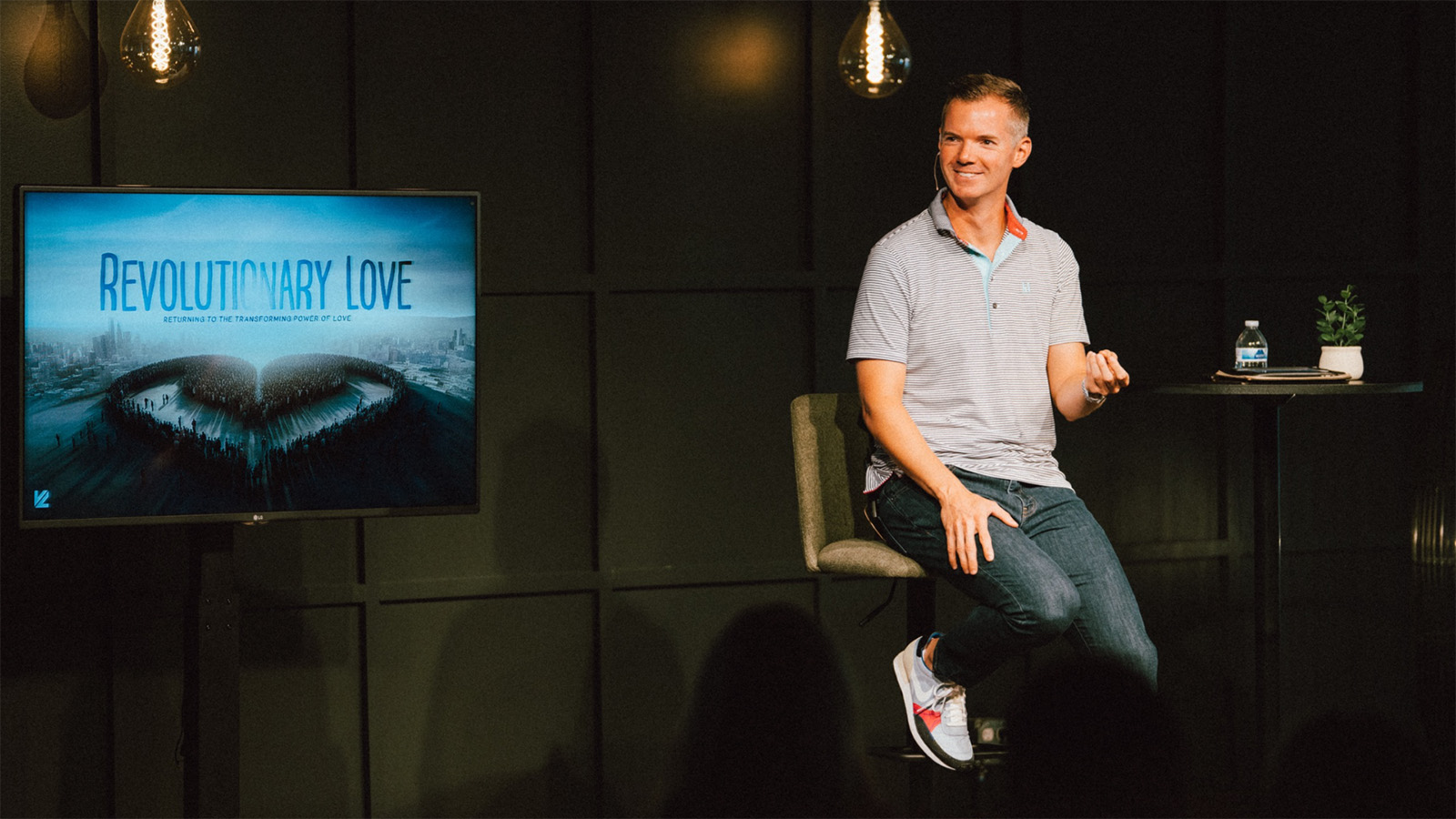
“Resurrection is God exposing the limits of political power. Empire can arrest the body. Silence a voice. Seal a tomb. But it cannot control what grows after truth has been planted,” said Deese, reading an excerpt from his forthcoming Easter sermon.
The theme of resisting empire is also part of the theological context at the Unitarian Church of Barnstable, a Unitarian Universalist congregation in Cape Cod. But while congregants will likely sing “Christ the Lord is Risen Today” this Easter, resurrection won’t be the focus of the service. The Rev. Kristen Harper, who has ministered the church for over two decades, noted that she empowers her Christian, Jewish, Buddhist, Humanist and atheist congregants to explore their own beliefs, rather than telling them what to think. Still, when she shares her perspective on the story of Jesus in her Easter sermons, she said, she’s most likely to focus on what he did before his crucifixion.
“The death and resurrection mean very little to us,” said Harper of her liberal congregation. Instead, she focuses on Jesus as a prophet whose ministry embodied radical inclusion and who might inspire others to act in the face of injustice.
“Even if we don’t believe Jesus was divine, which most of us do not, we do believe that he was one of the great prophets, great teachers of the world,” she said.


Unitarian Universalism is known for drawing spiritual inspiration from a variety of sources, and at Sunnyhill Unitarian Universalist Church of the South Hills in Pittsburgh, the Rev. Jim Magaw often relies on two texts each Easter: the original ending of the Gospel of Mark, which hints at the mystery of Easter with its abrupt ending about women fleeing the empty tomb, and the poem “Easter Exultet” by James Broughton.
“Nothing perishes; nothing survives; everything transforms,” Magaw said, quoting the poem. For him, he said, belief in a historical resurrection is less powerful than metaphor. “I feel like transformation happens at that deeper metaphorical level, much more than it does at a literal level.”
While some noncreedal congregations prefer metaphor, these days, Fountain Street’s current minister, the Rev. Nathan Dannison, isn’t against a literal resurrection. After all, he said, the world is “inherently miraculous.” The interreligious congregation remains committed to free speech and independent thought and expects its ministers to speak truthfully without enforcing their views on others. Ultimately, the Easter season at Fountain Street is about hope and social witness rather than uniform doctrinal claims.

That Easter hope was hinted at during Palm Sunday. Dozens of children came to the front of the sanctuary, grasped bunches of palm branches and dipped them into the baptismal font, blessing them and then handing them out to congregants. After the service, those same palm branches were taken by roughly 80 Fountain Streeters nearly 70 miles away to Lansing, where they joined a Palm Sunday Protest against Christian nationalism.
“The Easter tradition at Fountain Street, it’s very incarnational,” said Dannison. “It’s extremely embodied. And it’s lived through physical action.”
Original Source:
https://religionnews.com/2026/04/02/when-easter-isnt-all-about-a-literal-resurrection/