(RNS) — The foreign policy of President Donald Trump combines the worst of isolationism with the worst of interventionism in a uniquely disastrous way.
He began his presidency as a firm isolationist. His “America First” policy promised to focus on domestic issues and stay out of foreign wars.
Trump immediately alienated allies by insulting Europe and threatening to abandon NATO, which has been at the center of American bipartisan foreign policy since the end of the Second World War. For more than half a century NATO was a deterrent to Russian aggression in Europe. This deterrent kept peace in Europe until the dissolution of the Soviet Union in 1991 when everyone rejoiced at the end of the Cold War.
Vladimir Putin’s invasion of Ukraine showed that the Russian empire was not dead, simply wounded and vengeful. While traditional Republicans would have responded with alarm to the invasion, Trump simply did not care. In addition, he felt betrayed by Volodymyr Zelenskyy, who did not help him against Joe Biden, while at the same time Trump was being cultivated by Putin, who did support him against Biden.
In Trump’s egocentric world, it did not matter if Russia swallowed Ukraine.
During the postwar era, the United States and Europe presented themselves as the promoters of democracy and human rights. Too often their actions did not match their rhetoric because they were willing to side with anticommunist dictators who would support their political and economic agenda.
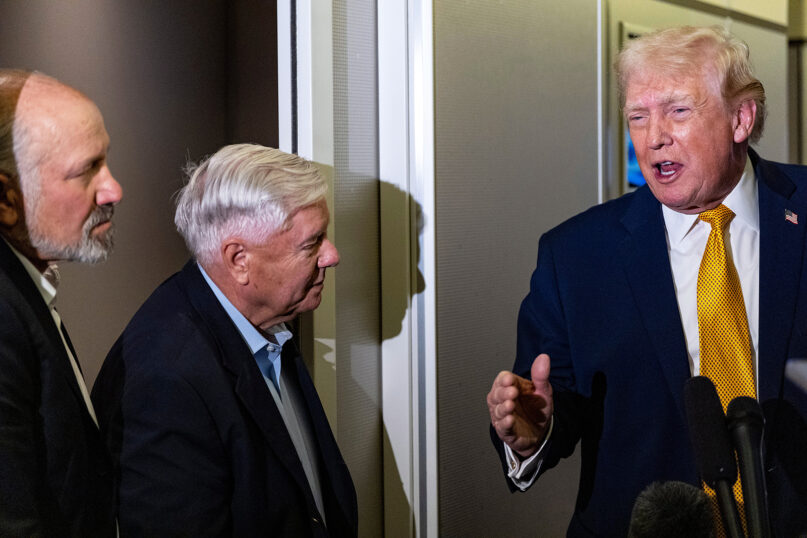
Under Trump, the rhetoric is gone. The Trump administration does not even pretend to care about democracy, human rights, political refugees or victims of natural disasters.
“America First” isolationism also led Trump to upend the global economic order that saw free trade and economic integration as a way to pull poor countries out of poverty, reduce prices for consumers and increase worldwide wealth.
Free trade did improve the lives of many, but it also destroyed the livelihood of small farmers in the Global South and industrial workers in the United States.
Economists with their economic models did not anticipate the social and political consequences of upending the lives of millions of people who are more than just interchangeable parts in a big machine. American workers and their families were hurt and felt betrayed.
Trump responded to the pain and anger of American industrial workers by cutting off immigration, rejecting earlier trade agreements and embracing tariffs. This upending of the global economic order further alienated allies and, more importantly, caused economic chaos by throwing a monkey wrench into a system of supply chains and markets as countries responded with their own tariffs.
No one would argue that the pre-Trump world economic order was perfect, but where a scalpel needed to be carefully applied, Trump wielded a machete. The result is a bleeding corpse. American farmers have lost foreign markets and immigrant workers. Raw materials and parts from foreign sources are more expensive for American businesses.
Trump economic policy also allowed politically connected supporters and industries to get tariff exemptions while consumers and small businesses suffered.
The result of Trump isolationism is that the world is less safe, and no one is better off economically except billionaires.
Add on top of this Trump’s recent turn to interventionism. While he campaigned as the candidate that condemned American involvement in foreign wars and attempts at regime change, he has now attacked Venezuela and kidnapped its president, Nicolás Maduro Moros.
While the kidnapping of the Venezuelan president was executed with military precision, what is next is not clear. Trump said “we’re in charge” of Venezuela. “We’re going to run the country until such time as we can do a safe, proper and judicious transition,” he told the press Saturday at Mar-a-Lago. That is interventionism by definition.
Trump seems to think he can do intervention on the cheap by intimidating the country into doing his will. But Maduro’s allies are still controlling the military and the government. They are unlikely to surrender to his will without a fight. Further intervention would require boots on the ground as in Iraq. If he attempts to bomb the government into submission, he may end up with another Libya as the country falls into chaos.
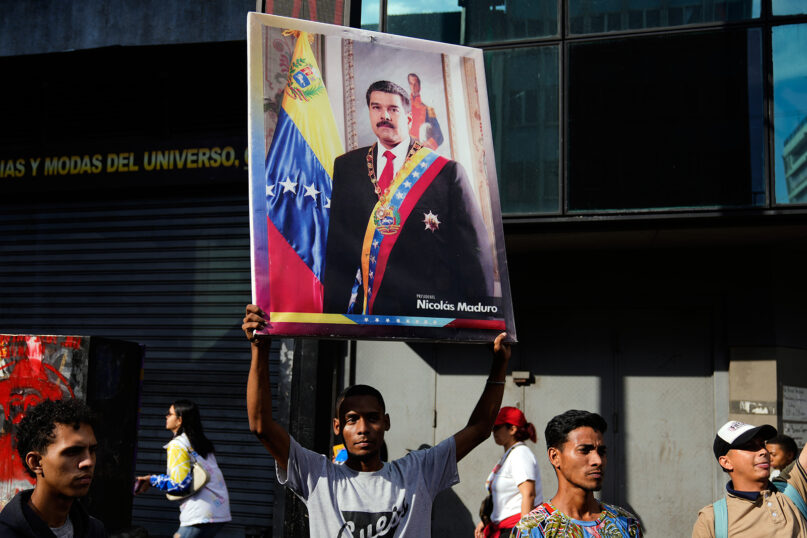
Trump does not pretend he is defending democracy and human rights. He is not supporting the installation of the actual winner of the last Venezuelan presidential election.
Trump bluntly says it is about oil, even though American oil companies are not eager to invest billions in Venezuelan oil production granted the political uncertainty. In addition, since Venezuelan oil is high in sulfur and difficult to refine, it sells for about $15 a barrel less than brent crude oil, which is currently selling at about $60 a barrel.
Despite Trump’s infatuation with fossil fuels, Venezuelan oil may not be a good investment, especially now that wind and solar energy is cheaper than fossil fuels.
Trump’s war is illegal, unwise, immoral and a waste of money. It harms both Venezuela and the United States. Worst of all, it encourages Putin to continue his war in Ukraine and gives the green light to China to use its military to take over Taiwan and bully other Asian nations.
Trump’s mix of isolationism and interventionism is disastrous for America and the world.
Pope Leo, on the other hand, urges international relations be based on truth, justice and peace. “The good of the beloved Venezuelan people must prevail over every other consideration,” the pope said, according to Vatican News, the Vatican’s official news agency.
At his weekly Angelus prayer on Sunday (Jan. 4), he urged the world to guarantee “the sovereignty of the country, ensuring the rule of law enshrined in the Constitution, respecting the human and civil rights of each and every person, and working together to build a peaceful future of collaboration, stability, and harmony, with special attention to the poorest who are suffering because of the difficult economic situation.”
The Vatican warned America against invading Iraq, but we did not listen. In our arrogance and ignorance of history, we keep making the same mistake — first in Vietnam and then in Iraq and Afghanistan. Will Venezuela be next?
Original Source:
https://religionnews.com/2026/01/06/trump-foreign-policy-is-a-disaster-for-america-and-the-world/